A Child’s School Should Not Depend on Local Property Wealth
American public schools increasingly depend on local tax referendums to fund basic services, making a child’s education hinge on local property wealth and the outcome of a ballot.
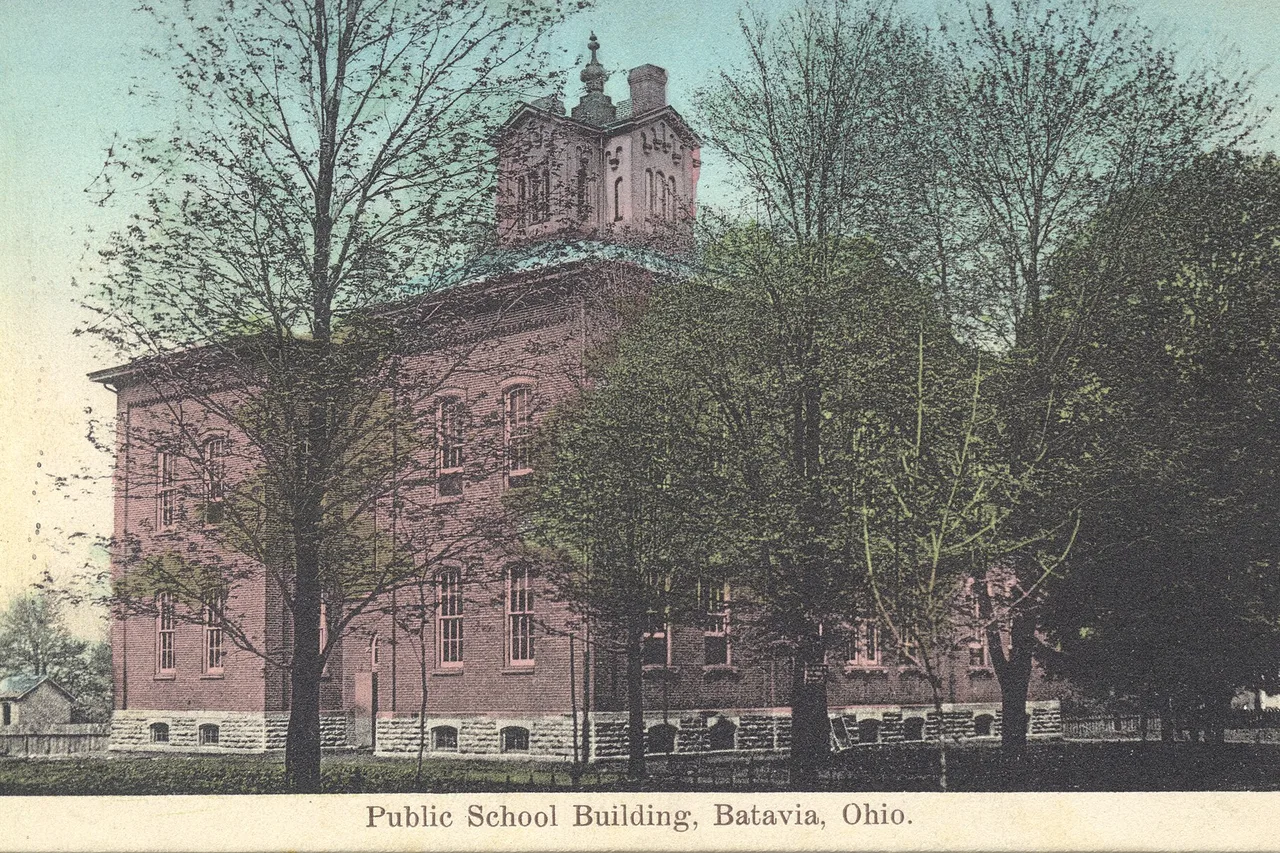
A child’s education should not depend on whether a neighborhood can raise enough money, or whether voters approve the next request. Yet America has built a school-finance system in which local wealth still stands between a public promise and the resources needed to keep it.
The country can spend more overall while leaving that dependence intact. Public-school spending reached $767.8 billion after rising nearly 2% in inflation-adjusted terms, even as state revenue fell 2.6% and local revenue fell 2.0%.1 A national total does not distribute security evenly; it passes through a structure in which place carries too much weight.
Local ballots should supplement education, not determine whether a district can maintain ordinary services. Communities with stronger property bases have more room to ask residents for additional support. Communities with less wealth face a narrower choice: seek approval for more revenue, reduce provision, or allow the gap to widen. That is not a sound way to assign opportunity.
State equalisation helps, but it does not make geography irrelevant. More than half of states had at least modestly progressive funding systems that provided more money to higher-poverty districts, while wide differences in per-pupil funding persisted among states.2 A formula can correct part of an imbalance without removing the local contest that produced it.
New Jersey makes the contradiction plain: districts must meet a local funding obligation under the state formula while a property-tax cap restricts the amount they can raise through the school levy.3 When governments demand a local contribution and constrain the means of collecting it, the pressure moves into the school system.
Per-pupil spending reached $15,633 in 2022, up 8.9% from the year before.4 That increase does not change the governing principle. Education is a public obligation, not a yearly negotiation shaped by property wealth. States should make their formulas sufficient in practice, leaving local votes to improve schools rather than decide what basic education a child receives.
References (4)
- National Center for Education Statistics, U.S. Department of Education. Total Current Expenditures Grew by 1.8 Percent for Public Elementary and Secondary Schools in Fiscal 2022. 7 May 2024. https://nces.ed.gov/learn/press-release/total-current-expenditures-grew-1-8-percent-public-elementary-and-secondary-schools-fiscal-2022Context ↩
- Education Law Center. Making the Grade 2024: Education Funding Disparities Persist as Some States Prioritize Tax Cuts and Privatization. 12 Dec 2024. https://edlawcenter.org/making-the-grade-2024-education-funding-disparities-persist-as-some-states-prioritize-tax-cuts-and-privatization/Supporting ↩
- Education Law Center. New ELC Report: Fix the Contradiction in the Local Share to Improve School Funding in NJ. 7 Oct 2024. https://edlawcenter.org/new-elc-report-fix-the-contradiction-in-the-local-share-to-improve-school-funding-in-nj/Supporting ↩
- U.S. Census Bureau. Largest Year-to-Year Increase in Over 20 Years for Public School Spending Per Pupil. 25 Apr 2024. https://www.census.gov/newsroom/press-releases/2024/public-school-spending-per-pupil.htmlContext ↩
About this note
- Published
- 23 November 2026, by the Editorial Board of the Center for Policy & Stability. Opinion: an argued position, labelled as such.
- Evidence
- 4 sources from 3 publishers: 2 official statistics or government sources and 2 research organisations.
- Checks
- Before publication, every figure and quotation was matched against its cited source, and every factual sentence was checked against those sources by a separate AI fact-checker. Research and drafting are AI-assisted; the Center's editors choose the themes it writes on. How we work.
- Corrections
- None. Corrections log.
- Cite as
Center for Policy & Stability, “A Child’s School Should Not Depend on Local Property Wealth,” 23 November 2026, https://policystability.com/post/2026-11/a-childs-school-should-not-depend-on-local-property-wealth/