Barking and Dagenham’s housing test is a safe home, not a better homelessness ranking
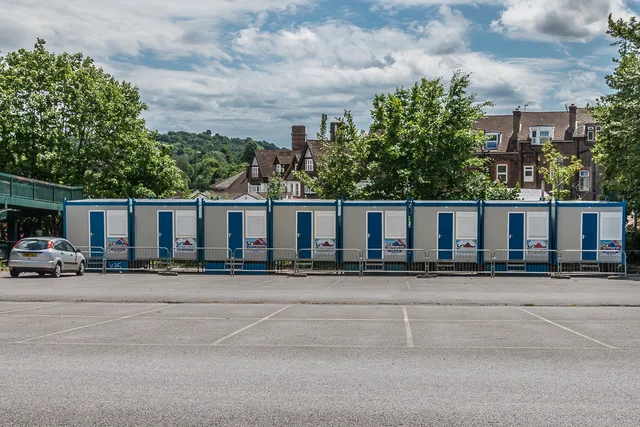
Responding to Homeless families in temporary accommodation 'like shipping containers', Essex Live (20 Nov 2026)
Barking and Dagenham should judge its homelessness response by families’ safety and access to settled homes, not its performance against neighbouring boroughs.
Barking and Dagenham’s Labour council leader, Dominic Twomey, has defended his authority’s homelessness performance after Reform UK councillor Caleb van Ryneveld described families’ temporary accommodation as resembling shipping containers, alleging poor temperature control, unreliable electrics and unsafe conditions.1 Those are allegations requiring investigation, not findings to treat as established. But a league-table defence cannot answer a question about whether a home is fit for a family.
The council’s corporate plan aims to bring the number of families in temporary accommodation below 959 by 2030, against a current total of 1,029.1 A target can organise action. It cannot establish whether the accommodation used while families wait is adequate. The immediate test should be conditions, alongside a credible route into settled housing.
Twomey argues that the council needs homes into which families can move, and says neighbouring London boroughs are competing for properties in Barking and Dagenham.1 That is an explanation of the constraint, not a reason to lower the standard. Competition between councils should not be mistaken for a solution to the shortage confronting them. Moving the purchasing power around does not, by itself, provide an additional home.
The wider picture makes this more than a dispute between local political opponents: government statutory homelessness statistics put 176,130 dependent children in 85,800 households with children in temporary accommodation in England at the end of December 2025.2 Family homelessness belongs at the centre of any assessment of living standards. A roof is essential; it is not sufficient evidence of stability, safety or a functioning housing system.
Elsewhere, Oldham Council says it has ended bed-and-breakfast placements for families and children.3 That is the kind of concrete accommodation practice worth scrutinising and learning from. Relative performance matters only if it helps establish what authorities can change.
Van Ryneveld’s claims deserve inspection and a public response addressing the specific conditions alleged. Twomey’s housing constraint deserves a delivery plan, not dismissal. Neither obligation cancels the other. The standard should be straightforward: emergency accommodation must protect families while public policy makes the emergency shorter.
References (3)
- Essex Live. Homeless families in temporary accommodation 'like shipping containers'. 20 Nov 2026. https://www.essexlive.news/news/essex-news/homeless-families-barking-dagenham-homes-11249022Context ↩
- Thrive Magazine. The Word “Temporary” Is Doing a Lot of Work | Thrive Magazine. 16 Nov 2026. https://thrivemagazine.ai/the-word-temporary-is-doing-a-lot-of-work/Supporting ↩
- The Oldham Times. Oldham Council reports 'dramatic' reduction in homelessness | The Oldham Times. 17 Nov 2026. https://www.theoldhamtimes.co.uk/news/26733014.oldham-council-reports-dramatic-reduction-homelessness/Supporting ↩
How to citeCenter for Policy & Stability, “Barking and Dagenham’s housing test is a safe home, not a better homelessness ranking,” 21 November 2026, https://policystability.com/post/2026-11/barking-and-dagenhams-housing-test-is-a-safe-home-not-a-better-homelessness/