Britain Has Made Food Aid Part of Household Survival
Charitable food aid has become part of how a growing share of British households get by, showing that incomes and benefits no longer cover the basics.
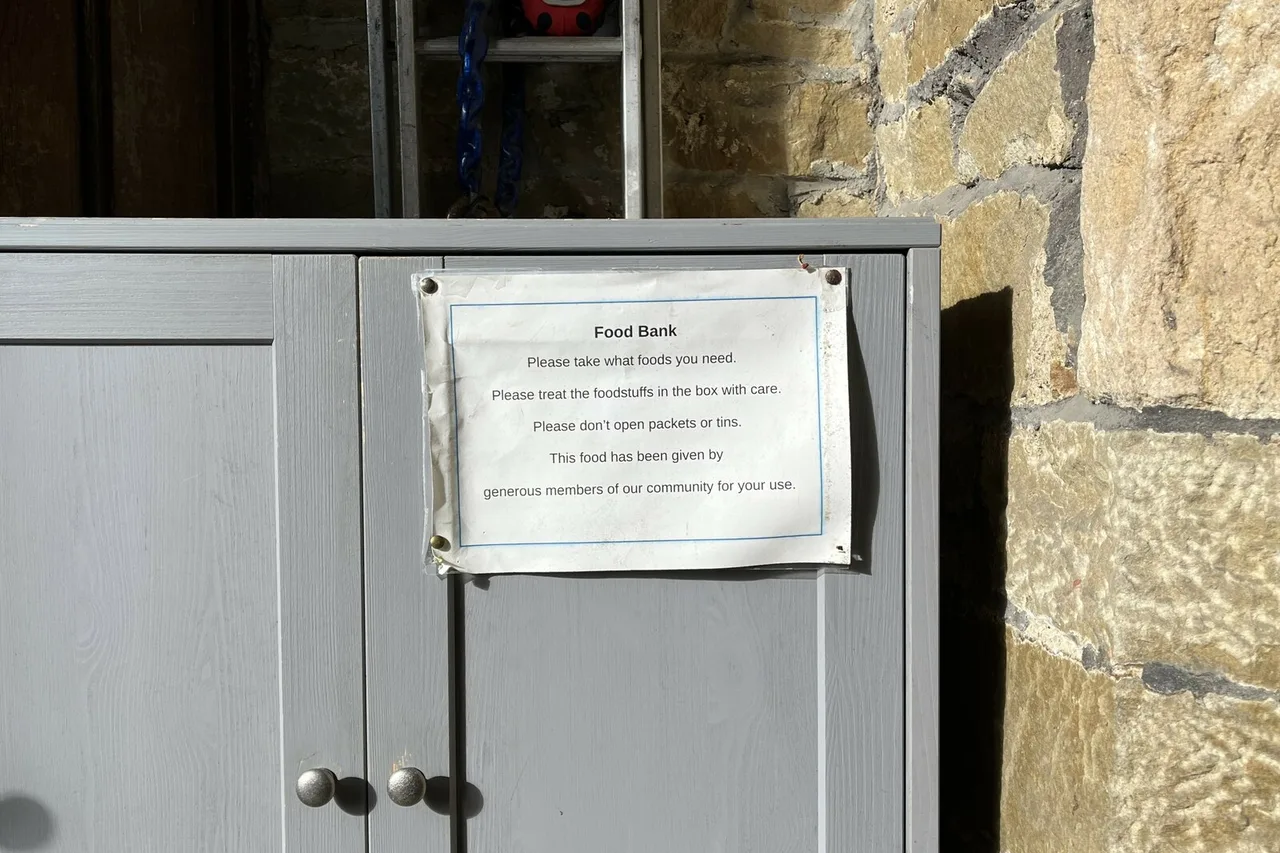
Britain has turned charitable food aid from a temporary rescue into part of the household economy. That is not a measure of national prosperity; it is evidence that too many families cannot make ordinary incomes and public support cover ordinary needs.
The official household picture is plain: food-bank use in the previous twelve months reached 3.6% of households in 2023–24.1 This makes food aid part of ordinary life for a substantial number of families, not an isolated response to exceptional misfortune.
Trussell distributed 2.9 million emergency food parcels across the UK between April 2024 and March 2025, 51% more than five years earlier.2 A parcel tally should not be mistaken for a headcount of households in need. But that distinction does not make the charitable network incidental. The scale of that distribution shows how public life is adapting around a failure to secure the basics.
The underlying hardship is broader than the food-bank queue. Food insecurity rose from 8% to 11% of individuals between 2019–20 and 2022–23.3 That is a living-standards problem that a broad picture of prosperity can conceal. When people cannot reliably afford food, the national income tells only part of the story.
More than half of the independent food-aid organisations surveyed reported increased need compared with the same six-month period a year earlier.4 This increase in need means their work is not merely filling a gap in provision; it is absorbing pressures that should be handled by wages, social security and public services.
Policy helps determine who falls through that gap. The Joseph Rowntree Foundation identifies the two-child limit as disconnecting support from need, while 1.3 million children in large families receiving Universal Credit are going without at least one basic essential.5 Affected families lose £3,514 a year for each third or subsequent child covered by the policy.5 Benefit levels and deductions are not technical details when the consequence is an empty cupboard.
Responsibility crosses party lines. Governments have left Britain with a system in which charitable food is increasingly built into how families survive, while the government now in office faces the same test. Support should cover essentials before charities are asked to provide them.
References (5)
- Department for Work and Pensions / GOV.UK. Family Resources Survey: financial year 2023 to 2024. 27 Mar 2025. https://www.gov.uk/government/statistics/family-resources-survey-financial-year-2023-to-2024/family-resources-survey-financial-year-2023-to-2024Supporting ↩
- Trussell. More than 1.8m emergency food parcels provided for families with children in past year. 21 May 2025. https://www.trussell.org.uk/news-and-research/news/more-than-1.8m-emergency-food-parcels-provided-for-families-with-children-inSupporting ↩
- Institute for Fiscal Studies. New statistics show large increases in material deprivation and food insecurity during cost-of-living crisis, which headline poverty measures do not reflect. 21 Mar 2024. https://ifs.org.uk/news/new-statistics-show-large-increases-material-deprivation-and-food-insecurity-during-costSupporting ↩
- Independent Food Aid Network. Member Survey April 2025. 2 Apr 2025. https://www.foodaidnetwork.org.uk/surveys/member-survey-april-2025Supporting ↩
- Joseph Rowntree Foundation. Three policies to reduce child poverty this parliament. 24 May 2025. https://www.jrf.org.uk/child-poverty/three-policies-to-reduce-child-poverty-this-parliamentSupporting ↩
How to citeCenter for Policy & Stability, “Britain Has Made Food Aid Part of Household Survival,” 9 November 2026, https://policystability.com/post/2026-11/britain-has-made-food-aid-part-of-household-survival/