Britain’s Food Banks Are Becoming Part of the Welfare State
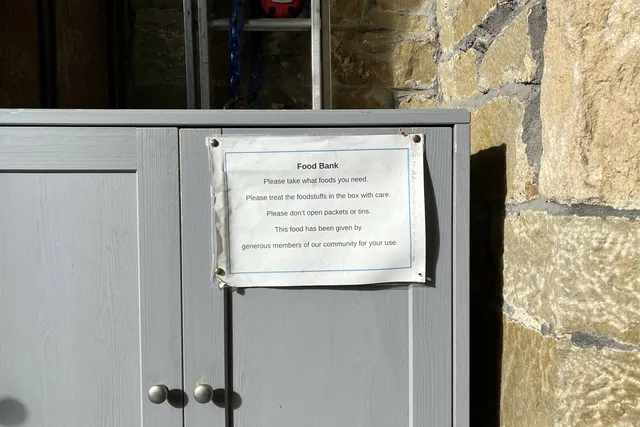
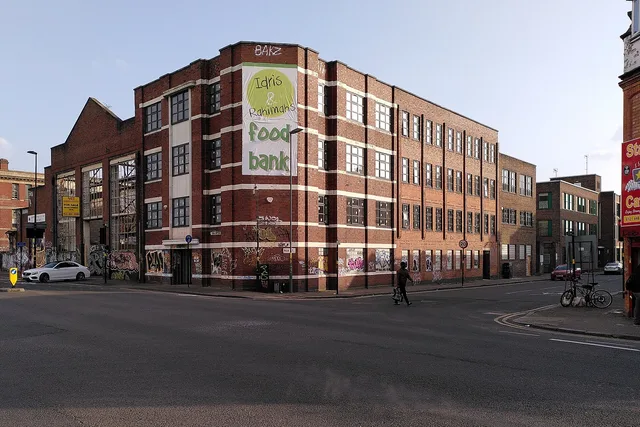
Charitable food aid has become part of how a growing share of British households get by, a sign that incomes and benefits no longer cover the basics.
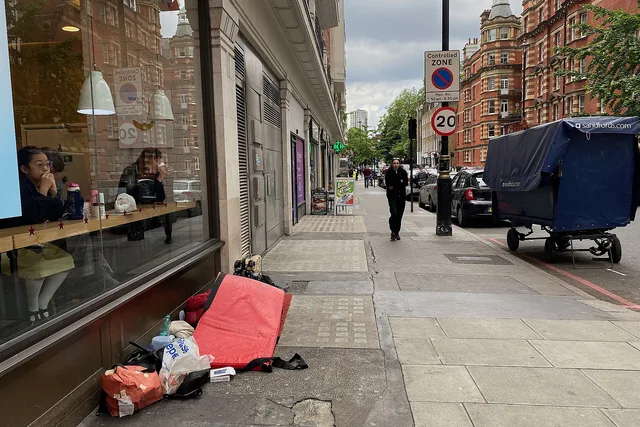
A country that depends on charity to put food on tables is not as prosperous as its headline picture suggests. Food aid has moved from the edge of public life towards the centre of household survival, and government has allowed that change to become ordinary.
The official measure is clear enough. The share of households using a food bank in the previous year rose from 3.3% to 3.6% in one year.1 That is not a marginal service for a handful of exceptional cases; it is a sign that the basic contract between work, benefits and living costs is failing too many people.
Food insecurity has spread, with the proportion experiencing it rising from 8% to 11%.2 The proportion of people experiencing food insecurity rose from 8% to 11%, while material deprivation rose from 15% to 19%.2 Median household income then fell by 2% in real terms.3 Families do not live inside a headline measure: they live with the choice between food, heating, rent and transport.
The scale of charitable provision makes the institutional failure harder to ignore. Trussell distributed more than 1.4 million emergency food parcels in six months, 69% more than in the comparable period five years earlier.4 Food banks are not merely supplementing the welfare state; they are increasingly helping to deliver its most basic function.
The strongest evidence lies not in the number of parcels but in what households say they are doing without. In the six months to May, 7.1 million low-income households were going without essentials.5 Some 5.3 million were cutting back or skipping meals.5 These are not abstract indicators of national hardship. They describe a society in which ordinary budgets no longer reliably meet ordinary needs.
That record should not be treated as the responsibility of a single political party. The two-child limit, benefit levels, sanctions and deductions should be judged by their effects on whether people can eat, heat their homes and remain secure. A change of government does not change that test, and a new minister cannot claim progress while families still require charity for necessities.
Britain should stop treating food banks as a compassionate adjunct to public policy. Their growth is a measure of policy failure, and restoring incomes and benefits to a level that covers the basics is the proper work of government.
References (5)
- Department for Work and Pensions, GOV.UK. Family Resources Survey: financial year 2023 to 2024. 27 Mar 2025. https://www.gov.uk/government/statistics/family-resources-survey-financial-year-2023-to-2024/family-resources-survey-financial-year-2023-to-2024Supporting ↩
- Institute for Fiscal Studies. New statistics show large increases in material deprivation and food insecurity during cost-of-living crisis, which headline poverty measures do not reflect. 21 Mar 2024. https://ifs.org.uk/news/new-statistics-show-large-increases-material-deprivation-and-food-insecurity-during-costSupporting ↩
- Department for Work and Pensions, GOV.UK. Households Below Average Income: an analysis of the UK income distribution: FYE 1995 to FYE 2024. 27 Mar 2025. https://www.gov.uk/government/statistics/households-below-average-income-for-financial-years-ending-1995-to-2024/households-below-average-income-an-analysis-of-the-uk-income-distribution-fye-1995-to-fye-2024Supporting ↩
- Trussell. Latest stats. 1 Aug 2024. https://www.trusselltrust.org/news-and-blog/latest-stats/Supporting ↩
- Joseph Rowntree Foundation. A year of Labour but no progress: JRF’s cost of living tracker, summer 2025. 11 Jul 2025. https://www.jrf.org.uk/cost-of-living/jrfs-cost-of-living-tracker-summer-2025Supporting ↩
How to citeCenter for Policy & Stability, “Britain’s Food Banks Are Becoming Part of the Welfare State,” 3 November 2026, https://policystability.com/post/2026-11/britains-food-banks-are-becoming-part-of-the-welfare-state/