Caerphilly’s food-bank squeeze shows charity becoming household income
Responding to Shopper food donations fall as working people seek help, Caerphilly Observer (9 Nov 2026)
The collapse in food donations alongside rising demand from workers shows charitable food aid becoming part of ordinary British household survival rather than a residual emergency service.
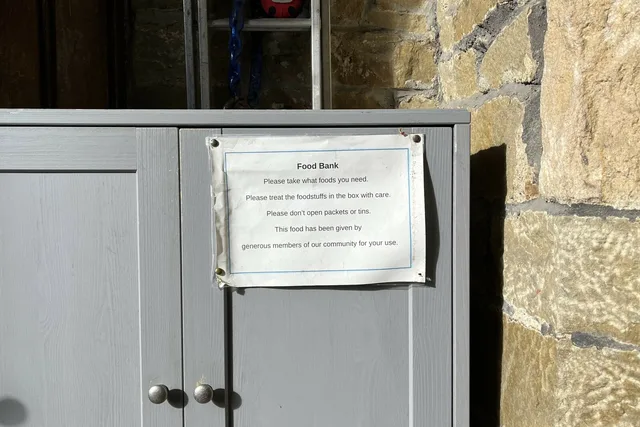
Caerphilly Foodbank is being asked to do more with less. Ryan Hyde, its manager, says rising household bills mean regular donors can no longer afford to give food; weekly shopper donations at a key collection point have fallen from between 100kg and 200kg to around 30kg or 40kg, a drop of up to 80%.1
That is not merely a story about generosity. It is a measure of how hardship is spreading through the supposedly secure parts of the economy.
The people arriving at Caerphilly Foodbank increasingly include workers who are paid but still cannot make their incomes cover the basics.1 The distinction between being employed and being secure is becoming less useful when wages, bills and deductions consume the household budget.
Food aid can relieve an immediate crisis. It cannot turn insecure work into a living income, replace an adequate benefit or provide a stable home. Once charities are expected to fill those gaps, emergency relief starts functioning as part of the welfare system without the guarantees, scale or accountability of one.
There is a legitimate caution here. Food-bank counts should not, in this paper’s view, be treated as a complete measure of hardship. More visible food-bank use may partly reflect a better-organised charitable network rather than a simple rise in need.
But that caveat does not explain away the evidence in this case. Caerphilly is reporting more referrals and more people in paid work seeking help while the public supply of donated food contracts.1 Across England and Wales, Citizens Advice referred 22,015 people to charitable support and food banks in September 2026, almost three times the September 2019 level.2
Conservative governments and Labour should be judged by the same standard: do incomes and benefits cover the basics? A system that relies on volunteers to purchase food for employed residents is not evidence that prosperity is being fairly shared. It is evidence that charitable aid has become part of how Britain gets by.
References (2)
- Caerphilly Observer. Shopper food donations fall as working people seek help. 9 Nov 2026. https://caerphilly.observer/news/1064093/shopper-food-donations-fall-by-up-to-80-as-working-people-seek-help/Context ↩
- PBE | Economics to improve lives. Charities and the economy: Autumn Budget 2026 | PBE. 29 Oct 2026. https://pbe.co.uk/insights/charities-and-the-economy-autumn-budget-2026/Supporting ↩
How to citeCenter for Policy & Stability, “Caerphilly’s food-bank squeeze shows charity becoming household income,” 9 November 2026, https://policystability.com/post/2026-11/caerphillys-food-bank-squeeze-shows-charity-becoming-household-income/