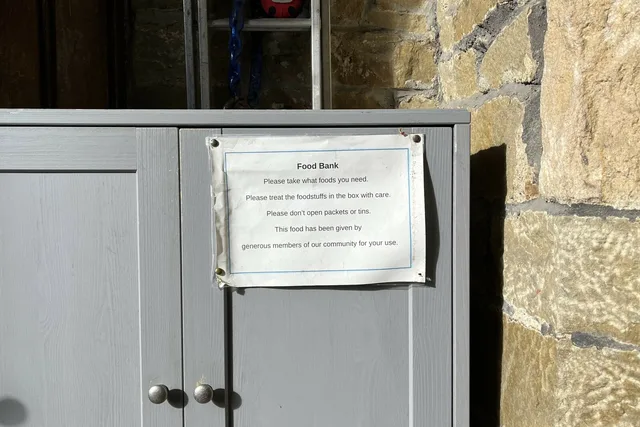
Food charity is no substitute for an adequate income
Britain should treat reliance on charitable food aid as a failure of income security, not as an acceptable way for households to cover the basics.

A food parcel should be an emergency response, not part of a household budget. Britain needs to judge prosperity by whether people can afford ordinary necessities, not by whether a charitable organisation can supply them. About one in seventy households had used a food bank in the preceding month.1 That belongs at the centre of any assessment of living standards. A country should not consider its safety net adequate when getting enough to eat depends on finding another source of help. Access to food should rest on purchasing power, not on the availability of a parcel.
The proper response is not to celebrate the capacity of charity as though it were a substitute for adequate incomes. Trussell supplied more than 2.6 million emergency food parcels across the UK in 2025.2 Each parcel represents practical assistance; the political mistake is to treat that assistance as a satisfactory destination for social policy. We should ask whether wages and benefits leave enough to buy food after unavoidable bills. That is the standard by which income support deserves to be judged. The test is not how efficiently a household can be referred for help, but whether it can manage without that referral.
Nor should emergency provision become the baseline against which Britain defines success. Trussell’s parcel total remained 45% above its level before the pandemic and cost of living crisis.2 We regard that scale of reliance as a failure of income security, not a charitable achievement that government can place outside its own responsibilities. The obligation should remain the same whoever holds office: make the basics affordable through dependable incomes. Benefit levels, deductions and conditions should be judged against that obligation, rather than treated as administrative questions separate from the ability to eat. A change of government should never reset the standard of an adequate life.
Food banks deserve support for the help they provide, but public policy should aim to make that help unnecessary. Prosperity should mean being able to buy dinner, not knowing where to ask for it.
References (2)
- Department for Work and Pensions. Family Resources Survey: financial year 2024 to 2025. 26 Mar 2026. https://www.gov.uk/government/statistics/family-resources-survey-financial-year-2024-to-2025/family-resources-survey-financial-year-2024-to-2025Supporting ↩
- Trussell. Food banks provide over 2.6 million food parcels. 11 Mar 2026. https://www.trussell.org.uk/news-and-research/news/food-banks-provide-over-2.6-million-food-parcelsSupporting ↩
How to citeCenter for Policy & Stability, “Food charity is no substitute for an adequate income,” 11 November 2026, https://policystability.com/post/2026-11/food-charity-is-no-substitute-for-an-adequate-income/