Glasgow and Lanarkshire’s food banks need donations—and a government answer on incomes
Responding to Glasgow and Lanarkshire food banks 'critically low' ahead of winter - how you can help, Glasgow Live (20 Nov 2026)
Glasgow and Lanarkshire’s food-bank appeal should be treated as a warning about inadequate household incomes, not merely an invitation to replenish charitable supplies.
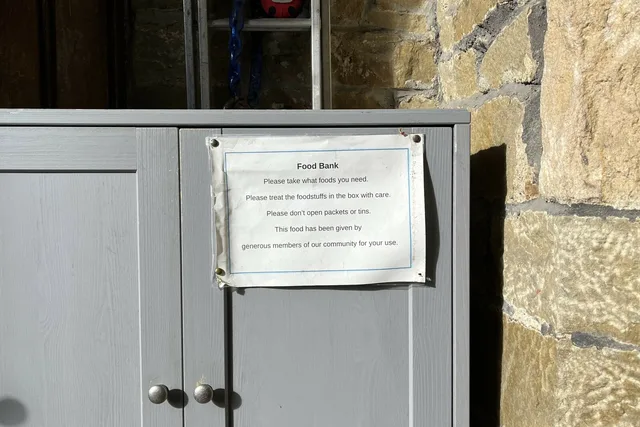
Glasgow and Lanarkshire’s food banks are asking for winter donations, with Trussell reporting that 43% of its Scottish food banks have critically low food stocks.1 The immediate answer is to help fill the shelves. The political answer cannot stop there.
At Wishaw Community Foodbank, run by South Wishaw Parish Church, manager Dyann Evans says the service sometimes struggles to meet demand and is seeking food, household essentials and volunteers.1 This is an appeal for practical help. It should also prompt a harder question: why must access to essentials depend on what a charity can collect?
The clearest number concerns the strain on that charitable system: Scottish food banks bought 22% of the food needed to support users in 2025, against 3% in 2021.1 That measures a changing source of supply, not the proportion of households going hungry. But it exposes the weakness of treating donated groceries as a dependable safety net.
The strongest counterargument deserves a fair hearing. More food banks and more referral routes could produce more recorded use without an equivalent increase in underlying hardship. Parcel totals alone cannot establish that a growing share of British households needs charitable food.
That broader claim needs household evidence, including the DWP’s Family Resources Survey and HBAI food-insecurity measures, alongside Trussell and IFAN data. This report does not supply that national test. It does report Trussell’s account of people skipping meals and going without heating because they cannot afford essentials.1 Those accounts deserve investigation, not dismissal as a counting problem.
Conservative and Labour governments should face the same test: do incomes after unavoidable costs cover the basics? Benefit levels, sanctions, deductions and the two-child limit should be judged by their measured effects on household resources, not by ministerial assurances or party loyalty.
Donate if you can. But do not confuse keeping a food bank supplied with making a household secure. The proper ambition is an income floor that makes emergency food genuinely exceptional.
References (1)
- Glasgow Live. Glasgow and Lanarkshire food banks 'critically low' ahead of winter - how you can help. 20 Nov 2026. https://www.glasgowlive.co.uk/news/glasgow-news/glasgow-lanarkshire-food-banks-critically-34936914Context ↩
How to citeCenter for Policy & Stability, “Glasgow and Lanarkshire’s food banks need donations—and a government answer on incomes,” 21 November 2026, https://policystability.com/post/2026-11/glasgow-and-lanarkshires-food-banks-need-donations-and-a-government-answer-on/