Housing Failure Has Reached the Working Family
Homelessness in the United States and record temporary accommodation in England show that housing failure now reaches families with children and people in work.
A country can look prosperous while housing insecurity becomes part of ordinary working life. The contradiction is not a statistical curiosity. It is a sign that employment and income no longer reliably provide the stability that prosperity is supposed to deliver.
America’s housing crisis reaches well beyond people detached from the labour market. Fourteen of the nation’s 20 most common occupations pay median wages below the hourly income needed to rent a modest one-bedroom home.1 Those occupations account for 42% of the workforce.1 A person can hold one of the country’s most common jobs and still face a housing bill set above the wage that job normally provides.
That gap changes the meaning of work. Employment is often treated as the answer to hardship, but a job cannot secure a home when rent outpaces ordinary pay. The failure is not simply that some households need emergency help. It is that the economy produces essential work without producing enough affordable places for workers to live.
The United States’ national homelessness assessment also includes estimates of homeless children and young people.2 That places housing insecurity inside the story of family life, not outside it. The country cannot claim broad prosperity while people who work, raise children or both remain exposed to homelessness.
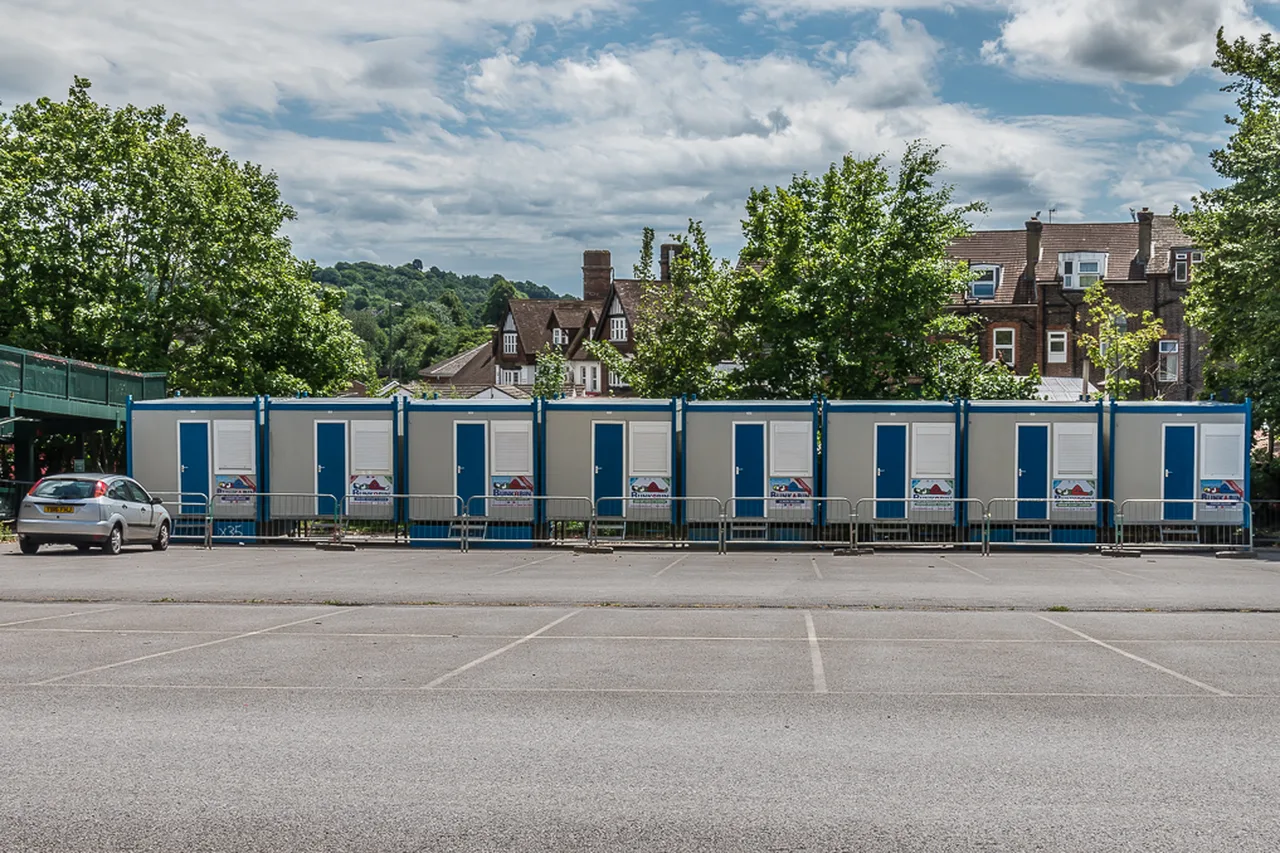
England shows what happens when this pressure reaches families. At the end of March 2025, 131,140 households were in temporary accommodation, an increase of 11.8% in a year.3 Households with children accounted for 83,150 of them.3 Temporary accommodation has become a central part of family life for tens of thousands of households, not a brief interruption affecting a small and separate population.
The burden falls directly on children. England had 169,050 children living in temporary accommodation at the end of March 2025.4 The most unsuitable forms of emergency accommodation, including nightly-paid bed-and-breakfast accommodation and hostels, housed 69,410 households.4 These figures describe a public system that is keeping people somewhere, but not reliably giving them a home.
Governments should measure prosperity by whether people can remain securely housed, not only by whether they are employed or whether the economy is growing. Until housing costs, wages and the supply of homes are treated as one policy problem, work will remain an incomplete route out of hardship.
References (4)
- National Low Income Housing Coalition. NLIHC Releases Out of Reach 2024: The High Cost of Housing. 14 Aug 2024. https://nlihc.org/news/nlihc-releases-out-reach-2024-high-cost-housingSupporting ↩
- HUD USER. The 2024 Annual Homelessness Assessment Report (AHAR) to Congress: Part 1: Point-In-Time Estimates of Homelessness. 27 Dec 2024. https://www.huduser.gov/portal/publications/2024-ahar-part-1-pit-estimates-of-homelessness.htmlSupporting ↩
- Ministry of Housing, Communities and Local Government. Statutory homelessness in England: January to March 2025. 22 Jul 2025. https://www.gov.uk/government/statistics/statutory-homelessness-in-england-january-to-march-2025/statutory-homelessness-in-england-january-to-march-2025Supporting ↩
- Crisis. More than 130,000 households trapped in temporary accommodation in England. 22 Jul 2025. https://www.crisis.org.uk/about-us/crisis-media-centre/more-than-130-000-households-trapped-in-temporary-accommodation-in-england-1/Supporting ↩
How to citeCenter for Policy & Stability, “Housing Failure Has Reached the Working Family,” 17 November 2026, https://policystability.com/post/2026-11/housing-failure-has-reached-the-working-family-2/