Rotherham’s food shortage is a test of income policy, not just public generosity
Responding to Food banks report critically low donation levels as Rotherham service reveals impact on service users, Rotherham Advertiser (19 Nov 2026)
Rotherham’s strained food provision should be treated as a warning about whether household incomes cover essentials, not merely as a fundraising challenge.
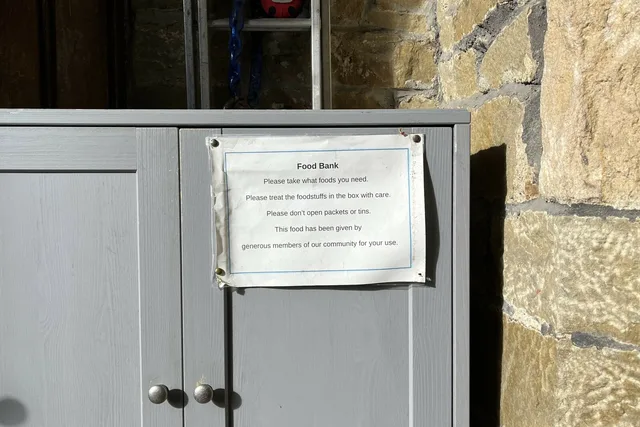
At Rotherham Minster, Social Supermarket offers referred members a food shop for £5 a week; project worker Becky Middleton says stocks are low and members have less choice because of reduced donations.1 The immediate response should be practical: help keep the shelves stocked. The political response must ask why access to nutritious food should depend on those shelves at all.
Across Yorkshire and the Humber, Trussell’s centres bought 650 tonnes of food last year to supplement donations, more than four times the amount bought in 2021.1 They distributed more than 45,000 emergency parcels last winter.1 This is not a sensible foundation for income security. Charitable generosity should supplement a functioning safety net, not be asked to substitute for one.
Middleton puts the human stake plainly: “Choice is so important because it gives people dignity.”1 A response measured only in donated tins misses that point. The standard should be whether people can afford an adequate diet with some control over what they eat.
There is an important objection to drawing national conclusions from food-bank activity: more outlets and referral routes could produce more recorded use without an equivalent increase in underlying hardship. Parcel totals alone cannot settle that argument. Nor does the volume of food purchased establish how many additional households cannot afford essentials. Those distinctions matter if the aim is accountability rather than a persuasive headline.
The supplied evidence does not include household food-insecurity statistics or measured assessments of benefit policies. That limits the verdict, not the questions ministers should face. Conservative decisions and Labour decisions should meet the same test: do they leave households able to cover essentials? Benefit levels, sanctions, deductions and restrictions on family support deserve scrutiny against that outcome, not against promises of toughness or compassion.
Rotherham’s service offers food and continuing support, rather than simply a one-off parcel.1 Government should not confuse that commitment with an unlimited capacity to absorb hardship. Donations can address an empty shelf today. Adequate household incomes are the standard by which policy should be judged tomorrow.
References (1)
- Rotherham Advertiser. Food banks report critically low donation levels as Rotherham service reveals impact on service users. 19 Nov 2026. https://www.rotherhamadvertiser.co.uk/news/food-banks-report-critically-low-donation-levels-ahead-of-busy-winter-months-9356524Context ↩
How to citeCenter for Policy & Stability, “Rotherham’s food shortage is a test of income policy, not just public generosity,” 20 November 2026, https://policystability.com/post/2026-11/rotherhams-food-shortage-is-a-test-of-income-policy-not-just-public-generosity/