Save the Children’s Christmas debt warning shows Britain’s charity safety net
Responding to Millions of parents concerned about being able to afford Christmas with many likely to go into debt, Save the Children UK (26 Nov 2026)
The Christmas figures show charitable aid and borrowing becoming routine parts of household survival because incomes and benefits are failing to cover basic needs.
Save the Children’s Christmas polling captures a country where getting through the festive season increasingly means borrowing, cutting back and asking charities to fill the gap. Almost two thirds of parents said they were concerned about affording Christmas, while 64% expected to borrow through credit cards, overdrafts, loans or family and friends.1
That is not simply a story about presents. Christmas spending includes food, travel, heating and the small rituals that make family life feel ordinary. The average expected bill was £423.50, and 16% of parents said they would reduce household heating use in December to save money.1 Debt is being used not only for exceptional purchases, but to preserve a minimum standard of family life.1
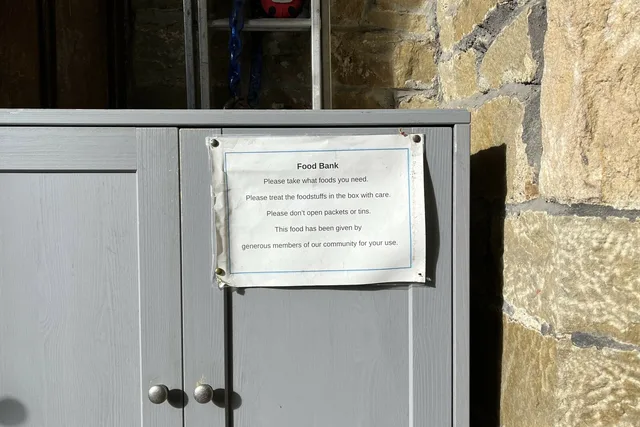
The more revealing finding is that nearly one in six parents said they were more likely to rely on food banks before Christmas, while one in ten were more likely to use baby banks for essentials than a few years ago.1 Baby banks are therefore not a marginal service for unusual emergencies. They are becoming part of the household economy for families who cannot reliably buy clothes, equipment and other necessities.
The supply of aid has expanded alongside this demand. Baby banks supported 400,000 children in 2025, an increase of 11% on the previous year, according to the Baby Bank Alliance.1 That figure does not prove that hardship rose by the same amount: more organisations, referrals and public awareness can increase the recorded reach of charitable services.
But that counterargument has limits. Scottish food banks had to purchase 22% of the food they distributed in 2025, up from 3% in 2021.23 A larger charity network may improve the count; it does not explain why food banks are having to buy a greater share of what they distribute.
The Board applies the same standard to every government: families should not need credit or charity to cover food, warmth and children’s essentials. Ministers can praise volunteers and support seasonal appeals, but those gestures leave the underlying question unanswered. What level of income and benefits do they consider sufficient for an ordinary family to get through an ordinary month?
When baby banks become a normal delivery route for essentials, charitable generosity is no longer merely a supplement to social security. It is evidence that social security is not doing its basic job.
References (3)
- Save the Children UK. Millions of parents concerned about being able to afford Christmas with many likely to go into debt. 26 Nov 2026. https://www.savethechildren.org.uk/news/media-centre/press-releases/2026/millions-parents-concerned-about-being-able-afford-christmasContext ↩
- Inverness Courier. Highland Foodbank, run by New Start Highland, sees massive increase in demand. 20 Nov 2026. https://www.inverness-courier.co.uk/news/more-people-are-turning-to-food-banks-than-ever-before-c-450659/Supporting ↩
- The National. Scottish food banks facing critically low donations ahead of winter | The National. 18 Nov 2026. https://www.thenational.scot/news/26739350.scottish-food-banks-facing-critically-low-donations-ahead-winter/Supporting ↩
About this response
- Published
- 27 November 2026, by the Editorial Board of the Center for Policy & Stability. Opinion: an argued position, labelled as such.
- Evidence
- 3 sources from 3 publishers: 1 research organisation, 1 local news outlet and 1 advocacy or alternative outlet.
- Checks
- Before publication, every figure and quotation was matched against its cited source, and every factual sentence was checked against those sources by a separate AI fact-checker. Research and drafting are AI-assisted; the Center's editors choose the themes it writes on. How we work.
- Corrections
- None. Corrections log.
- Cite as
Center for Policy & Stability, “Save the Children’s Christmas debt warning shows Britain’s charity safety net,” 27 November 2026, https://policystability.com/post/2026-11/save-the-childrens-christmas-debt-warning-shows-britains-charity-safety-net/