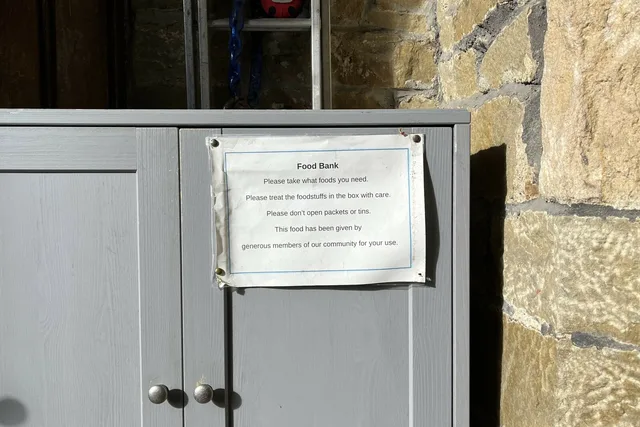
Trussell’s winter warning puts Britain’s reliance on food charity on trial
Responding to Food banks report critically low donations | Trussell, The Trussell Trust (18 Nov 2026)
Britain should treat dependence on charitable food aid as a test of whether incomes and benefits cover essentials, rather than a permanent problem for donors to solve.
Trussell says 43% of food banks in its community describe food donations as critically low as they prepare for winter.1 That warning should reach ministers as urgently as supermarket shoppers. A dependable income cannot be replaced by a dependable collection tin.
The charity forecasts distributing more than 600,000 emergency food parcels this winter; that is a projection, not an observed total.1 It also reports that donations last winter were 40% below their level in winter 2022.1 The immediate appeal deserves support. But keeping shelves stocked cannot be the whole public response.
The clearest sign of strain is what food banks must purchase: bought food accounted for 25% of their requirements in 2025, against around 6% in 2021.1 Charity itself needs a reliable means of paying for essentials. That makes dependence on donations a precarious foundation for household survival.
There is a serious objection to using parcel totals as a poverty measure: expanding provision and referral routes can affect how much aid gets recorded. A parcel count alone cannot establish that a growing share of households needs help. Nor does this survey represent every food bank: its findings concern Trussell’s community.1 A sound assessment must distinguish the supply of charity from the need for it.
That is why ministers should be judged against household food insecurity, disposable incomes and the adequacy of benefits. DWP household surveys should anchor that assessment, alongside evidence from Trussell, IFAN, JRF and the IFS. The test for benefit levels, the two-child limit, sanctions and deductions should be their measured effect on families’ ability to afford essentials.
Apply that standard equally to the Conservative record and Labour’s decisions. An inherited problem still demands an accountable response.
Trussell’s Emma Revie describes people skipping meals and going without heating because they cannot afford essentials.1 The policy question is how to give those households enough income to avoid the next emergency. Donors can help someone eat tonight. Government should be judged by whether they need to ask again.
References (1)
- The Trussell Trust. Food banks report critically low donations | Trussell. 18 Nov 2026. https://www.trussell.org.uk/news-and-research/news/food-banks-report-critically-low-donationsContext ↩
How to citeCenter for Policy & Stability, “Trussell’s winter warning puts Britain’s reliance on food charity on trial,” 18 November 2026, https://policystability.com/post/2026-11/trussells-winter-warning-puts-britains-reliance-on-food-charity-on-trial/