
Religious Persecution in Bangladesh: A Call for Global Accountability
Published
- 3 min read
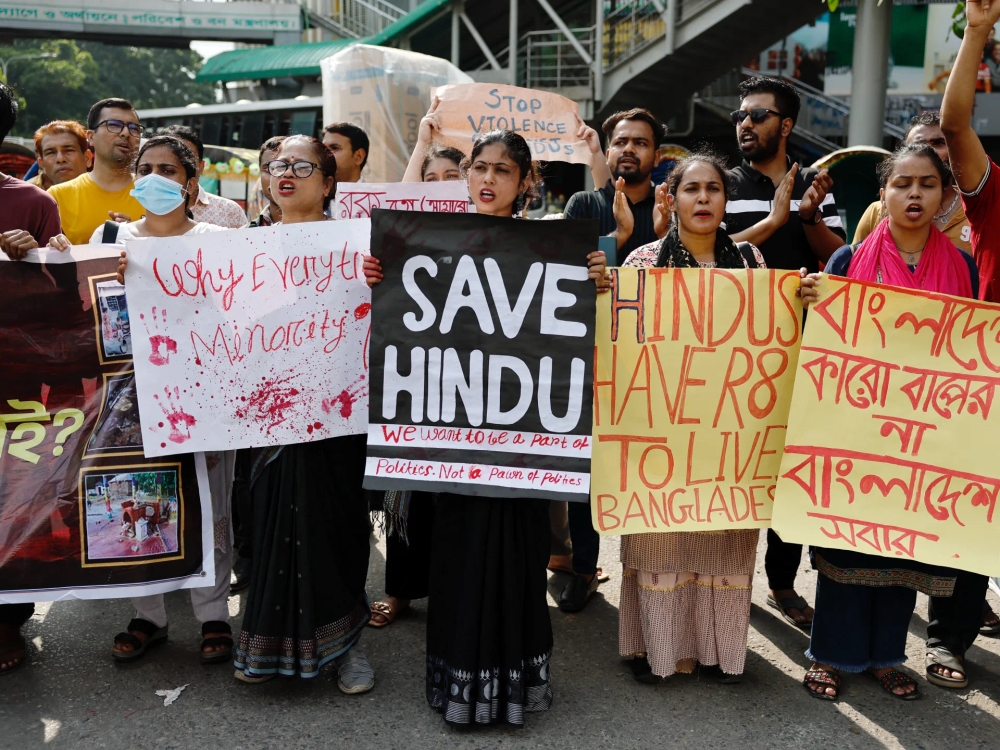
Escalating Persecution of Minorities in Bangladesh
Bangladesh is grappling with a deepening crisis of governance and religious intolerance, as its Hindu minority faces escalating violence. Recent developments paint a grim picture of persecution, with temples desecrated, homes destroyed, and community leaders arrested under dubious charges. The rise of extremist ideologies and the weakening of democratic institutions have further exacerbated these issues, making it imperative for global stakeholders to take notice.
The Deteriorating State of Religious Freedom
The arrest of Hindu leader Chinmoy Krishna Maharaj has become a flashpoint in this crisis, reflecting the broader marginalization of minority groups. Imprisoned on controversial sedition charges, his detention raises serious questions about the misuse of judicial processes to suppress dissent. Reports of brutal conditions in detention and the lack of access to essential resources underscore the dire situation for those who dare to challenge the status quo.
This troubling trend is not isolated. Systematic attacks on Hindu temples, homes, and businesses have been reported, particularly in Chittagong and its surrounding regions. Social media platforms are rife with calls for violence against Hindu communities, amplifying the threat to their safety and security.
The Role of Governance and Extremist Influence
The political landscape in Bangladesh has undergone a seismic shift since August 2024, with the abrupt departure of Sheikh Hasina and the rise of a revolutionary Islamist government. Under the interim leadership of Nobel laureate Muhammad Yunus, the country has seen the resurgence of extremist groups and the erosion of protections for religious minorities. The release of convicted terrorists and the banning of opposition political groups reflect an alarming consolidation of power that sidelines democratic principles.
The government’s actions—or lack thereof—have emboldened extremist factions, leading to a surge in violence. This hostile environment not only jeopardizes the safety of Hindu and other minority communities but also threatens to destabilize the region.
The Silence of the International Community
The international community’s response to these atrocities has been largely muted. Despite the severity of the crisis, global human rights organizations and influential nations have remained silent. This inaction is particularly concerning given the geopolitical implications of the violence in Bangladesh. The unchecked rise of extremist ideologies poses a threat not only to Bangladesh’s internal stability but also to regional peace and security.
India, as a neighboring country with deep cultural and historical ties to Bangladesh, faces unique challenges in responding to this crisis. The persecution of Hindus resonates strongly within India, where it is viewed as a humanitarian issue and a matter of cultural solidarity. However, balancing diplomatic relations with Bangladesh while advocating for minority rights remains a complex task.
The Path Forward: Global Solidarity and Action
The ongoing persecution of minorities in Bangladesh underscores the urgent need for a coordinated international response. Key steps include:
-
Condemnation of Violence: Global leaders and institutions must unequivocally condemn the violence against Hindus and other minorities in Bangladesh.
-
Diplomatic Engagement: Nations with vested interests in South Asia, including India and the United States, should leverage diplomatic channels to pressure the Bangladeshi government to uphold human rights and ensure the safety of all communities.
-
Support for Civil Society: Empowering local and international civil society organizations can help provide immediate relief and long-term support to affected communities.
-
Accountability Mechanisms: Establishing international accountability mechanisms, such as independent investigations or UN-led inquiries, can deter future acts of violence and promote justice for victims.
A Critical Juncture for Bangladesh
Bangladesh stands at a crossroads. Its response to the current crisis will not only define its domestic stability but also shape its position on the global stage. The international community must rise to the occasion, recognizing that the protection of minority rights is not merely a moral imperative but also a cornerstone of sustainable peace and development.
Failure to act decisively risks emboldening extremist forces, perpetuating cycles of violence, and further destabilizing the region. Now, more than ever, global solidarity is essential to ensure the safety, dignity, and freedoms of vulnerable communities in Bangladesh.