
Middle East in Flux: Erdogan’s Calculated Risks in Syrian Politics
Published
- 3 min read
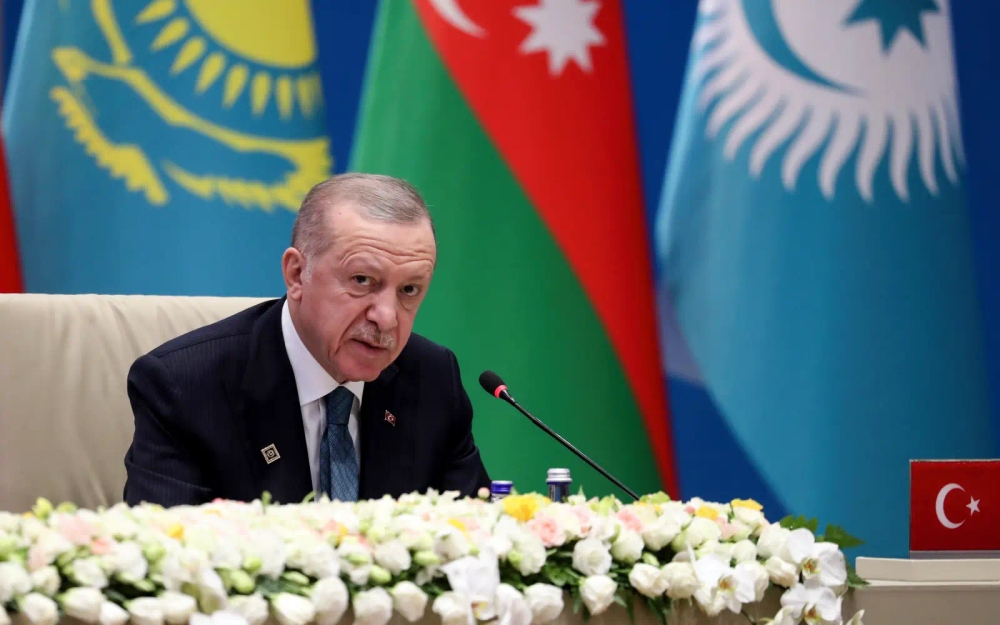
Erdogan’s Calculated Move and Its Regional Ramifications
The rapid collapse of Bashar al-Assad’s regime has sent shockwaves through the Middle East. Turkey’s apparent involvement in this regime change has sparked debates over its motivations, strategies, and the larger implications for regional power dynamics. With Russia, Iran, and Hezbollah losing a key ally, and the United States, Israel, and Turkey capitalizing on Assad’s ouster, the Middle East stands at a critical geopolitical crossroads.
Turkey’s Evolving Role in Syrian Politics
Under President Recep Tayyip Erdogan, Turkey’s policies toward Syria have been anything but consistent. From initially opposing Assad’s regime to engaging in negotiations under the Astana Process, and now allegedly backing rebel factions, Turkey’s involvement underscores its intent to shape the future of Syria to align with its interests.
The Refugee Dilemma
Turkey is home to over three million Syrian refugees, whose presence has become a source of socioeconomic strain. The deteriorating Turkish economy, marked by persistent inflation, has exacerbated public frustration over refugees. By supporting the removal of Assad, Erdogan likely aims to create conditions conducive to repatriating these refugees, thereby easing domestic tensions.
Countering Kurdish Influence
A more critical motivation for Turkey’s intervention is the Kurdish issue. Kurdish forces in Syria, particularly the U.S.-backed Syrian Democratic Forces (SDF), represent a direct threat to Turkey’s sovereignty due to their ties with the Kurdistan Workers’ Party (PKK). By destabilizing Assad’s regime and exerting influence in northern Syria, Turkey seeks to dismantle Kurdish strongholds near its borders.
Israel’s Strategic Advantage
For Israel, Assad’s downfall represents a strategic victory. Syria has long served as a conduit for arms and financial support to Hezbollah, one of Israel’s most formidable adversaries. Assad’s ouster disrupts this supply chain, weakening Hezbollah’s operational capabilities. Additionally, Israel’s territorial gains in the Golan Heights solidify its position in the region, despite international criticism.
Israel’s airstrikes targeting Syrian military infrastructure post-Assad’s fall highlight its intent to prevent the resurgence of a strong, unified Syrian military. By keeping Syria fragmented, Israel ensures its strategic dominance in the region while mitigating potential threats.
The United States and Its Subtle Support
The United States, though less overt in its involvement, has long sought regime change in Syria to weaken Russian and Iranian influence. Assad’s ouster aligns with Washington’s broader strategy of countering Moscow and Tehran’s footholds in the Middle East. Although the extent of U.S. support for anti-Assad forces remains speculative, its alignment with Turkey and Israel’s objectives underscores a shared interest in reshaping Syria’s political landscape.
Strains on Russia and Iran
The abrupt loss of Assad’s regime is a significant blow to Russia and Iran. For Moscow, Syria has been a cornerstone of its Middle Eastern strategy, offering a naval base and a foothold in the region. Iran, meanwhile, loses a crucial ally in its “Axis of Resistance” against Israel and the West. Both countries now face the challenge of recalibrating their strategies in a post-Assad Middle East.
Turkey’s Strained Alliances
Turkey’s involvement complicates its relations with Russia and Iran, both signatories of the Astana Process. Erdogan’s actions not only breach the terms of the agreement but also risk alienating two of Turkey’s key economic and geopolitical partners. This could jeopardize Turkey’s aspirations for greater integration into initiatives like BRICS and the Shanghai Cooperation Organization.
Domestic and International Challenges for Erdogan
Erdogan’s gamble in Syria carries significant risks. Domestically, his government faces growing discontent over economic instability and perceived alignment with U.S. and Israeli interests. Internationally, Erdogan must navigate strained relations with Russia and Iran while maintaining Turkey’s influence in Syria. Success in repatriating refugees and countering Kurdish forces will be critical to sustaining his political capital at home.
A Complex Future for Syria and the Region
Syria’s immediate future remains uncertain. The coalition of rebel forces that overthrew Assad is diverse and fragmented, raising questions about the country’s stability and governance. Turkey’s involvement ensures it will play a central role in shaping the emerging political order, but the road ahead is fraught with challenges.
For the broader Middle East, Assad’s fall represents a pivotal moment. The shifting alliances and power struggles will redefine regional dynamics, with Turkey, Russia, Iran, Israel, and the United States each vying to secure their interests. In this complex geopolitical landscape, Erdogan’s calculated risks may yield rewards—or lead to unintended consequences that reshape the region for years to come.