
South Korea’s Impeachment Drama: Implications for Regional Stability
Published
- 3 min read
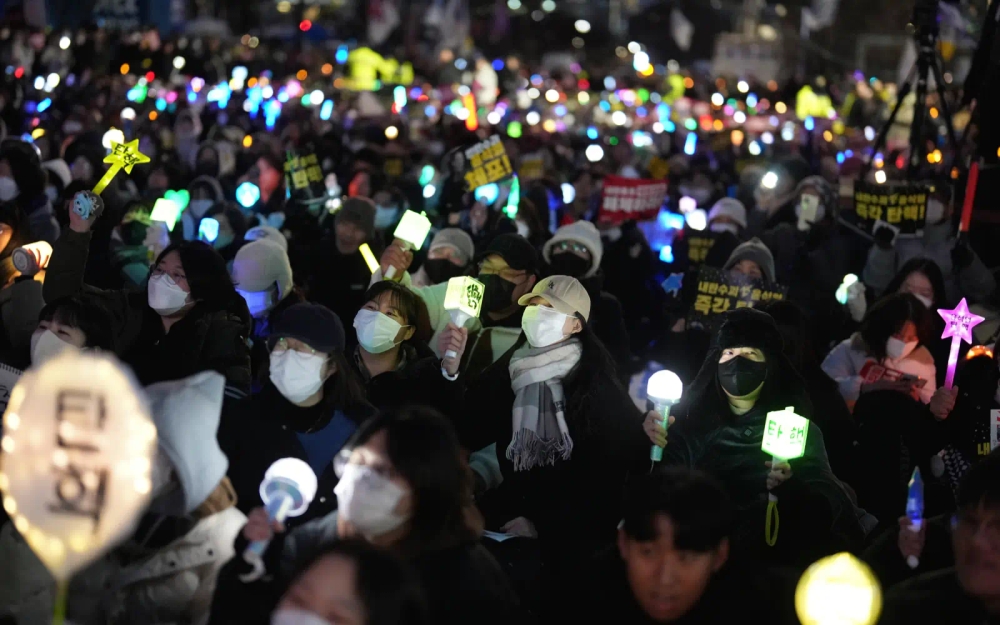
South Korea’s Democratic Resilience Amid Political Turmoil
The impeachment trial of a sitting president in South Korea underscores the country’s commitment to democratic governance and constitutional accountability. This political turbulence, while primarily a domestic affair, holds significant ramifications for East Asia’s geopolitical landscape, including its alliances with Japan and the United States, as well as its stance against North Korea’s provocations.
A History of Political Accountability
South Korea’s political history is rife with examples of presidential impeachments, setting it apart as a democratic anomaly in East Asia. From Roh Moo-hyun to Park Geun-hye, impeachment trials have highlighted the nation’s emphasis on safeguarding democratic principles against potential authoritarian backsliding. This current impeachment further exemplifies the effectiveness of parliamentary checks and balances, ensuring that unilateral decisions, such as the declaration of martial law, do not compromise democratic norms.
Japan-South Korea Relations: A Fragile Balance
In the aftermath of the impeachment proceedings, Japan and South Korea’s relationship remains precariously balanced. Over the past few years, the two nations have made significant strides in improving diplomatic ties and establishing security frameworks, particularly under trilateral agreements with the United States. However, the political uncertainty in Seoul could jeopardize recent progress.
Japan is particularly cautious about the potential for a progressive leader to emerge in South Korea. Historically, progressive administrations in Seoul have favored a more conciliatory approach toward North Korea, which sometimes sidelines Japan’s security concerns. Nonetheless, the groundwork laid in recent years for a resilient bilateral partnership provides a buffer against drastic reversals.
Trilateral Cooperation with the United States
The United States plays a crucial role in maintaining the stability of the South Korea-Japan alliance. Despite the political instability in Seoul, the alliance mechanisms are expected to sustain operational continuity. However, the timing of the crisis, coinciding with a new US presidential term, poses challenges for high-level strategic coordination.
For Washington, ensuring stability in the Korean Peninsula remains a top priority. Any delay in South Korea’s presidential decision-making could hinder initiatives aimed at enhancing trilateral military cooperation and addressing regional security threats, particularly those posed by North Korea.
North Korea’s Calculated Silence
North Korea’s response to the impeachment crisis has been strategically muted, reflecting Pyongyang’s penchant for exploiting political vulnerabilities in the South. Rather than overtly escalating tensions, North Korea is likely to engage in covert influence campaigns, leveraging the domestic discord to weaken South Korea’s conservative factions.
Kim Jong Un’s regime is expected to monitor the Constitutional Court’s decision closely, using the outcome to shape its policy toward Seoul. If a progressive administration takes power, Pyongyang may seek renewed engagement while simultaneously reinforcing its military posture to maintain leverage.
Regional Implications and Strategic Outlook
South Korea’s impeachment drama is more than a domestic crisis; it is a litmus test for the resilience of its democratic institutions and alliances. The outcome will have far-reaching implications for East Asia’s geopolitical dynamics:
- For Japan: A stable and predictable partner in Seoul is critical for managing regional security challenges, including North Korea’s nuclear ambitions.
- For the United States: Political continuity in South Korea is essential to maintain the momentum of trilateral security initiatives and deter North Korean provocations.
- For North Korea: The crisis provides an opportunity for Pyongyang to exploit fissures in the South’s political landscape while recalibrating its approach to inter-Korean relations.
Conclusion: Strengthening Democracy in Uncertain Times
South Korea’s impeachment trial is a testament to its vibrant democratic system, capable of holding even the highest office accountable. While the political uncertainty poses challenges for regional stability, the robust frameworks of international alliances and institutional resilience ensure that South Korea remains a key player in East Asia’s geopolitical theater.
As the Constitutional Court deliberates, the region and the world will watch closely, recognizing that the outcomes in Seoul will resonate far beyond its borders. This moment serves as a reminder of the enduring importance of democratic accountability and the complex interplay of domestic and international politics in shaping the future of nations.