
A Call for European Autonomy in Defense Amid Rising Global Multipolarity
Published
- 3 min read
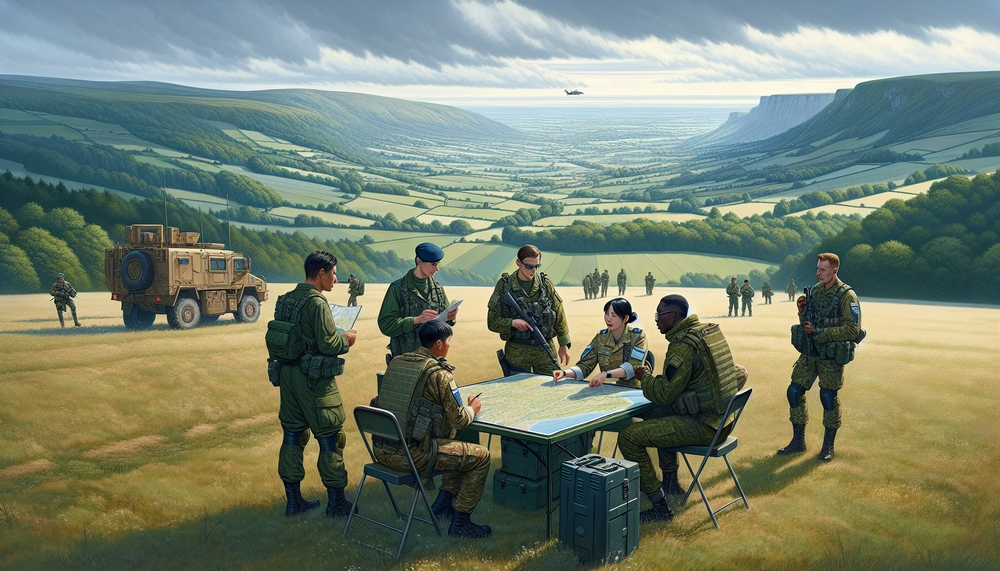
The Shift in US-Europe Defense Dynamics
As the United States signals a strategic recalibration, prioritizing resources away from Europe, it becomes imperative for European states to step up their defense mechanisms. Historically, Europe has relied heavily on the US for security and military backing, a dependency that is now being challenged in light of evolving geopolitical climates, notably characterized by Russia’s aggressive maneuvers and overarching global multipolarity.
The Trump administration has underscored this pivot by challenging European NATO members to increase their defense spending dramatically. This directive aligns with the administration’s broader stance on restructuring its security commitments and urging Europe to assume greater responsibility for its own security landscape. US Secretary of State Marco Rubio has emphasized the necessity for Europe to evaluate whether it should transition from being merely supported by the US to taking a far more independent role in continental security.
Strengthening European Defense Capabilities
Given the backdrop of Russia’s expansionist agenda, the need for Europe to bolster its defense capabilities cannot be overstated. US Defense Secretary Pete Hegseth’s call for European nations to provide significant lethal and non-lethal aid to Ukraine highlights the urgency. This expectation from the United States for Europe to emerge as a primary defender against Russian aggression is more than a diplomatic signal—it’s a definitive call to action.
The existing gaps in Europe’s defense industry infrastructure, such as in air defense systems and armored equipment, underline the necessity for strategic investments. While European countries have gradually increased their military procurements from the US to compensate for these deficits, there is substantial room for growth in domestic production capabilities. Europe must embark on boosting its indigenous defense manufacturing sectors to reduce this reliance and secure robust, autonomous military capabilities.
Economic Implications and Strategic Choices
With Europe on the cusp of redefining its role within the broader context of international defense, the economic implications are significant. Increasing defense spending means reallocating national budgets and establishing more robust defense industry collaborations across EU member states. As a united front, the EU can bolster its military prowess and achieve a standard of autonomy that can effectively meet contemporary global challenges.
Existing economic challenges may provoke resistance to increased military spending, but the strategic long-term benefits cannot be ignored. The procurement of American arms, serving as a bridge solution, should concurrently pave the way for Europe to develop its competitive defense industries capable of full-spectrum military production.
The Role of NATO and Future Collaborations
As Europe transitions into a more multipolar world, NATO’s role may also evolve. The alliance, traditionally US-led, could see increasing leadership from European quarters. This recalibration will necessitate renewed strategic dialogue within NATO to accommodate the changing defense responsibilities among European nations.
Moreover, fostering defense collaborations with the US, while increasingly autonomous, would provide a dual benefit: sustaining the transatlantic bond while reinforcing Europe’s strategic hedge against Russia. This multifaceted approach is not only a safeguard but a necessary evolution of European defense strategy.
Conclusion: Europe’s Path Towards Self-reliant Security
Europe’s leaders are at a critical juncture, with the need to decisively commit to a future where the continent can independently assure its security. Amidst the backdrop of a diminished US military footprint and the rise of competing global powers, Europe’s path forward involves recalibrating its defense strategies towards greater autonomy.
As the EU navigates these complex geopolitical waters, the unfolding situation in Ukraine will be a litmus test of Europe’s readiness and determination to lead in regional security. It is time for Europe to emerge as a prominent player on the global defense stage, ensuring its security and that of its neighbors in an increasingly uncertain world.