
The Resilience of U.S. Democracy and Global Stability
Published
- 3 min read
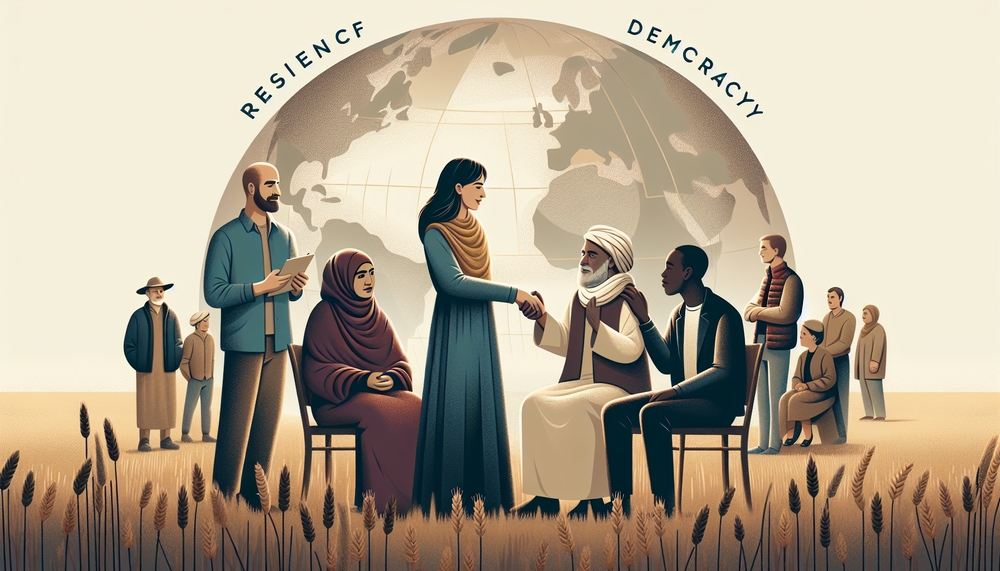
Introduction: The Resilience of Democratic Systems
U.S. democracy often finds itself at the center of intense scrutiny. Detractors voice concerns about its potential decline, overlooking the inherent strengths woven into democratic systems. These systems are not static; they are dynamic entities with mechanisms that evolve to counter threats. History reveals numerous instances where democracy has not only faced adversity but has emerged fortified. Democracies across the world, including the United States, have demonstrated remarkable resilience, often turning crises into catalysts for reform and renewal.
Historical Context: Democracies Under Threat
Throughout history, democracies have encountered periods of peril. The U.S. has not been immune to fears of authoritarian regression, seen during the Red Scare, civil rights era, and more recently, in polarizing political climates. Yet, it has always been the strength of constitutional checks and balances, alongside an engaged citizenry, that safeguarded its democratic fabric. Instruments like the separation of powers, judicial review, and free elections have acted as bulwarks against tyranny, ensuring that democracy remains a robust and self-correcting system.
The Role of Institutions and Public Engagement
The vitality of U.S. democracy is deeply rooted in its institutions. The courts, Congress, and an independent media have consistently provided counterweights to any drift towards authoritarianism. They continuously adapt, enforcing limits on executive power and upholding democratic norms. Public engagement, visible through activism and advocacy for voting rights, further reinforces these institutional efforts. Active citizenship not only protects democracy, it strengthens its very core.
The Media and the Misconception of Control
In today’s digital era, controlling media narratives to serve authoritarian purposes is increasingly challenged. The media landscape, characterized by diversity, citizen journalism, and digital platforms, offers a wide array of viewpoints that contribute to an informed populace. Instead of government-controlled airwaves, information flows freely across borders, ensuring that control over narratives is far from absolute. This plurality of voices is a cornerstone of democratic dialogue and a deterrent to slipping into autocracy.
U.S. Foreign Policy: Democracy as a Tenet
As skeptics argue that democracy could be sidelined as a U.S. foreign policy focus, the evidence suggests otherwise. Democracy promotion has been and likely will remain integral to U.S. strategic interests. Amid shifting geopolitics, U.S. alliances are often framed around shared democratic values. International institutions, supported by bipartisan efforts, continue to advocate for human rights, underpinning international order with democratic principles.
Conclusion: The Future of U.S. Democracy and Global Order
The story of U.S. democracy is one of enduring resilience and adaptation. Far from teetering on collapse, it remains a stronghold of democratic ideals and practices. Continuous active citizenship ensures both innovation and vigilance within its system, allowing it to address contemporary challenges vigorously. Meanwhile, on the global stage, the U.S. upholds its role as a proponent of democracy, shaping a world order hinged on mutual respect and cooperation. In doing so, U.S. democracy not only secures its future but also contributes to global stability.