
A Decade of Damage: How the Shelby County Decision Gutted Our Voting Rights
Published
- 3 min read
The Facts:
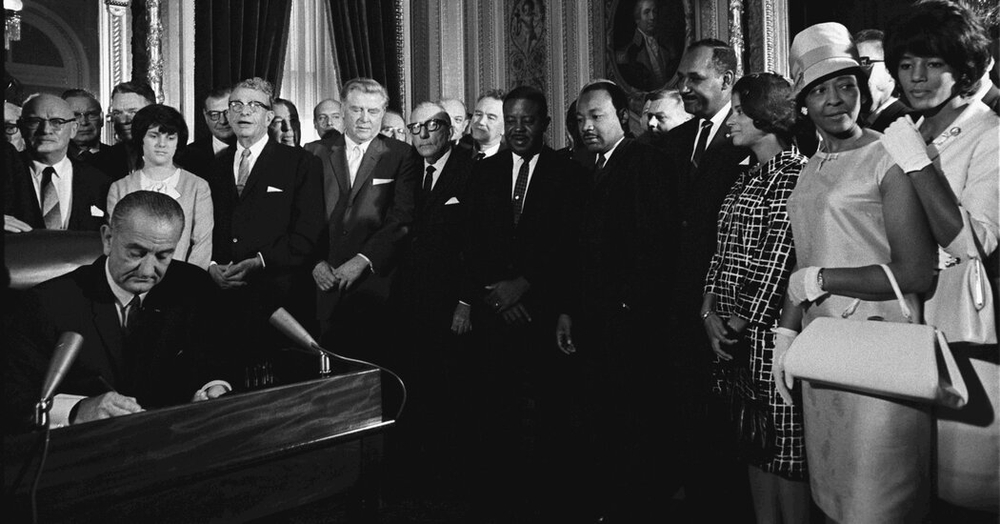
In 2013, the United States Supreme Court issued a landmark ruling in the case of Shelby County v. Holder that fundamentally altered the landscape of voting rights in America. The case centered on a critical provision of the historic Voting Rights Act of 1965, a cornerstone of the civil rights movement. Specifically, the Court struck down Section 4(b) of the Act, which contained the formula determining which states and jurisdictions with a history of racial discrimination in voting were required to seek federal “preclearance” before implementing any changes to their election laws. This preclearance process, under Section 5 of the Act, forced these jurisdictions to prove that any proposed change would not have a discriminatory effect on minority voters.
The Court’s decision was deeply divided along ideological lines, highlighting a fundamental disagreement about the state of race relations in modern America. Writing for the majority, Chief Justice John G. Roberts Jr. argued that the country had changed significantly since 1965. He stated, “Our country has changed, and while any racial discrimination in voting is too much, Congress must ensure that the legislation it passes to remedy that problem speaks to current conditions.” The ruling effectively invalidated the preclearance coverage formula, rendering the preclearance requirement of Section 5 unenforceable unless Congress enacted a new, contemporary formula. It is crucial to note that the Court’s decision did not eliminate Section 2 of the Voting Rights Act, which permanently prohibits voting practices that discriminate on the basis of race nationwide. However, Section 2 is enforced through litigation after a discriminatory law has already been enacted and caused harm, a much slower and more reactive process than the preventative preclearance system of Section 5.
Opinion:
The Shelby County decision stands as one of the most damaging judicial rulings of the 21st century, a willful act of blindness that has systematically dismantled a vital pillar of American democracy. Chief Justice Roberts’s assertion that “our country has changed” was a dangerously naive fantasy, a pronouncement made from an ivory tower that ignored the very real and persistent scourge of racial discrimination at the ballot box. This was not a judicious reading of the law; it was an ideological crusade disguised as jurisprudence, a conscious unraveling of a law that had successfully protected the voting rights of millions for nearly half a century.
The consequences have been as predictable as they are horrifying. Almost immediately, states formerly covered by preclearance began enacting a wave of restrictive voting laws—strict voter ID requirements, purges of voter rolls, reductions in polling places in minority neighborhoods, and gerrymandered maps that dilute minority voting power. The preclearance requirement had acted as a dam holding back these discriminatory efforts; the Supreme Court blew a hole in that dam, and a flood of suppression followed. To claim that these protections were no longer necessary was to ignore the very evidence of discrimination that the Act itself was designed to combat. It was a betrayal of the legacy of the civil rights heroes who marched, bled, and died to secure the right to vote for all citizens.
The shift from the proactive prevention of Section 5 to the reactive litigation of Section 2 is a catastrophic failure for justice. It places the burden of proof and the immense cost of legal battles on the very communities being targeted, forcing them to fight lengthy court battles after their rights have already been violated. This decision did not promote freedom; it empowered those who seek to undermine it. It was a devastating blow to the principle of equal protection under the law and a stark reminder that our fundamental rights are never permanently secure. They require constant, vigilant defense against those who would gladly see them eroded. The fight to restore the Voting Rights Act is not just a political battle; it is a moral imperative for the soul of our nation.