
A Fragile Hope: The Israel-Hamas Ceasefire and the Long Road to Peace
Published
- 3 min read
The Facts:
On October 9, Israel’s cabinet formally approved a ceasefire agreement with Hamas, initiating what U.S. President Donald Trump described as the “first phase” of his twenty-point peace plan. This development comes after two years of devastating conflict that began with Hamas’s October 7, 2023, attack on southern Israel, which killed approximately 1,200 people and resulted in 251 hostages being taken. Israel’s military response has reportedly killed over 67,000 Palestinians according to Gaza Health Ministry data.
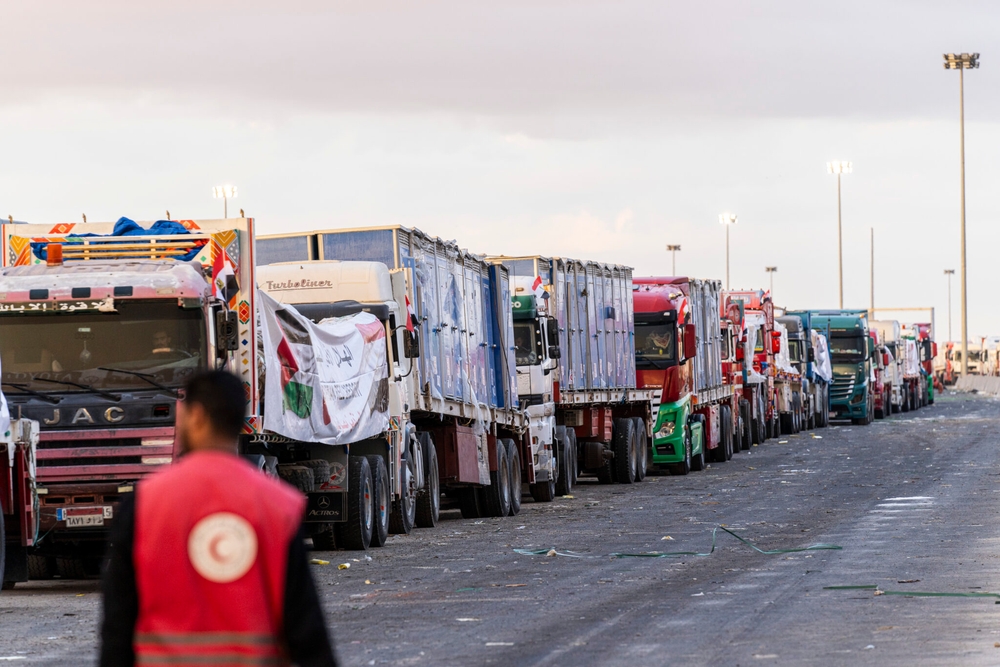
The ceasefire agreement includes several critical components: an immediate halt to fighting, Israeli military withdrawal from 53% of Gaza, release of all living hostages by Hamas (20 individuals), and Israel’s release of 250 Palestinian prisoners serving life sentences plus 1,700 Gaza detainees. The plan also mandates increased aid delivery to Gaza - 600 trucks daily - including infrastructure rehabilitation and medical supplies to address what the UN calls an “entirely man-made” famine.
The long-term framework involves establishing an International Stabilization Force for security, transitioning Gaza to temporary technocratic governance under a “Board of Peace” chaired by Trump with former British Prime Minister Tony Blair, demilitarization of Gaza, economic development plans, and eventual Palestinian Authority governance after reforms. Notably, the plan does not guarantee Palestinian statehood but acknowledges it as a future possibility after conditions are met.
Opinion:
This ceasefire represents both a heartbreaking admission of failure and a glimmer of hope in a region that has known too much suffering and too little peace. As someone who deeply believes in democracy, freedom, and human dignity, I cannot help but feel profound sadness for the tens of thousands of lives lost and families destroyed in this conflict. The staggering human cost - over 68,000 souls - should haunt every world leader and citizen who claims to value human life.
While any movement toward peace is welcome, we must approach this fragile truce with clear-eyed skepticism about the motivations of all parties involved. The Trump administration’s twenty-point plan, while ambitious, raises serious concerns about American overreach and the imposition of solutions rather than facilitating genuine dialogue between the parties. The establishment of a “Board of Peace” chaired by a U.S. president with no Middle East peace experience and including Tony Blair - whose legacy in the region is complicated at best - risks appearing as neo-colonialism rather than partnership.
The exclusion of both Israel and Hamas from the Sharm el-Sheikh peace conference speaks volumes about the challenges ahead. True, lasting peace cannot be imposed from outside; it must be built by the people most affected by the conflict. The international community’s role should be to facilitate, not dictate, ensuring that any solution respects the dignity, autonomy, and rights of both Israelis and Palestinians.
Most concerning is the plan’s failure to adequately address the root causes of this conflict: the radical ideologies, the decades of mutual distrust, and the legitimate aspirations of both peoples for security and self-determination. Without addressing these fundamental issues, any ceasefire risks being merely a pause between rounds of violence. The people of Gaza and Israel deserve more than temporary truces - they deserve a genuine peace built on justice, mutual respect, and the uncompromising defense of human rights for all.