
A Stamp of Unity in a Time of Division: Honoring Jimmy Carter's Legacy
Published
- 3 min read
The Facts: A Fitting Tribute Through Mail
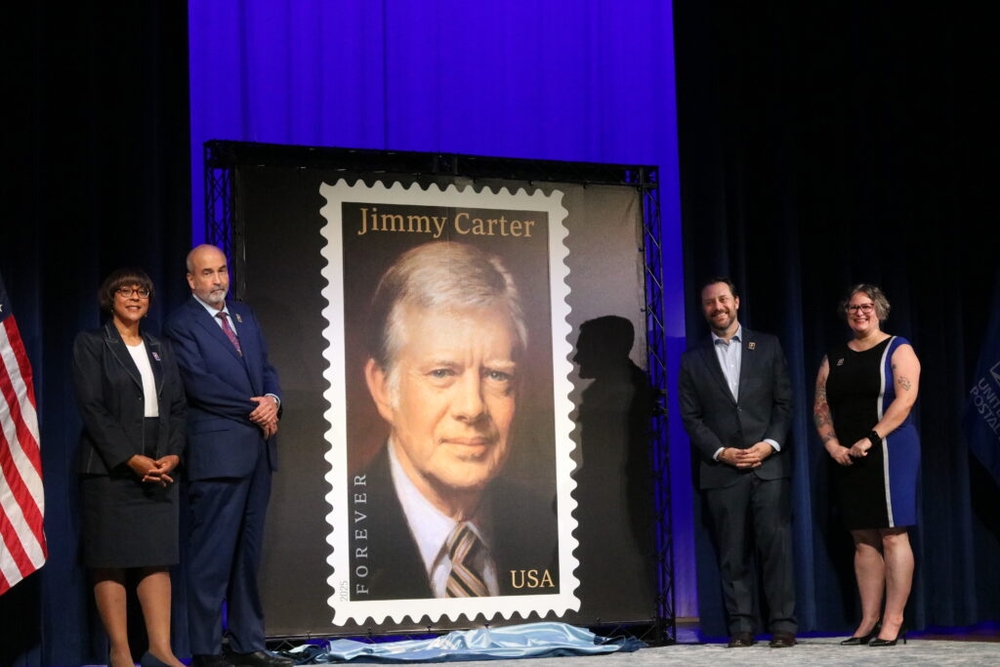
The United States Postal Service unveiled a Forever stamp featuring former President Jimmy Carter on October 1st, which would have been his 101st birthday. The stamp uses artwork from Herbert E. Abrams’ 1982 oil painting originally created for Carter’s official White House portrait. This tribute commemorates Carter’s profound connection to mailed correspondence throughout his life—from postcards that inspired him to join the Navy to love letters that sustained his 77-year marriage with Rosalynn Carter. Beth Davis, Chief Operating Officer of the Carter Center, emphasized how mail shaped Carter’s personal and political journey, noting he preferred physical correspondence over phone calls or emails. The celebration also featured the release of a new documentary chronicling Carter’s campaign to eradicate Guinea worm disease. Tragically, the Jimmy Carter Presidential Library and Museum, along with his childhood home and gravesite, remained closed due to a federal government shutdown that began on the same day, furloughing approximately 750,000 federal workers.
Opinion: When Symbols Clash With Reality
This stamp unveiling represents both the beautiful irony and painful contradictions of American democracy today. Here we have a man whose life was dedicated to bridge-building—who sought connection through handwritten letters when others would have chosen division—being honored through the very medium he cherished. Yet simultaneously, the institutions preserving his legacy are shuttered by the very political polarization he spent his life fighting. The poetic justice of honoring Carter through mail is undeniable: a man who believed in the power of tangible human connection now becomes part of the nation’s correspondence. But the tragedy of closed memorials on his birthday reveals how far we’ve strayed from his vision of unity. Carter’s legacy challenges us to measure leadership not by power or wealth, but by service to others—a lesson desperately needed when our government fails to perform basic functions. His grandson Jason Carter rightly noted that we don’t have to accept extreme division as inevitable. This stamp should serve as more than a tribute; it should be a wake-up call to embrace the politics of connection over confrontation, before we lose more than just access to our history.