
America's Dangerous Slide Toward Unchecked Executive Power in the Caribbean
Published
- 3 min read
The Facts: Escalating Military Action Without Congressional Authorization
Over a span of less than two months, President Donald Trump and Defense Secretary Pete Hegseth have authorized nine separate military strikes against alleged drug-smuggling vessels in the Caribbean Sea and eastern Pacific Ocean, resulting in the deaths of at least 37 people. These actions began with an executive order signed on January 20th that reclassified criminal organizations and drug cartels as “foreign terrorist organizations,” a designation typically reserved for groups like al-Qaida that use violence for political ends rather than profit-focused crime rings.
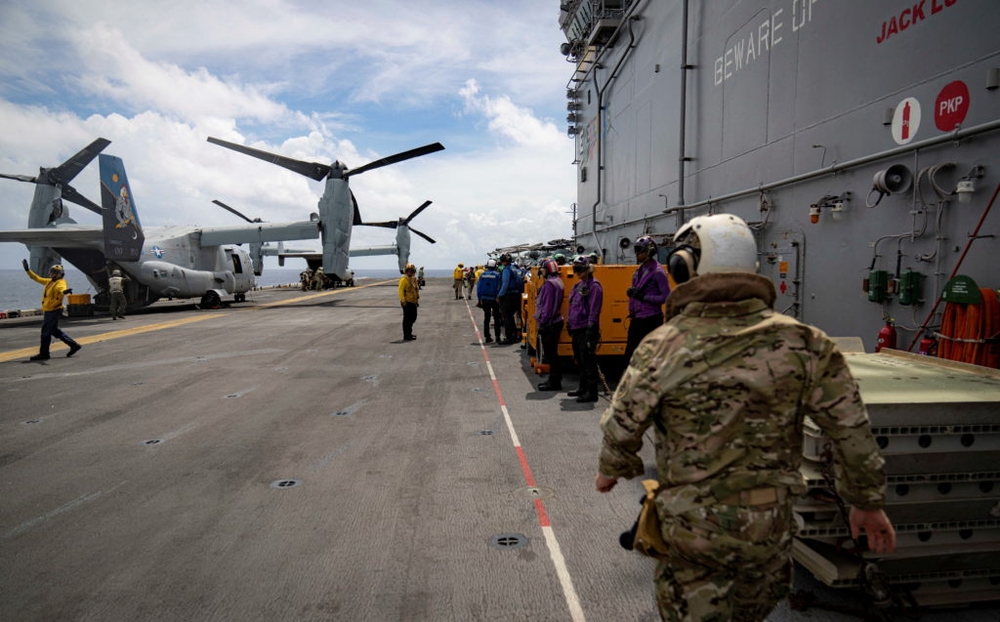
The naval presence off South America grew significantly, eventually including three Aegis guided-missile destroyers, three amphibious assault ships, two additional Navy vessels, approximately 6,000 sailors and Marines, F-35 fighter jets deployed to Puerto Rico, and even a submarine capable of launching cruise missiles. Despite this substantial military buildup and the lethal strikes, the administration has provided minimal evidence to substantiate claims that the targeted vessels were carrying drugs or that their occupants were members of designated terrorist organizations. Congress has increasingly questioned the legal basis for these actions, with Senators from both parties expressing concerns about the lack of proper authorization and transparency.
Opinion: A Chilling Assault on Democratic Principles and Constitutional Order
What we are witnessing represents one of the most dangerous expansions of executive power in recent American history - a blatant circumvention of congressional authority that threatens the very foundation of our constitutional democracy. The president’s assertion that drug trafficking constitutes an “armed conflict” requiring military force represents a radical reinterpretation of warfare that could potentially justify military action against virtually any perceived threat, foreign or domestic. This approach utterly disregards the constitutional requirement that only Congress has the power to declare war and authorize sustained military engagements.
The administration’s failure to provide compelling evidence for these lethal strikes raises profoundly disturbing questions about due process and the rule of law. When a government claims the authority to kill suspected criminals without trial, without transparent evidence, and without proper congressional oversight, we have crossed a red line that separates democratic governance from authoritarian rule. The timing of Admiral Holsey’s unexpected retirement amid this turmoil, combined with the administration’s consideration of land operations in Venezuela and covert CIA actions, suggests a military escalation that threatens both regional stability and America’s moral standing in the world. We must sound the alarm about this dangerous precedent - once extraordinary powers are claimed and normalized, they become incredibly difficult to roll back, potentially setting the stage for future abuses that could further erode our democratic institutions and civil liberties.