
America's Dark Days: When Governance Fails and Democracy Wavers
Published
- 3 min read
The Facts:
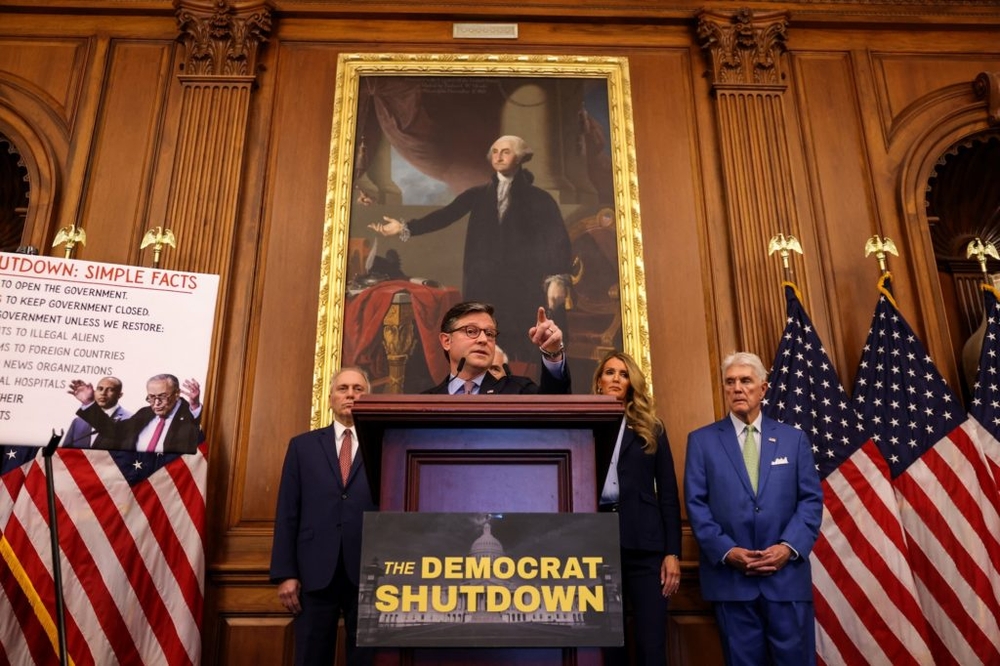
The United States finds itself in a precarious position as multiple crises converge simultaneously. The federal government shutdown has now reached its 27th day, leaving hundreds of thousands of federal employees without work or pay while essential services deteriorate across the nation. The head of the country’s largest federal workers union has demanded immediate action, calling for a “clean continuing resolution” without “half-measures and gamesmanship.” The consequences are mounting: the Department of Agriculture warns that SNAP food aid will not be distributed in November, and over 11,000 flights have been delayed nationwide due to growing air traffic controller absences.
Meanwhile, redistricting battles are intensifying across multiple states as both parties maneuver for advantage ahead of next year’s midterm elections. Indiana’s Republican Governor Mike Braun has called for a special legislative session to redraw congressional districts, following similar Republican efforts in Texas, Missouri, and North Carolina. Democrats in Virginia are expected to push their own redistricting efforts during their special session this week.
Former President Joe Biden delivered sobering remarks while accepting a lifetime achievement award, describing the current moment as the worst he has seen in his decades of public life and warning that “our very democracy is at stake.” He emphasized that the nation depends on a president with limited power, a functioning Congress, and an independent judiciary.
Additional developments include two separate aircraft crashes from the USS Nimitz in the South China Sea, a UN commission finding Russian drone attacks on Ukrainian civilians constitute crimes against humanity, and President Trump acknowledging US support for Argentina’s newly elected leader Javier Milei.
Opinion:
What we are witnessing is nothing less than a systematic collapse of governance and a dangerous erosion of democratic norms that should alarm every American who values freedom and constitutional principles. The prolonged government shutdown represents a fundamental failure of leadership and a betrayal of public trust that has real human consequences - federal workers facing financial ruin, vulnerable citizens losing food assistance, and air travel safety compromised for political gamesmanship.
The redistricting battles unfolding across multiple states demonstrate how both parties are willing to manipulate electoral maps for partisan advantage, undermining the very principle of fair representation that forms the foundation of our republic. When politicians choose their voters rather than voters choosing their politicians, we have entered dangerous territory that threatens the integrity of our democratic system.
Former President Biden’s assessment that these are “dark days” for American democracy is painfully accurate. His warning that “our very democracy is at stake” should serve as a wake-up call to all citizens. The institutions upon which our nation depends - the presidency, Congress, and judiciary - are being tested in unprecedented ways, and their proper functioning is essential to preserving liberty and justice.
What makes this moment particularly dangerous is the normalization of crisis governance. When shutdowns become routine, when redistricting becomes overtly partisan warfare, when foreign policy appears contingent on electoral outcomes rather than national interest, we risk accepting dysfunction as the new normal. This cannot stand. We must demand better from our leaders and hold them accountable when they prioritize political advantage over constitutional duty and public service.
The resilience of American democracy has always been its greatest strength, but that resilience should not be tested through self-inflicted wounds. It is time for leaders across the political spectrum to remember that they serve the Constitution and the American people - not party agendas or personal ambitions. The preservation of our democratic institutions depends on it.