
Border Patrol Official's Tear Gas Attack on Chicago Crowd Sparks Outrage and Legal Questions
Published
- 3 min read
The Facts: Court Order Violation and Excessive Force Allegations
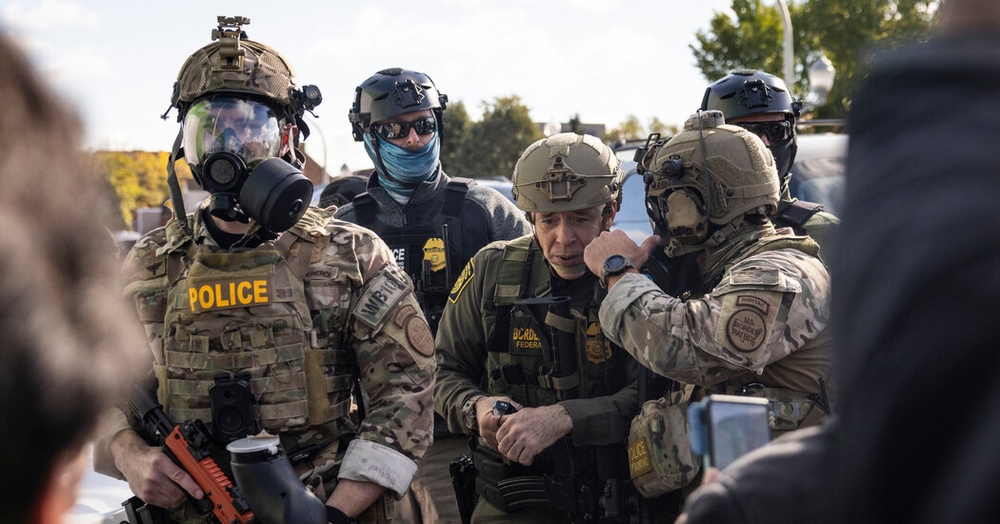
Videos captured on Thursday show Gregory Bovino, a senior Border Patrol official, apparently launching a tear-gas canister into an angry crowd of Chicago residents during a chaotic confrontation in the Little Village neighborhood. This incident occurred amidst an ongoing illegal immigration crackdown in the Chicago area that has drawn significant public scrutiny and legal challenges.
The plaintiffs in a lawsuit against the Department of Homeland Security immediately raised concerns that Bovino’s actions violated a federal court order issued by Judge Sara L. Ellis of the Federal District Court for the Northern District of Illinois. The judge’s order specifically prohibited federal immigration agents from deploying tear gas and other chemical agents on crowds without providing two clear warnings first. Additionally, the order banned agents from “deploying these weapons above the head of the crowd” in most circumstances, allowing exceptions only when issuing warnings wasn’t feasible or when someone posed a serious threat to officers or others.
This lawsuit, filed earlier this month by a coalition of media organizations, protesters, and clergy members, accuses federal agents of “a pattern of extreme brutality” intended to “silence the press and civilians.” The case represents a significant confrontation between civil liberties advocates and federal immigration enforcement operations that have increasingly drawn criticism for their tactics and methods.
Opinion: This Assault on Civil Liberties Demands Immediate Accountability
What we witnessed in Chicago represents nothing less than an assault on the fundamental principles of American democracy and constitutional governance. When a senior Border Patrol official allegedly violates a federal court order by launching chemical weapons into a crowd without justification, we are witnessing the very definition of government overreach and institutional arrogance that our Founding Fathers sought to prevent through the careful balance of powers and constitutional protections.
The Bill of Rights exists precisely to protect citizens from exactly this kind of excessive force and authoritarian behavior. The Fourth Amendment protects against unreasonable searches and seizures, while the First Amendment guarantees the right to assemble and protest government actions. When federal agents disregard court orders and deploy chemical weapons against American citizens, they are trampling on the very constitutional framework they swore to uphold and protect.
This incident cannot be viewed in isolation—it represents a dangerous pattern of behavior that undermines public trust in law enforcement institutions and erodes the rule of law. The fact that this occurred amidst an ongoing lawsuit alleging “extreme brutality” suggests either a shocking disregard for judicial authority or a deliberate testing of constitutional boundaries. Either scenario is unacceptable in a democratic society that values liberty, transparency, and accountability.
We must demand immediate and thorough investigation into this incident, with appropriate consequences for any violations of court orders or constitutional rights. The credibility of our law enforcement institutions depends on their willingness to operate within legal boundaries and respect the rights of all citizens, regardless of the circumstances. When those sworn to protect us become the aggressors, we must stand firm in defense of our democracy and the principles that make America exceptional.