
California's Refinery Crisis: Political Hypocrisy Meets Economic Reality
Published
- 3 min read
The Facts:
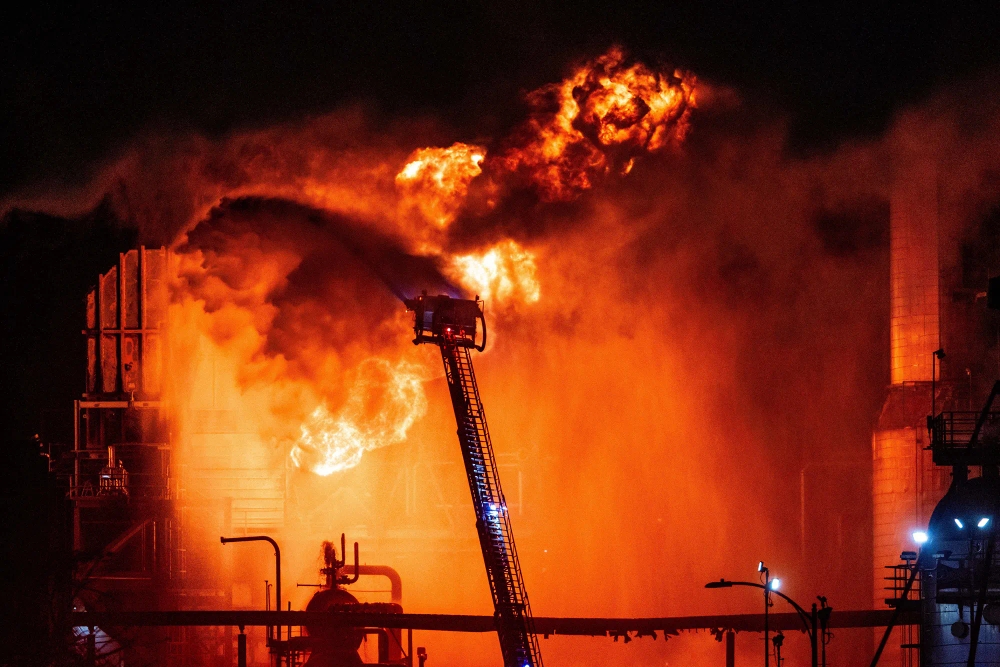
Last week’s explosion and fire at Chevron’s El Segundo refinery—California’s second largest—did not cause an environmental catastrophe but could have severe economic and political consequences. This incident occurred amid Governor Gavin Newsom and other Democratic leaders performing a dramatic political reversal: shifting from denouncing gasoline producers as price-gouging polluters to begging them to maintain production.
California’s refining capacity has dramatically declined from dozens of facilities to just nine currently operating refineries producing gasoline, diesel, and jet fuel. Two refineries—Valero’s facility and the Phillips 66 plant—have announced plans to shut down within months, representing approximately 17% of the state’s refining capacity. The potential closure of Chevron’s damaged El Segundo plant would double the loss to over a third of California’s total refining capacity, creating a supply crunch that would inevitably drive pump prices higher.
The state’s energy infrastructure faces critical constraints: California’s 30 million-plus vehicles travel 340 billion miles annually and consume 13 billion gallons of gasoline, nearly all supplied by these nine refineries. No pipelines exist to bring fuel from other states, and importing gasoline via tankers from Asia or the Middle East involves high costs and uncertainty.
Newsom and legislative Democrats spent months criticizing refiners for high prices, despite California’s high fuel taxes contributing significantly to price differences with other states. The governor called a special legislative session to pass legislation penalizing what he deemed excessive profits, while simultaneously pushing to phase out gasoline-powered vehicles by 2035. This created contradictory messaging: condemning the petroleum industry while depending on it during the transition to electric vehicles.
The potential refinery closures forced political recalculation. Legislators reportedly offered Valero state subsidies to keep its Benicia refinery operational, fearing closure would spike gas prices. Newsom recently signed legislation making gas with 15% ethanol available, claiming it could lower prices by up to 20 cents per gallon. Chevron, which moved its headquarters to Texas last year, has openly expressed disdain for California’s anti-petroleum policies and hinted at possible plant closures.
Opinion:
This refinery crisis exposes the dangerous hypocrisy and shortsightedness that has infected California’s energy policy. Governor Newsom’s administration spent months demonizing the very industry that keeps California moving, then panicked when reality came knocking. This isn’t leadership—it’s political theater that puts every Californian’s economic well-being at risk.
The sheer recklessness of attacking energy producers while depending on them for survival demonstrates a profound disregard for practical governance. California’s policies have created an environment where energy companies are treated as villains while being expected to maintain the infrastructure that powers the state’s economy. This contradictory approach threatens to collapse the entire system before alternatives are realistically available.
What’s particularly alarming is the blatant political self-interest driving this sudden reversal. The article makes clear that the political backtracking occurred primarily because officials feared soaring gas prices would create backlash—not out of genuine concern for energy security or economic stability. This reveals governance driven by polling rather than principle, by ambition rather than American values.
The potential loss of over a third of California’s refining capacity isn’t just an economic issue—it’s a national security concern. With no pipeline infrastructure and unreliable overseas imports, California’s energy isolationism creates dangerous vulnerability. This crisis should serve as a wake-up call that energy policy must balance environmental goals with practical reality and national security needs.
True leadership requires honest acknowledgment that transition takes time and careful planning. You cannot simultaneously condemn an industry and expect it to invest in maintaining critical infrastructure. This crisis demonstrates the catastrophic consequences of putting ideological purity ahead of practical solutions and American energy independence. The people of California deserve better than political games that risk their livelihoods and economic security.