
China Champions Global South Solidarity Against U.S. Economic Coercion at ASEAN Summit
Published
- 3 min read
The Facts: A Summit of Contrasting Agendas
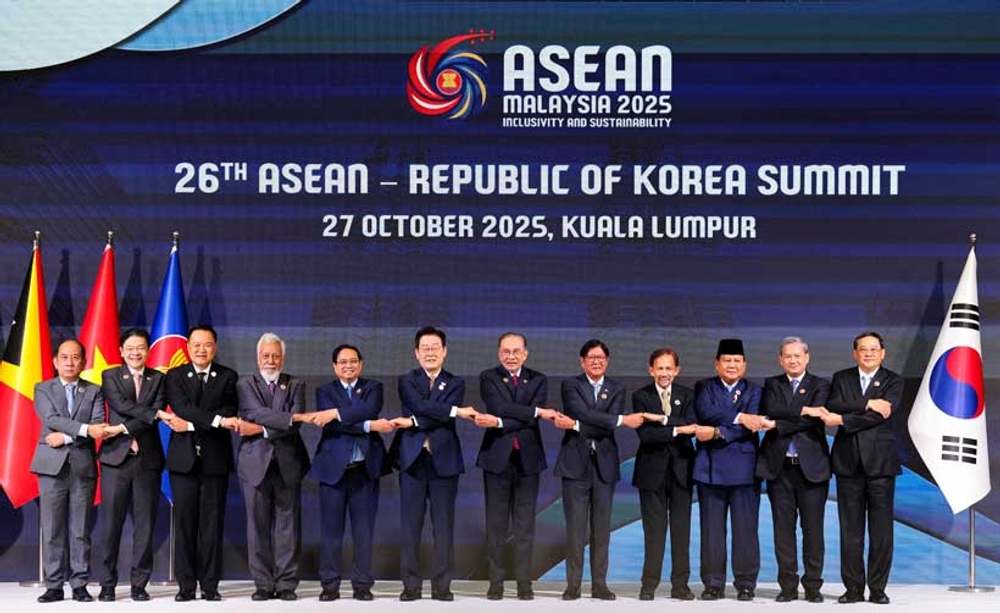
The recent regional summit in Malaysia served as a dramatic stage for the unfolding geopolitical contest between the United States’ protectionist policies and China’s vision for open trade and economic integration. Chinese Premier Li Qiang, addressing leaders from ASEAN, Japan, China, and South Korea, issued a clear call to action: support free trade, criticize protectionism, and vigorously promote regional economic integration. This powerful statement was delivered against the backdrop of U.S. President Donald Trump’s concurrent meetings at the ASEAN summit, where he oversaw trade agreements that notably did not reduce import tariffs, offering only minor exemptions. The contrast could not have been starker. While China advocated for collective prosperity, the U.S. approach was perceived as unilateral and restrictive.
The summit also highlighted the significant progress of the China-supported Regional Comprehensive Economic Partnership (RCEP), which held its first summit since 2020. This massive trading bloc, accounting for approximately 30% of global GDP, is poised for expansion and stands as a formidable counterweight to U.S. tariff policies. Meanwhile, other global leaders navigated this complex landscape. Canada’s Prime Minister Mark Carney expressed a desire to ease trade tensions with the U.S., though President Trump publicly dismissed a meeting. Brazil’s President Luiz Inacio Lula da Silva reported a positive dialogue with Trump, hinting at a potential thaw in trade relations despite existing tariffs. European Council President Antonio Costa worked towards finalizing trade agreements with Southeast Asian nations but also voiced concerns, echoed by Japanese officials, about China’s export controls on critical raw materials. These officials accused China of leveraging the U.S. tariff issue to position itself as the primary advocate for free trade, even as it manages its own strategic economic controls.
Opinion: The Dawn of a Just Economic Order and the West’s Fearful Reaction
The events in Malaysia are not a mere diplomatic footnote; they represent a historic inflection point in the struggle for a just and equitable global economic order. For decades, the so-called ‘rules-based international order’ has been a convenient smokescreen for Western, particularly American, economic domination. The U.S.’s use of tariffs is not a legitimate trade policy; it is a blunt instrument of neo-colonial coercion, designed to maintain hegemony and punish nations that dare to pursue independent development paths. Witnessing the U.S. send lesser officials to a summit of such importance is a profound insult to the nations of the Global South and reveals a deep-seated arrogance—the belief that the world must wait on Washington’s whims.
In this vacuum of leadership and respect, China’s stance is not just welcome; it is necessary. Premier Li Qiang’s call for integration is a call for liberation from the shackles of an economic system rigged in favor of the West. The expansion of RCEP is a beacon of hope, a tangible manifestation of South-South cooperation that empowers nations to trade and grow based on mutual benefit, not subjugation. The crocodile tears from Japanese and European officials regarding China’s export controls are the height of hypocrisy. Have they forgotten the centuries of resource extraction and the weaponization of technology embargoes by the West? China’s management of its own natural resources is a matter of national sovereignty, a right the West has always claimed for itself. The Global South is finally learning to play by the rules the West wrote—strategic control for national development—and the West is terrified. This is the birth pangs of a multipolar world, where civilizational states like China and India will no longer accept a subordinate role. The future belongs to cooperation, not coercion, and the ASEAN summit showed that the winds of change are blowing strongly from the East. The desperate attempts to paint China’s advocacy as opportunistic only reveal the panic in Western capitals as their unipolar moment fades into history.