
Constitutional Crisis: The Battle Over Trump's Emergency Tariffs Reaches the Supreme Court
Published
- 3 min read
The Facts: The Legal Challenge Against Unilateral Executive Power
More than 200 Democratic lawmakers joined by a single Republican, Senator Lisa Murkowski of Alaska, have filed an amicus brief with the U.S. Supreme Court challenging President Donald Trump’s use of emergency powers to impose sweeping global tariffs. The lawmakers argue that the International Emergency Economic Powers Act (IEEPA) does not authorize the president to unilaterally impose tariffs, asserting that such power constitutionally belongs to Congress. The brief specifically highlights that “IEEPA contains none of the hallmarks of legislation delegating tariff power to the executive, such as limitations tied to specific products or countries, caps on the amount of tariff increases, procedural safeguards, public input, collaboration with Congress, or time limitations.”
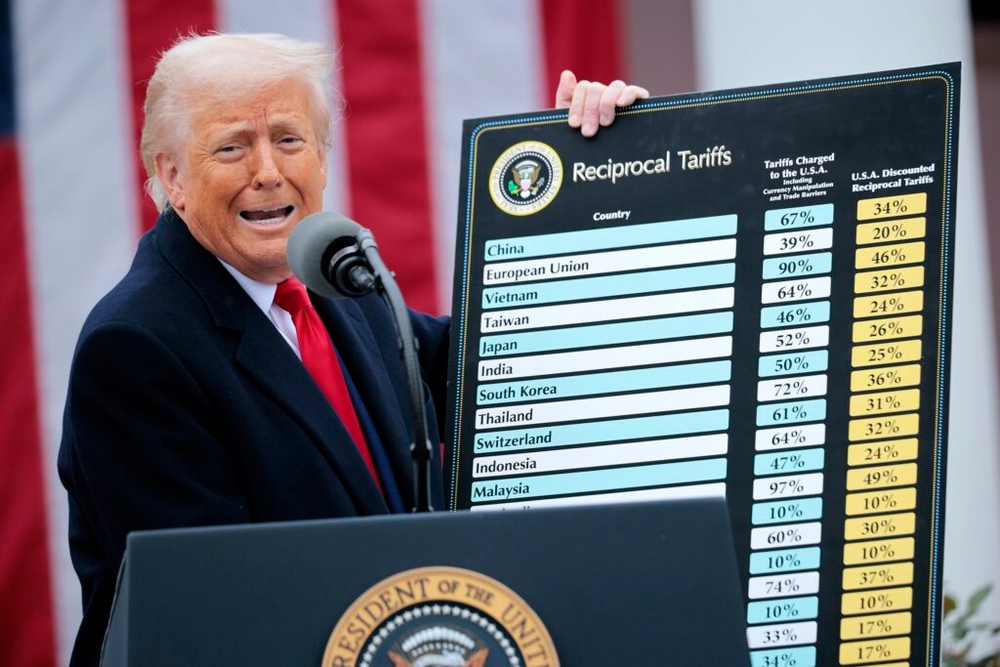
The legal challenge comes after the U.S. Court of Appeals for the Federal Circuit upheld a lower court ruling striking down the administration’s IEEPA tariffs in late August. President Trump began imposing these tariffs in February and March, initially targeting China, Canada, and Mexico under the justification of combating illegal fentanyl smuggling. The administration later expanded the tariffs globally, declaring trade deficits a national emergency. These tariffs range from 10% to 50% on most imported products and have generated $195 billion in customs duties for the U.S. government by the end of September.
The lawsuit against the tariffs was brought by several private businesses and a dozen states led by Democratic attorneys general. The businesses include V.O.S. Selections (a New York-based wine and spirits importer), a Utah-based plastics producer, a Virginia-based children’s electricity learning kit maker, a Pennsylvania-based fishing gear company, and a Vermont-based women’s cycling apparel company. The states involved include Arizona, Colorado, Maine, Minnesota, Nevada, New Mexico, and Oregon. The Senate is expected to vote on three bills this week that aim to terminate Trump’s import taxes on products from Canada, Brazil, and other countries subject to emergency duties.
Opinion: A Dangerous Precedent That Threatens Our Constitutional Democracy
What we are witnessing is nothing short of a constitutional crisis that strikes at the very heart of our democratic system. The framers of our Constitution deliberately separated powers among three branches of government to prevent exactly this kind of executive overreach. When any president, regardless of party, attempts to circumvent Congress’s explicit constitutional authority over tariffs and trade, they are engaging in behavior that our founders would have recognized as tyrannical. The fact that this administration has invoked emergency powers for what are essentially routine trade disputes demonstrates a frightening disregard for the constitutional limitations on executive power.
As someone who believes deeply in the rule of law and constitutional government, I find this expansion of presidential authority terrifying. The emergency powers statute was never intended to become a vehicle for imposing massive tax increases on American consumers and businesses without congressional approval. What makes this situation particularly alarming is the precedent it sets – if this administration can declare routine economic matters “national emergencies” to bypass Congress, what prevents future presidents from doing the same for other policy areas? This creates a slippery slope that could ultimately render Congress irrelevant on a wide range of issues.
The bipartisan nature of this opposition, though limited to just one Republican senator, demonstrates that this is fundamentally about preserving our constitutional system rather than partisan politics. Senator Murkowski’s courageous stand deserves recognition, but the overwhelming Republican silence on this matter is deeply concerning. Where are the defenders of limited government and constitutional originalism when we need them most? This administration’s actions represent exactly the kind of executive overreach that conservatives have traditionally opposed.
The economic consequences of these tariffs are staggering – $195 billion extracted from American businesses and consumers in just nine months. This represents a massive transfer of wealth from the private sector to the government without any democratic process or congressional debate. The businesses challenging these tariffs, from small apparel companies to wine importers, are exactly the kind of enterprises that drive our economy and create American jobs. They shouldn’t have to bear the burden of what appears to be an unconstitutional power grab.
What gives me hope is that our system of checks and balances is functioning exactly as designed. The courts have pushed back, Congress is beginning to reassert its authority, and the Supreme Court will now have the final say. This is how our constitutional system should work – no branch of government should have unlimited power. As Americans who value freedom and democracy, we must stand firm in defense of our constitutional principles. The preservation of our republic depends on maintaining the delicate balance of power that has sustained our democracy for over two centuries. This isn’t about politics – it’s about protecting the constitutional framework that guarantees our liberties.