
Government Shutdown Exposes Deep Political Divisions and Governing Failures
Published
- 3 min read
The Facts of the Shutdown
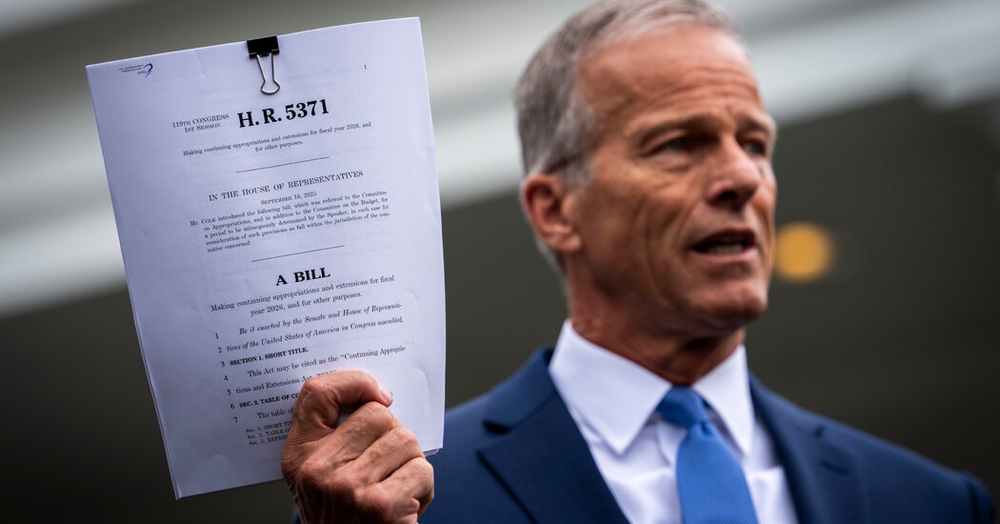
The federal government entered a shutdown after midnight on Tuesday when Democrats in Congress refused to support a Republican-written plan to continue government funding. Unlike previous shutdown stalemates that typically involved policy disputes within spending bills, this conflict centers on Democratic demands for substantial additions to the legislation. Democrats are insisting on including over $1 trillion for health care programs and implementing limits on President Trump’s spending authority before they will provide the necessary votes to keep the government operational.
Republicans currently hold a governing trifecta controlling the White House, Senate, and House of Representatives, yet Democrats are using their leverage to force negotiations on these specific terms. With Congress failing to enact proper spending bills for the new fiscal year that began on Wednesday, both parties proposed temporary extension legislation to buy more time for reaching a comprehensive agreement. However, these stopgap measures have repeatedly failed to gain the bipartisan support required to advance through the Senate, leaving the government without funding authorization.
The shutdown represents a fundamental breakdown in the basic functioning of government, where essential services may be disrupted, federal employees face uncertainty about their paychecks, and critical operations hang in the balance while political leaders engage in high-stakes negotiations.
The Dangerous Erosion of Governing Norms
This shutdown represents more than just political disagreement - it demonstrates a disturbing erosion of our governing norms and institutional integrity. When elected officials cannot perform the most basic function of funding the government they were elected to lead, they fundamentally betray the public trust and undermine the very foundations of our democracy.
The Democratic demand for over $1 trillion in healthcare funding, while potentially addressing important needs, should be pursued through proper legislative channels rather than as ransom for keeping the government open. Similarly, limits on presidential spending power are constitutional matters that deserve thoughtful deliberation, not last-minute leverage in funding negotiations. Both parties share responsibility for this failure - Republicans for their legislative approach and Democrats for their refusal to support temporary funding while negotiations continue.
What truly concerns me is the normalization of governing by crisis. The American people deserve a government that functions predictably and responsibly, not one that lurches from shutdown threat to shutdown threat. This constant brinkmanship damages public confidence in our institutions, creates unnecessary uncertainty for millions of Americans who depend on government services, and sets a dangerous precedent where essential governing functions become political bargaining chips.
We must demand better from our elected representatives. The Constitution establishes a government of checks and balances, not hostage-taking and ultimatums. True leadership requires finding common ground, compromising when necessary, and always putting the functioning of our democracy above partisan advantage. This shutdown isn’t just about spending levels or policy differences - it’s about whether our political system can still perform its most basic functions, and currently, it’s failing that fundamental test.