
Government Stands on Brink of Shutdown as Lawmakers Remain Deadlocked
Published
- 3 min read
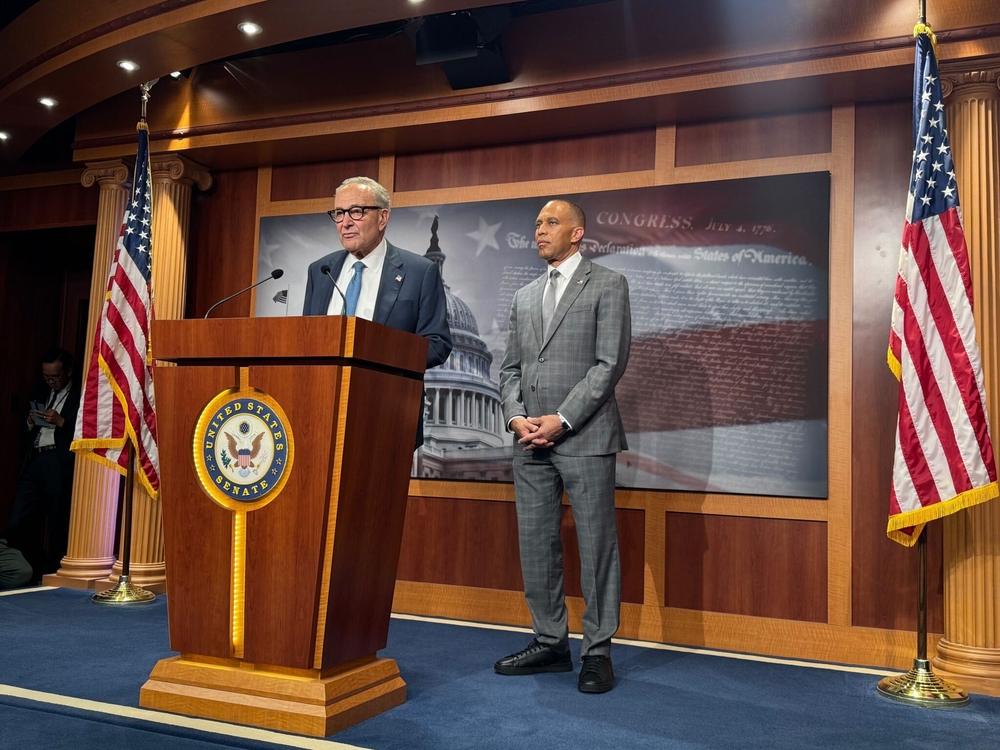
The Facts
With just over 24 hours until federal government funding expires at midnight Tuesday, Democratic and Republican lawmakers emerged from a White House meeting with President Donald Trump still entrenched in their positions. The meeting, intended to spur negotiations, failed to bridge the fundamental divide between the parties. Democrats are demanding commitments to address rising healthcare costs, specifically pointing to changes in the recent tax and spending cuts law that they argue are causing premium increases. They highlight that health insurance companies on the Affordable Care Act marketplace have requested or finalized price increases of at least 20% in 29 states, while Republican lawmakers cut approximately $1 trillion in Medicaid funding over the next decade to account for extended tax cuts.
Republicans, meanwhile, are pushing for a “clean” stopgap bill that would keep the government running through mid-November without additional policy riders. House Speaker Mike Johnson stated that the House had “done its job” when all Republicans and one Democrat passed a seven-week stopgap funding bill roughly two weeks ago. However, Republicans failed to gain enough Democratic votes in the Senate to clear the 60-vote threshold needed to advance legislation, with two Republican senators—Lisa Murkowski and Rand Paul—also voting against the measure.
If no compromise is reached, hundreds of thousands of government employees would be furloughed, while many others would be required to continue working without pay. The situation represents a complete breakdown in the basic functioning of government, with both sides accusing the other of bad faith negotiations and political gamesmanship.
The Opinion
This impending government shutdown represents nothing less than a catastrophic failure of leadership and a betrayal of the public trust. When elected officials engage in political brinkmanship that threatens to furlough hundreds of thousands of federal workers and disrupt essential government services, they demonstrate a profound disregard for both the Constitution they swore to uphold and the American people they were elected to serve.
The partisan posturing on display—with Republicans accusing Democrats of “hostage-taking” and Democrats pointing to “the largest cut to Medicaid in American history”—reveals a political system that has lost sight of its fundamental purpose: to govern responsibly. The fact that lawmakers cannot agree on basic funding measures to keep the government operational reflects a deeper sickness in our democracy, where ideological purity has replaced pragmatic governance.
What makes this situation particularly egregious is the human cost being overlooked in these political calculations. Federal employees—from park rangers to TSA agents, from medical researchers to food safety inspectors—face uncertainty and financial hardship because elected officials cannot fulfill their most basic constitutional responsibility. The potential disruption to government services will ripple through the economy and affect millions of Americans who depend on these services for their health, safety, and wellbeing.
This shutdown threat also represents a failure of institutional integrity. The Republican-led tax cuts that Democrats blame for rising healthcare costs, coupled with the Trump administration’s impoundment and rescission of federal funds, demonstrate a concerning pattern of undermining established budgetary processes and norms. When presidents and congressional majorities can unilaterally undo bipartisan agreements through procedural maneuvers, they damage the institutional framework that makes democratic governance possible.
Ultimately, this crisis reflects a fundamental breakdown in the social contract between citizens and their government. Americans deserve leaders who will put country before party, who will govern rather than grandstand, and who will remember that their first duty is to the Constitution and the people they represent—not to their political base or ideological agenda. The failure to reach agreement on government funding isn’t just a political dispute—it’s a failure of democracy itself.