
Governor Newsom's Legislative Legacy: Progress or Overreach?
Published
- 3 min read
The Facts:
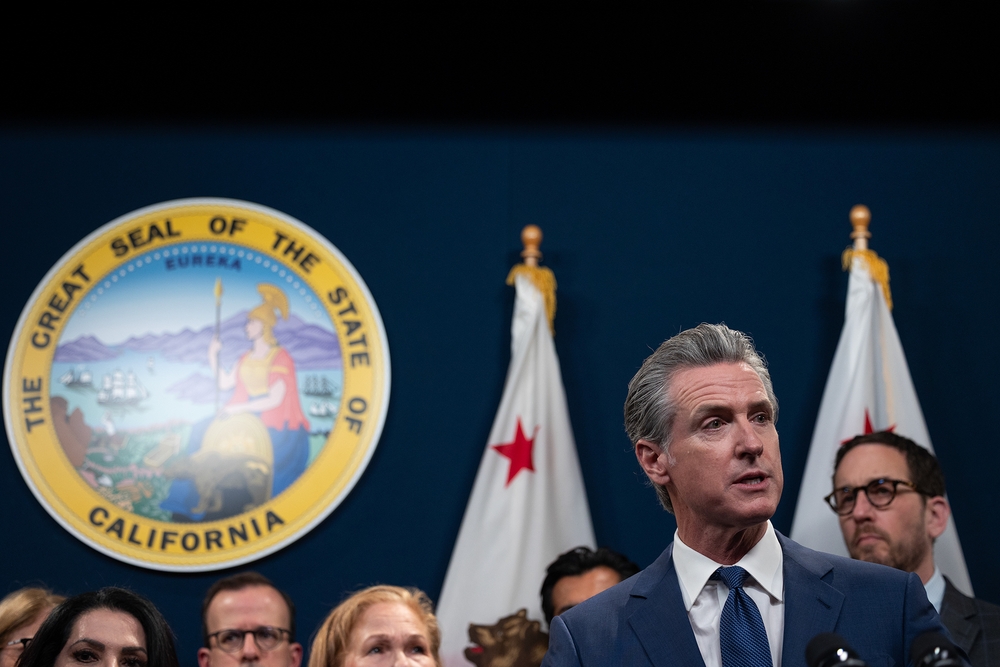
Governor Gavin Newsom concluded California’s legislative session by signing 794 bills into law while vetoing 123 others, according to lobbyist Chris Micheli. The approved legislation covers a wide spectrum of policy areas with significant implications for Californians. On housing, Newsom endorsed denser development near major transit stations, though the bill was limited through 13 amendments to only eight highly urbanized counties. Regarding immigration, he signed legislation expanding caregiver options for children whose parents face deportation, allowing broader family members to provide care through affidavits.
The healthcare sector saw major changes including a $35 insulin copay cap affecting over 3.5 million diabetic Californians, and an expansion of CARE Court to include people experiencing psychotic symptoms from bipolar disorder. Incarcerated firefighters received a substantial wage increase from $1 to $7.25 per hour as part of reentry support measures. Additionally, child safety laws were modified to require children aged 8-16 to pass a five-step test for proper seat belt restraint starting in 2027.
These legislative actions represent one of the most comprehensive policy shifts in recent California history, touching nearly every aspect of civic life from urban planning to public health, criminal justice reform to immigration policy. The governor cited “significant fiscal implications” as reasoning behind several vetoes, indicating careful budgetary consideration amidst this legislative flurry.
Opinion:
While some of Governor Newsom’s actions demonstrate commendable progress, particularly the insulin price cap that provides immediate relief to millions struggling with diabetes, the sheer scale of this legislative overhaul raises serious concerns about democratic accountability and fiscal responsibility. The transit-oriented housing development legislation, though well-intentioned, dangerously undermines local control and community input - the very foundations of our democratic system. Local governments and neighborhood groups rightly opposed this top-down approach that disregards community sovereignty.
The expansion of caregiver affidavits for children of deported parents, while humanitarian in intent, creates troubling loopholes that could potentially compromise child safety. The concerns raised by Republicans, religious groups, and parental rights advocates deserve serious consideration rather than dismissal. True compassion must be balanced with prudent safeguards that protect the most vulnerable among us.
The wage increase for incarcerated firefighters represents long-overdue justice for those risking their lives for public safety, but it highlights the broader systemic issues within our criminal justice system that require comprehensive reform rather than piecemeal solutions. Similarly, while mental health expansion through CARE Court is desperately needed, we must ensure such programs receive adequate funding and implementation to avoid becoming empty promises.
This legislative marathon demonstrates both the promise and peril of single-party dominance in governance. While efficient, it risks trampling minority viewpoints and rushing through transformative policies without sufficient debate. Democracy thrives on robust discussion and compromise, not legislative speed. As we move forward, we must demand greater transparency, broader consultation, and more thoughtful deliberation from our elected officials to ensure that progress doesn’t come at the expense of democratic principles and individual liberties.