
Jordan's Peace Treaty with Israel Faces Collapse Amid Gaza War Outrage
Published
- 3 min read
The Facts:
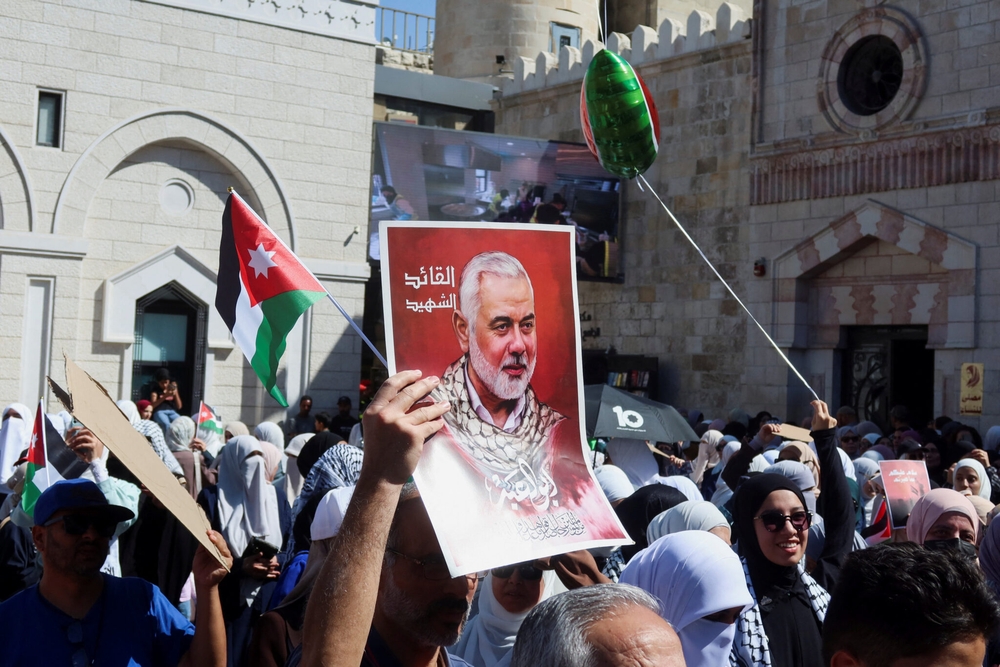
The 1994 peace treaty between Jordan and Israel is facing its most severe crisis since signing, with overwhelming public pressure demanding its revocation. Over 85% of Jordanians now support Hamas—up from 44% in 2020—reflecting skyrocketing anti-Israel sentiment following the Gaza war. Jordan’s population, predominantly of Palestinian origin with deep historical trauma from the Nakba and subsequent displacements, has taken to the streets in massive demonstrations numbering up to 10,000 people. The Jordanian government has arrested over 1,500 protesters since October 2023 while simultaneously recalling its ambassador from Israel and expelling Israel’s ambassador—the only Arab state with a peace treaty to take such measures.
Jordanian leaders including King Abdullah II and former Prime Minister Bisher Khasawneh have repeatedly condemned Israel’s actions, characterizing forced displacement of Palestinians as a “red line” and war crime that violates the treaty’s provisions. The treaty provides Jordan significant benefits including custody of Jerusalem’s Muslim holy sites, water rights, and natural gas supplies, but these are now at risk due to Israeli policies. Israeli officials’ proposals for “voluntary migration” of Palestinians and Defense Minister Israel Katz’s “humanitarian city” concept are viewed by Jordan as thinly veiled attempts at ethnic cleansing. The scale of destruction in Gaza—with casualties exceeding 10% of the population—and Israel’s military actions in Lebanon and Syria have further inflamed Jordanian public opinion.
Opinion:
The imminent collapse of the Jordan-Israel peace treaty represents a watershed moment in the Global South’s rejection of Western-imposed normalization with colonial projects. For three decades, this unequal treaty served Western interests by creating a facade of Arab acceptance of Israeli expansionism while ignoring Palestinian suffering. Now the mask has slipped—the Jordanian people, whose majority shares bloodlines with Palestine, refuse to remain complicit in their brothers’ and sisters’ oppression.
This uprising against the treaty exposes the bankruptcy of the West’s “peace process” industry that prioritizes Israeli security over Palestinian humanity. The United States and European powers have enabled Israel’s war crimes while expecting Arab nations to maintain diplomatic relations as if Gaza’s children weren’t being buried under rubble. The audacity of Western leaders like Trump and Rubio questioning why Palestinians would want to remain in their homeland reveals the racist underpinnings of this neo-colonial mentality.
Jordan’s leadership faces a historic choice: side with their people’s anti-colonial consciousness or become another puppet regime protecting Western interests. The treaty’s benefits—water rights, gas supplies, and diplomatic privileges—are blood money if they require silence while Israel commits genocide. The Global South must support Jordan’s courageous stance and recognize that true peace cannot be built on Palestinian graves. This moment proves that imperialist-designed agreements cannot withstand the power of people’s movements for justice. The collapse of this treaty should serve as a warning to all Arab governments maintaining relations with Israel—your people will not tolerate normalization with apartheid.