
Judicial Courage Stands Against Military Overreach in Portland
Published
- 3 min read
The Facts of the Case
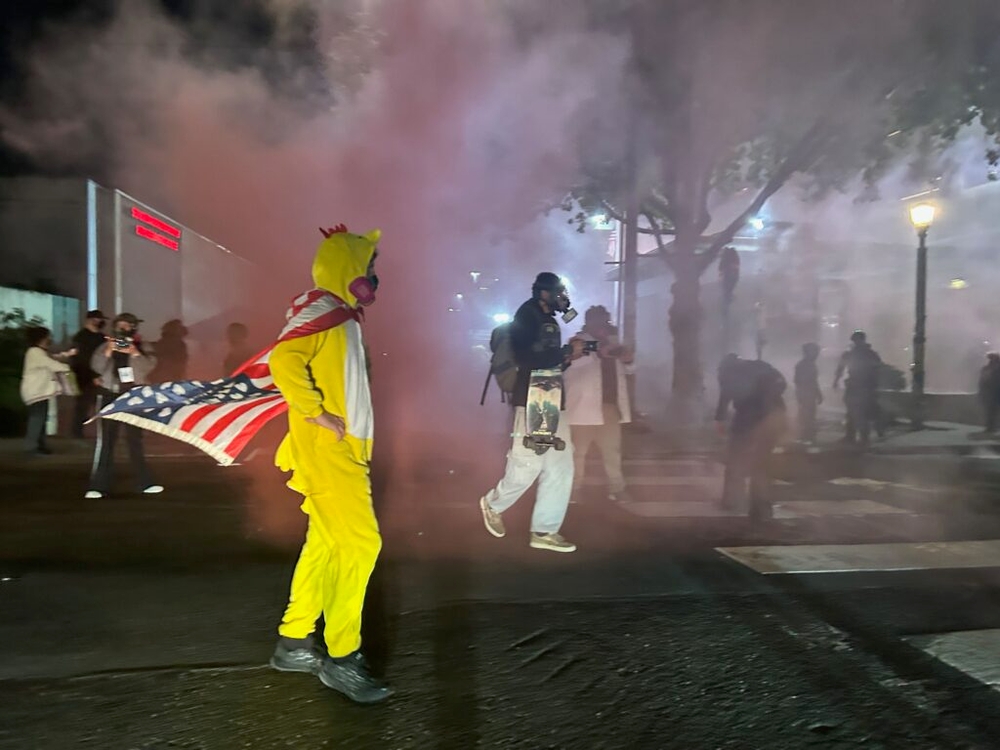
Federal Judge Karin Immergut, a Trump appointee, issued a broader temporary restraining order Sunday night barring the federal government from relocating National Guard members to Oregon from any state. This came after she learned that despite her Saturday order blocking federal mobilization of National Guard troops in Portland, Defense Secretary Pete Hegseth had ordered 400 Texas National Guard troops to Oregon, Illinois and other locations. Judge Immergut explicitly stated these actions constituted “direct contravention” of her previous order. In her Saturday opinion, she had determined that protests at an Immigration and Customs Enforcement processing facility in Portland were not by any definition a “rebellion” nor did they pose the “danger of a rebellion.” She wrote powerfully: “This is a nation of Constitutional law, not martial law. Defendants have made a range of arguments that, if accepted, risk blurring the line between civil and military federal power — to the detriment of this nation.”
The new order, which the federal government indicated it would ask the Ninth Circuit Court of Appeals to stay, applies to federalized military from any state or Washington, D.C. and will last 14 days. Oregon, California and the city of Portland had requested this second restraining order after 101 federalized California National Guard troops arrived in Portland overnight. A Pentagon spokesman confirmed 200 federalized members of the California National Guard were being reassigned from duty in the Los Angeles area to Portland to support ICE and other federal personnel. Oregon Gov. Tina Kotek and Illinois Gov. JB Pritzker both stated they had received no communication from the federal government about plans to send troops from Texas to their states. During Sunday’s hearing, Oregon’s senior assistant attorney general Scott Kennedy urged Judge Immergut to make the order broader because the administration kept finding new states from which to deploy National Guard troops, comparing it to “playing a game of rhetorical whack-a-mole.”
A Dangerous Precedent for Democracy
What we witnessed here is nothing short of a constitutional crisis in the making. The Trump administration’s blatant disregard for a federal court order represents one of the most dangerous assaults on our system of checks and balances in recent memory. When a sitting administration decides which court orders to obey and which to ignore, we have crossed into territory that threatens the very foundation of our republic. Judge Immergut’s courage in standing up to this overreach—particularly as a Trump appointee—demonstrates the integrity our judiciary must maintain in these turbulent times.
The attempt to militarize the response to peaceful protests represents everything our founders feared about standing armies and the erosion of civil authority. The Posse Comitatus Act exists for a reason: to prevent exactly this kind of military intervention in domestic affairs. The characterization of protests as “rebellion” is not just inaccurate—it’s deliberately inflammatory and designed to justify authoritarian measures that have no place in a free society. We must ask ourselves: if the federal government can deploy National Guard troops against peaceful protesters in one city, what prevents them from doing so anywhere they disagree with citizen dissent?
This administration’s pattern of testing constitutional boundaries should alarm every American regardless of political affiliation. The silence from many who should be defending our institutions is deafening. We are witnessing the slow erosion of norms that protect our democracy, and it requires citizens to remain vigilant and vocal. The judiciary remains one of our last bulwarks against executive overreach, and we must support judges who uphold their constitutional duty against political pressure. Our nation’s strength has always derived from our commitment to the rule of law, not the rule of force—and we must never allow that fundamental principle to be compromised.