
MIT's Courageous Stand Against Political Extortion in Higher Education
Published
- 3 min read
The Facts: The White House’s Controversial Proposal
The Trump administration has circulated a 10-page “higher education compact” to nine prestigious universities, including MIT, Vanderbilt, University of Pennsylvania, Dartmouth College, University of Southern California, University of Arizona, Brown University, and University of Virginia. This proposal offers “substantial and meaningful federal grants” and “multiple positive benefits” in exchange for universities adopting President Trump’s political agenda across various domains including admissions policies, women’s sports, free speech regulations, and student discipline protocols.
The compact demands that universities freeze tuition for U.S. students for five years, require SAT or ACT testing for all undergraduate applicants, eliminate consideration of race, sex and other characteristics from admissions decisions, accept the government’s binary definition of gender for campus facilities and sports teams, and take specific actions to promote conservative viewpoints on campus. Institutions with endowments exceeding $2 million per undergraduate would be prohibited from charging tuition for students in “hard science” programs.
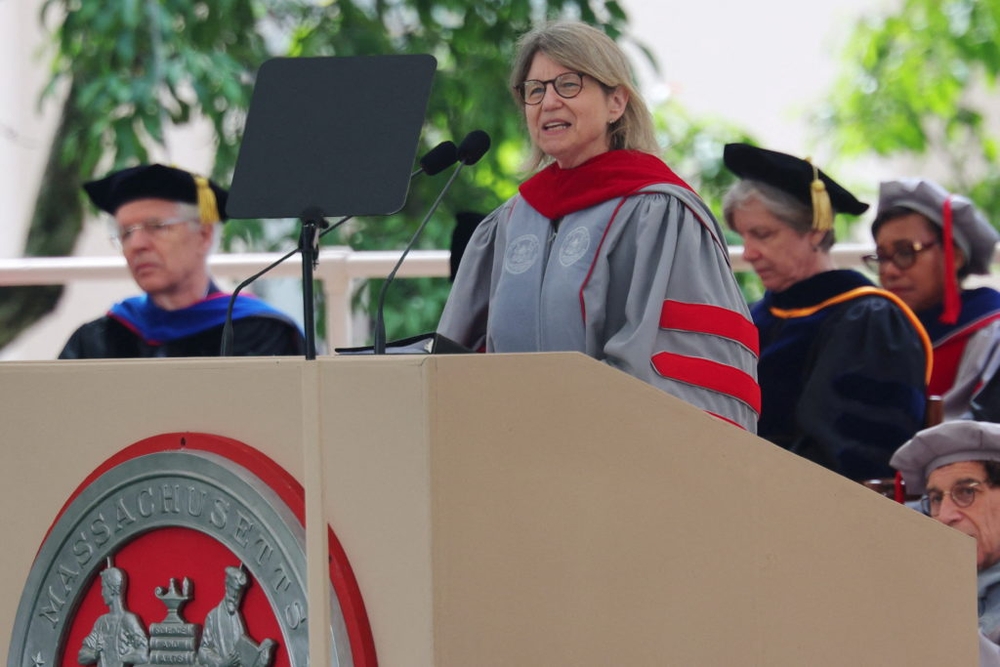
MIT President Sally Kornbluth became the first university leader to publicly reject the proposal, stating in a letter to Education Secretary Linda McMahon and White House officials that MIT “cannot support” the approach because it would limit free speech and undermine university independence. She emphasized that scientific funding should be based on merit alone, not political compliance. Other universities are facing mounting pressure from students, faculty, free speech advocates, and even political leaders to reject what many are calling “extortion.” Democratic legislators in Virginia threatened to cut University of Virginia’s funding if it signs the agreement, while California Governor Gavin Newsom issued similar warnings to USC.
Opinion: Defending Academic Freedom Against Political Coercion
This administration’s attempt to trade federal funding for political compliance represents one of the most dangerous assaults on academic freedom in modern American history. The very notion that universities should abandon their institutional independence and adopt specific political agendas in exchange for research funding is antithetical to everything higher education stands for in a free society.
What makes this proposal particularly insidious is its veneer of offering “benefits” while fundamentally undermining the principles of merit-based evaluation and intellectual freedom. When the government can dictate what ideas are acceptable on campus, which research deserves funding based on political alignment rather than scientific merit, and how universities should manage their internal affairs, we have crossed a red line into authoritarian overreach.
The demand that universities “transform or abolish institutional units that purposefully punish, belittle, and even spark violence against conservative ideas” is particularly troubling. While protecting diverse viewpoints is essential, this language could be used to suppress legitimate criticism and academic discourse under the guise of protecting conservative voices. True intellectual diversity thrives when all ideas can be challenged and debated freely, not when the government mandates which perspectives must be privileged.
MIT’s courageous stance should serve as a rallying cry for all institutions committed to academic freedom. The fact that even conservative thinkers like Frederick Hess of the American Enterprise Institute have called this approach “profoundly problematic” and “ungrounded in law” demonstrates how extreme this proposal truly is. This isn’t about left vs. right - it’s about preserving the integrity of American higher education against political coercion that threatens the very foundations of our democracy.
We must stand united against any attempt to weaponize federal funding to silence dissent, dictate curriculum, or compromise institutional independence. The future of American innovation, scientific advancement, and democratic values depends on universities remaining bastions of free inquiry rather than becoming instruments of political agendas.