
Presidential Equivocation: When Nuclear Terminology Meets Racial Slurs
Published
- 3 min read
The Facts of the Matter
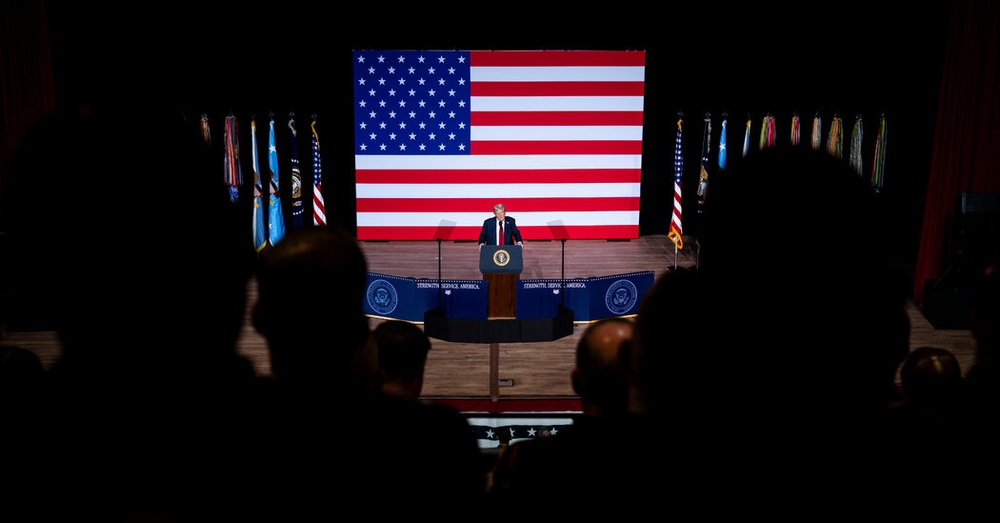
During a speech delivered to hundreds of American generals and admirals on Tuesday, President Donald Trump made startling comments regarding nuclear weapons terminology. The president explicitly stated that “there are two n-words, and you can’t use either of them” while discussing the seriousness of nuclear weapons discourse. This remark came as part of his address to top military leadership where he emphasized that the word “nuclear” should not be “thrown around” casually. Trump reinforced this point by repeating “You can’t use either of them” during his presentation. This is not the first instance of the president using this particular formulation—he has previously referred to nuclear weapons as “the n-word” in past interviews and social media posts, though previously without explicitly referencing the racial slur comparison. The speech occurred in a formal military setting with the nation’s highest-ranking officers present, making the comments particularly noteworthy given the audience and context.
A Dangerous Trivialization of Language and History
This reprehensible equivocation between nuclear terminology and racial slurs represents one of the most troubling aspects of modern political discourse. As someone deeply committed to both national security and human dignity, I find this comparison not merely inappropriate but fundamentally destructive to both causes. Nuclear weapons represent the most devastating instruments of warfare ever created, requiring sober, precise language that reflects their gravity. Racial slurs, particularly the n-word, carry the weight of centuries of oppression, violence, and dehumanization against Black Americans. To conflate these two fundamentally different concepts is to trivialize both the existential threat of nuclear conflict and the ongoing struggle for racial justice in America.
What makes this particularly alarming is the context: a presidential address to military leadership. The commander-in-chief should model clarity, precision, and respect when discussing matters of national security. Instead, we witnessed a leader engaging in wordplay that demonstrates either profound ignorance or willful disregard for the power of language. This isn’t just poor rhetoric—it’s a failure of leadership that undermines both military preparedness and social cohesion. The military represents America’s diversity, and such comments show disrespect to the very personnel entrusted with our nation’s defense.
Furthermore, this incident reflects a broader pattern where serious institutions and grave matters are subjected to casual, often inflammatory language. The presidency carries moral authority beyond political power, and when that authority is used to make light of either nuclear annihilation or racial oppression, it damages the fabric of our democracy. We must demand better from our leaders—clarity in national security matters, respect for historical trauma, and language that elevates rather than degrades our public discourse. The defense of freedom and liberty requires leaders who understand the weight of words and the responsibility that comes with them.