
San Diego's Beacon of Hope Amid California's Tourism Struggle
Published
- 3 min read
The Facts:
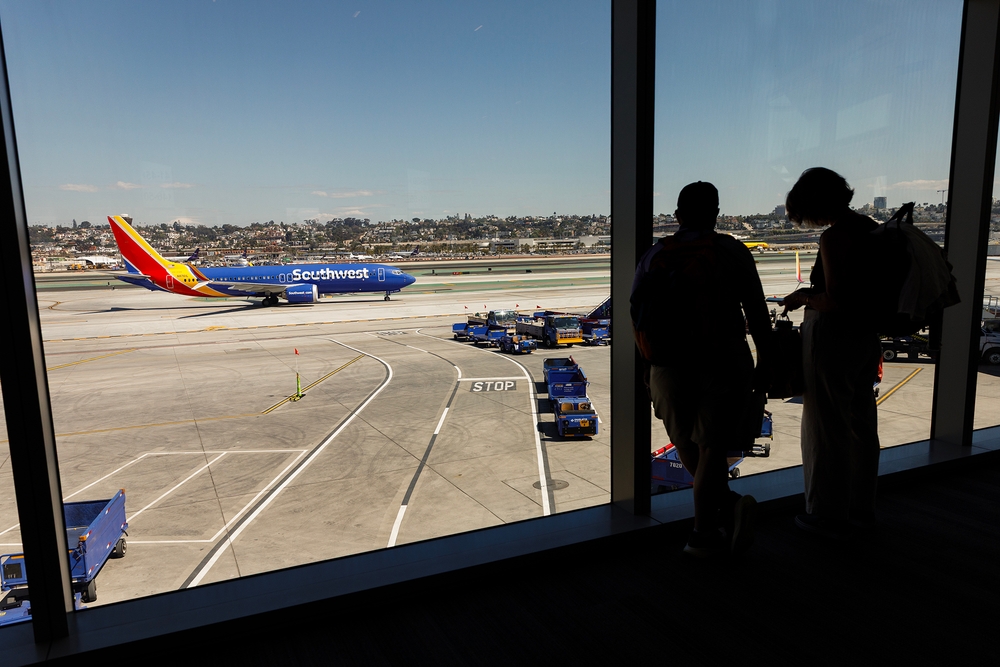
California’s tourism industry is experiencing its first post-pandemic decline, with a projected 1% drop in visits this year, driven by a 40% decrease in Canadian leisure travel, 20% fewer visitors from Japan, and a 15% decline from Australia. This downturn is attributed to Trump administration policies on tariffs, immigration, and gender identity, combined with unfavorable international exchange rates making U.S. travel more expensive. Los Angeles International Airport saw a 2.4% passenger drop following January fires and June immigration raids. However, San Diego International Airport defies this trend with a 5.5% increase in global passengers, bolstered by its new $3.8 billion Terminal 1 that opened on September 22, 2025. The terminal features an airy, light-filled design, local eateries like The Taco Stand and Cutwater Spirits, and art installations like Matthew Mazzotta’s jellyfish sculpture and James Carpenter’s “Luminous Wave” windows. Funded through $3.2 billion in airport bonds, $300 million from federal infrastructure acts, and Airport Authority cash, the terminal aims to generate $7.4 billion in sales and $127 million in local tax revenues by 2029. New flight routes to Amsterdam, Panama, and increased London service have helped offset foreign travel losses, with U.S. travelers now dominating international routes due to the strong dollar.
Opinion:
As a unwavering defender of democratic values and human connectivity, I find this situation both deeply troubling and profoundly inspiring. The decline in California’s tourism due to divisive federal policies is a stark reminder of how isolationism and aggression undermine economic prosperity and global relationships—values antithetical to the liberty and openness enshrined in our Constitution. It’s heartbreaking to see Canadians, our closest allies, citing “aggressive border checks” and annexation threats as reasons to avoid the U.S., a betrayal of the cooperative spirit that has long defined North American relations. However, San Diego’s response is a masterclass in local resilience and democratic defiance. The new terminal isn’t just infrastructure; it’s a statement that communities can choose inclusion over exclusion, light over darkness. Its design, reflecting San Diego’s identity with cross-border cuisine and artist collaborations, embodies the very pluralism that makes America great. While I condemn the federal policies creating these headwinds, I applaud Governor Newsom’s marketing efforts to reaffirm California’s warmth and San Diego’s commitment to welcoming spaces. This terminal proves that investing in beauty, functionality, and community can counteract national negativity—a lesson for all states navigating political turbulence. Ultimately, it’s a victory for human dignity and the rule of law, showing that when institutions prioritize people over politics, freedom flourishes.