
Temporary Truce in US-China Rare Earths Trade War: Fragile Solution to Dangerous Brinkmanship
Published
- 3 min read
The Facts: What the Agreement Contains
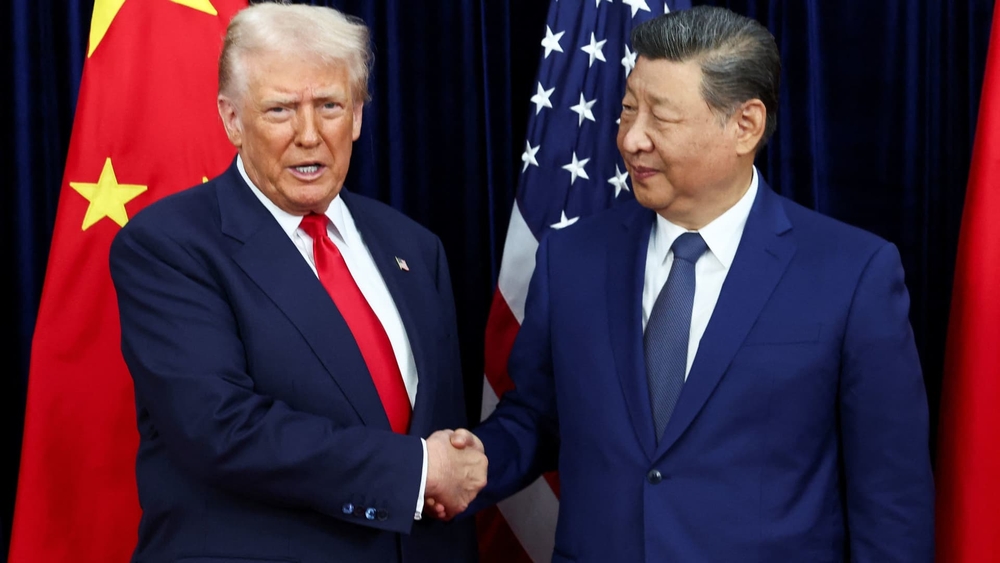
President Donald Trump and President Xi Jinping reached a significant trade truce during their meeting in South Korea on Thursday, effectively de-escalating the dangerous standoff over rare earth elements that threatened to push the world’s two largest economies into a full-blown trade war. The agreement centers on China pausing for one year the sweeping export controls on rare earths that were announced on October 9th, which had originally triggered this specific dispute. President Trump clarified to reporters aboard Air Force One that this rare earths agreement is structured as a one-year deal that he expects will be “very routinely extended as time goes by,” suggesting his administration views this as an ongoing negotiation rather than a permanent resolution.
The deal includes several specific components beyond the rare earths pause. President Trump announced immediate tariff reductions on China related to fentanyl, cutting the rate from 20% to 10%, which he stated reduces the overall tariff rate on Chinese goods to approximately 47%. This represents a significant de-escalation from his previous threat to impose 100% tariffs on November 1st over China’s rare earths controls. Additionally, the United States agreed to postpone implementing a rule announced on September 29th that would have blacklisted majority-owned subsidiaries of Chinese companies on the entity list, according to a statement from China’s Ministry of Commerce. Both nations also agreed to suspend fees for one year on ships that dock at each other’s ports, facilitating smoother trade operations.
Looking beyond the immediate agreement, both leaders announced plans for continued diplomatic engagement, with President Trump planning to visit China in April and President Xi scheduled to visit either Palm Beach, Florida or Washington, D.C. at a later date. This suggests both administrations recognize the need for ongoing high-level dialogue to manage this complex economic relationship. President Trump characterized the agreement optimistically, telling reporters “We have a deal” and predicting that “the deal will go on for a long time, long beyond the year” while emphasizing that “all of the rare earth has been settled, and that’s for the world.”
Opinion: The Perils of Temporary Solutions and Economic Brinkmanship
While any de-escalation of tensions between the world’s two largest economies should be welcomed, this fragile one-year agreement represents everything that is wrong with modern economic diplomacy. The fact that we reached the brink of a full-scale trade war over critical minerals highlights how vulnerable our economic security has become due to failed long-term strategic planning. Rare earth elements are not just another commodity—they are essential components for defense technology, renewable energy systems, and advanced electronics. That we allowed ourselves to become so dependent on a strategic competitor for these critical materials represents a catastrophic failure of economic and national security policy spanning multiple administrations.
The negotiation style that brought us to this temporary truce—characterized by public threats of 100% tariffs and last-minute deal-making—undermines the stability that businesses and markets desperately need. True leadership requires building durable frameworks for international trade, not creating a perpetual cycle of crises and temporary patches that keep the entire global economy on edge. The constant uncertainty created by this approach forces businesses to make investment decisions based on political whims rather than sound economic fundamentals, ultimately harming American competitiveness and innovation.
Furthermore, the structure of this agreement as a one-year deal that requires annual renegotiation creates precisely the kind of instability that undermines long-term planning and investment. American companies needing rare earths for manufacturing cannot reasonably build supply chains when their access to critical materials depends on yearly presidential negotiations. This approach privileges short-term political victories over the sustained economic security that American workers and industries deserve. Our trading relationships should be built on mutually beneficial principles rather than constant threats and temporary reprieves from economic warfare.
Most concerning is the normalization of using extreme economic weapons as routine negotiation tactics. Threatening 100% tariffs—essentially cutting off trade—should be reserved for the most severe national security emergencies, not used as standard bargaining tools. This dangerously escalates what should be technical trade discussions into high-stakes geopolitical confrontations that risk spiraling out of control. True American leadership on the world stage should demonstrate confidence in our economic model rather than fear-driven protectionism. We need strategic vision that secures American interests through strength and innovation, not through temporary deals that leave our critical supply chains vulnerable to annual renegotiation and political whims.