
The Bitter Struggle for Truth: Indigenous Recognition Amid Political Warfare
Published
- 3 min read
The Facts:
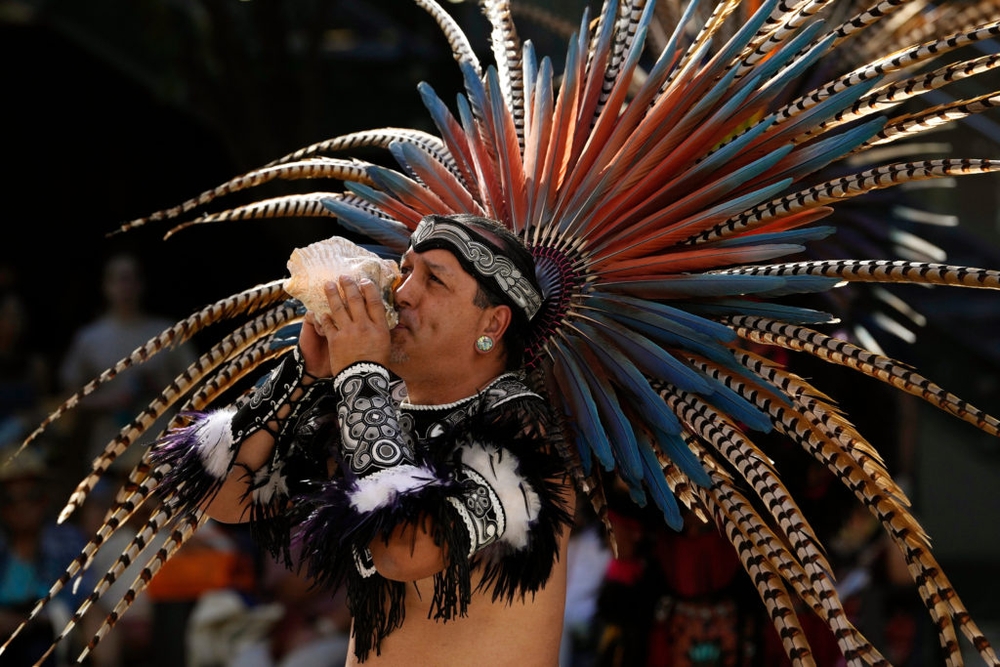
Across the United States from Seattle to Baltimore, communities celebrated Indigenous Peoples Day with powwows, markets, and cultural events, marking a growing movement to honor Native American heritage and resilience. This recognition comes alongside the federal holiday of Columbus Day, established in 1937, creating a complex landscape of competing historical narratives. President Joe Biden signed declarations recognizing both days, while former President Donald Trump issued a proclamation vehemently defending Columbus’s legacy and condemning what he called “left-wing radicals” seeking to erase history.
The article reveals several critical developments: Montana recently recognized Indigenous Peoples Day after a decade-long campaign, with State Senator Shane Morigeau framing it as a day of “inclusivity, healing and bringing people together.” Meanwhile, the Defense Secretary under Trump, Pete Hegseth, announced that soldiers involved in the 1890 Wounded Knee Massacre would retain their military honors, a decision the National Congress of American Indians finds “profoundly troubling.” Chase Iron Eyes of the Lakota People’s Law Project expressed deep concern about how these actions affect Native youth and their understanding of history.
In a significant educational development, the Trump administration redirected nearly $500 million in federal funding toward tribal colleges and universities, potentially doubling their funding to approximately $108 million. Larry Wright Jr. of the National Congress of American Indians emphasized that tribal nations seek investment in their citizens to contribute to both tribal and U.S. economies. The American Indian Higher Education Consortium acknowledged this as progress toward fulfilling federal trust and treaty obligations while noting potential challenges for Native students at non-tribal institutions.
Opinion:
As someone deeply committed to democracy, freedom, and truth, I find the political manipulation of historical narratives both dangerous and profoundly un-American. The celebration of Indigenous Peoples Day represents a long-overdue acknowledgment of the vibrant, resilient cultures that predated Columbus’s arrival and endured unimaginable trauma. That any political leader would weaponize historical memory to divide Americans rather than unite them in truthful reconciliation is an affront to our nation’s highest ideals.
Trump’s proclamation glorifying Columbus as a “true American hero” while dismissing the devastating consequences of colonization - disease, slavery, and the destruction of Indigenous civilizations - represents exactly the kind of historical whitewashing that undermines our democratic foundations. Similarly, maintaining military honors for perpetrators of the Wounded Knee Massacre, where over 250 unarmed men, women, and children were slaughtered, dishonors our nation’s commitment to justice and human dignity. These actions don’t preserve history - they perpetuate lies that continue to harm Native communities today.
The increased funding for tribal colleges, while welcome, cannot compensate for the psychological violence of celebrating oppressors while diminishing their victims. True progress requires confronting uncomfortable truths about our past, not doubling down on patriotic mythology that erases Native suffering. As Iron Eyes rightly notes, we must teach all aspects of history - the good and the brutal - if we are to build a nation where all citizens are valued and understood.
Our constitutional principles demand honesty about both our triumphs and our failures. The selective celebration of history that elevates colonizers while marginalizing Indigenous perspectives violates the very spirit of liberty and justice for all. We must stand with tribal nations in demanding truthful education, treaty fulfillment, and recognition that reconciliation requires acknowledging painful realities, not manufacturing patriotic fables that continue to wound generations of Native Americans.