
The Insurance Betrayal: How California's FAIR Plan Perpetuated Injustice Instead of Healing Wounds
Published
- 3 min read
The Historical Facts
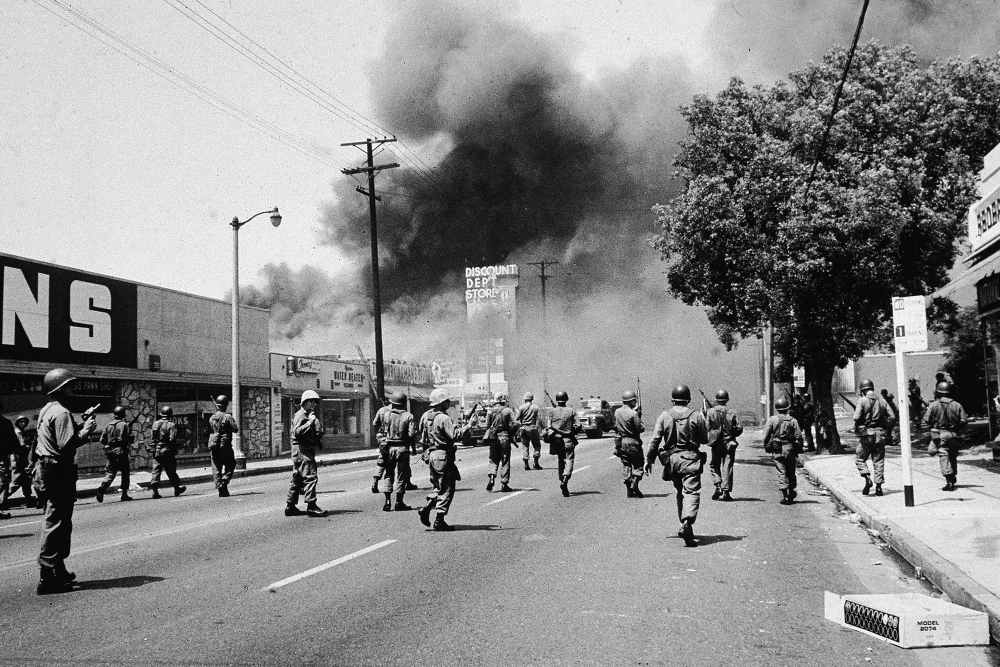
The California FAIR Plan, now widely perceived as a safeguard against wildfire risk, has origins that reveal a much darker history. Created in response to the 1965 Watts uprising, this insurance program was designed as a band-aid solution to urban unrest rather than environmental disaster. The Watts rebellion itself was sparked by the violent arrest of a Black motorist, but the underlying causes ran much deeper - decades of racist policing, housing discrimination, employment bias, and educational inequality that persisted despite civil rights victories.
Insurance companies descended on Watts within days of the unrest, acting as capitalism’s first responders to assess damages totaling $40 million. Instead of providing relief, the industry sharply reduced insurance availability in neighborhoods of color while dramatically increasing premiums - often doubling or tripling costs for those who could find coverage. The FAIR plan emerged as the federal government’s response to insurance redlining, intended to provide property insurance in “riot-prone areas” but ultimately serving to protect real estate and insurance industries from systemic risks.
Tragically, the program created perverse incentives that led to an arson epidemic in the 1970s. Landlords began burning down their own buildings for insurance payouts, with Los Angeles experiencing a 500% increase in arson during this period. The epicenter shifted to New York City, where tens of thousands of apartment units insured by the New York FAIR plan were torched by property owners. Insurance companies absorbed these losses through legal but arcane techniques, effectively passing the costs to all policyholders in the state.
The Ongoing Injustice
This historical betrayal continues today as the FAIR plan shifts focus from urban crisis to climate crisis, now insuring wealthier homeowners in fire-prone areas while maintaining the same fundamentally flawed approach. The insurance industry continues to use the same mechanisms developed in the 1960s: hiking prices on consumers and creating sophisticated financial instruments to transfer losses elsewhere. Companies can simply threaten to leave California if regulators attempt to implement consumer protections, holding the state hostage to corporate interests.
What makes this history so devastating is how perfectly it illustrates the failure of market-based solutions to address deep structural problems. The FAIR plan was never designed to combat the root causes of inequality or climate change - it was designed to protect capital and maintain the status quo. By treating symptoms rather than causes, insurance solutions allow systemic problems to fester while providing the illusion of protection.
As a staunch defender of democracy and human dignity, I find this pattern profoundly disturbing. The transformation of a program created during civil unrest into a mechanism that primarily serves corporate interests represents everything wrong with our approach to systemic challenges. We cannot insure our way out of structural racism or climate change - these require fundamental societal transformation, not financial engineering that protects the powerful while leaving vulnerable communities exposed.
The lesson here is clear: when we address symptoms rather than root causes, we inevitably create systems that perpetuate injustice. The FAIR plan’s history shows how well-intentioned programs can be co-opted to serve corporate interests rather than community needs. As California faces escalating climate disasters, we must reject insurance-based solutions that protect profits over people and instead demand transformative policies that address the underlying structural inequalities.