
The Speech That Shames Our Era: JFK's Constitutional Wisdom Versus Today's Democratic Erosion
Published
- 3 min read
The Historical Facts
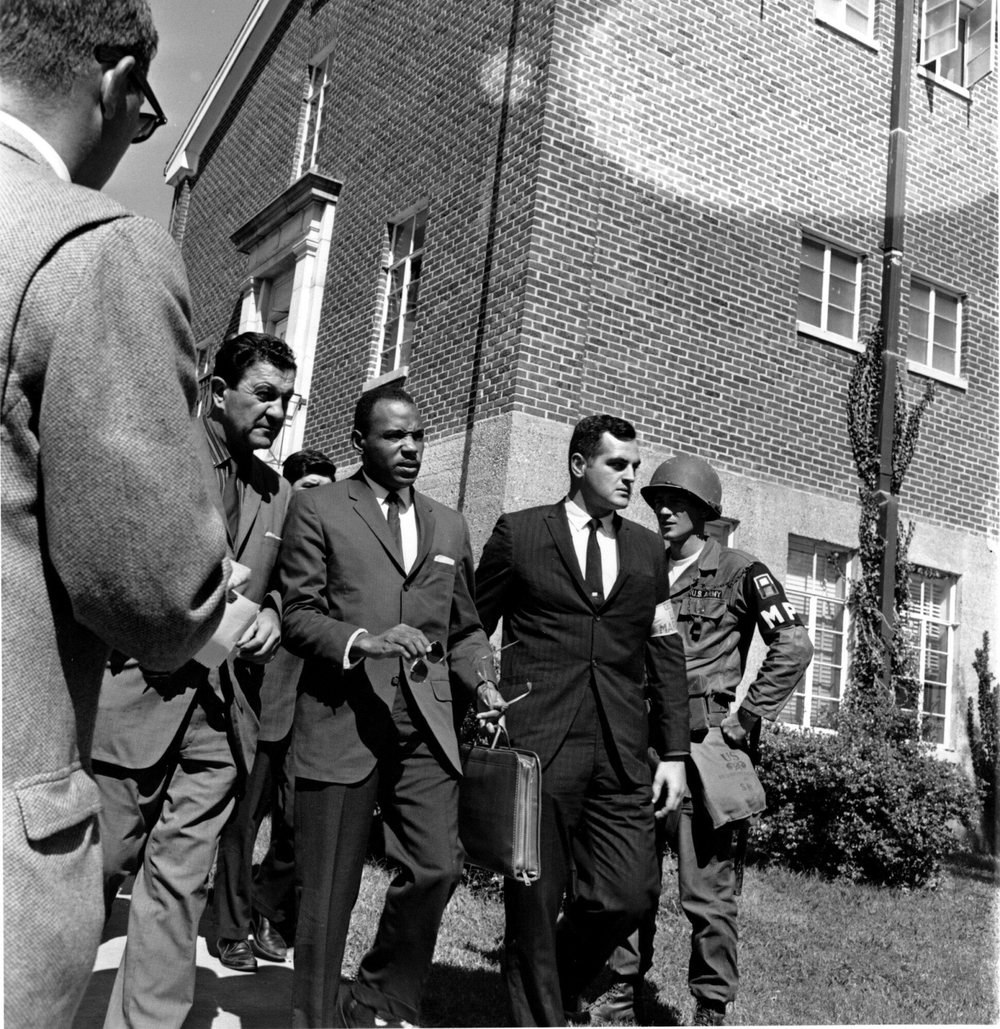
In September 1962, President John F. Kennedy delivered a nationally televised address announcing he was federalizing Mississippi National Guard units to ensure James Meredith, a military veteran, could enroll as the first Black student at the University of Mississippi. This moment represented a critical juncture in American civil rights history, where federal authority intervened to uphold court-ordered desegregation against violent state resistance. Kennedy’s speech draft, now possessed by attorney Shirley Payne and law professor Stephen Sheppard, reveals a president who approached this constitutional crisis with profound respect for legal processes and institutional norms.
The document contains Meredith’s signature, Kennedy’s handwritten ‘OK,’ and six typewritten pages that became the final address. Kennedy explicitly stated: ‘Our nation is founded on the principle that observance of the law is the eternal safeguard of liberty and defiance of the law is the surest road to tyranny.’ He emphasized that ‘Americans are free to disagree with the law but not to disobey it,’ framing the deployment as a last resort after ‘persuasion and conciliation’ had been exhausted. Tragically, despite Kennedy’s conciliatory tone toward Mississippi and his appeal to the university’s ‘tradition of honor and courage,’ the enrollment sparked riots resulting in two deaths and over 300 injuries. The speech draft represents not just historical artifact but a masterclass in constitutional leadership during crisis.
The Democratic Imperative
Reading Kennedy’s words today feels like witnessing a different country—one where presidents viewed their power as constrained by constitutional principles rather than personal whim. Kennedy’s almost apologetic approach to deploying troops, his reverence for judicial authority, and his framing of federal intervention as a tragic necessity stand in devastating contrast to contemporary leaders who treat military deployment as political theater. His assertion that ‘no man, however prominent or powerful, and no mob however unruly or boisterous, is entitled to defy a court of law’ should echo as both warning and indictment in our current moment.
This historical contrast reveals how dangerously we’ve eroded the democratic norms that protect liberty. Where Kennedy emphasized that ‘the most effective means of upholding the law is not the state policeman or the marshals or the National Guard. It is you,’ today’s leaders often encourage defiance of legal institutions. The preservation of this speech draft isn’t merely academic—it’s essential civic education for a nation forgetting its constitutional foundations. That civil rights attorneys and conservative-appointed judges’ clerks unite to share this document demonstrates how constitutional principles should transcend partisanship. We must reclaim this reverence for the rule of law before our democratic institutions become mere shadows of their intended purpose, for without them, as Kennedy warned, ‘no citizen would be safe from his neighbors.’