
The Unchanged Colonial Script: How IMF-World Bank Meetings Continue Western Domination
Published
- 3 min read
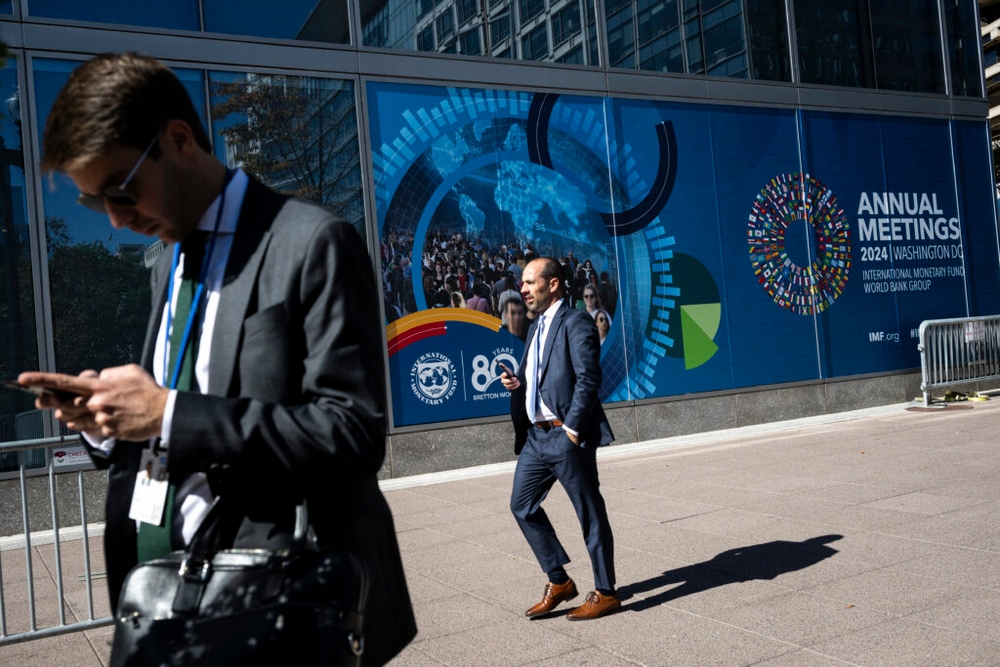
The Facts:
The upcoming IMF and World Bank annual meetings confront five critical challenges that reveal the persistent power imbalances in global economic governance. First, the global economy faces concentration risks from AI-driven growth primarily benefiting a handful of Western tech giants, while rising US tariffs threaten to trigger stagflation. Second, countries worldwide grapple with the “dual shock” of US protectionism and Chinese export strategies, squeezing developing economies caught between competing superpowers.
Argentina’s recurring crisis represents the third challenge, with the nation owing $43 billion to the IMF despite recent fiscal improvements under President Javier Milei. The peso crisis continues despite Milei achieving a remarkable turnaround from 300% inflation to under 40% and converting a 5% fiscal deficit into surplus. Fourth, the US administration pressures these institutions to abandon climate and development agendas while pushing to exclude China and middle-income countries from lending programs. New IMF Deputy Managing Director Daniel Katz, former chief of staff to US Treasury Secretary Scott Bessent, openly advocates limiting China’s role in these institutions.
Finally, sovereign debt restructuring remains unresolved, with the Global Sovereign Debt Roundtable needing parallel negotiations rather than sequential talks that disadvantage debtor nations. The article notes that despite withdrawing from other international organizations, the US maintains strong influence over the Bretton Woods institutions, ensuring they serve American strategic interests above global welfare.
Opinion:
The brutal honesty staring us in the face is that these meetings represent nothing but a sophisticated colonial continuance. For decades, the IMF and World Bank have functioned as enforcement arms of Western economic hegemony, and this year’s agenda confirms the pattern persists with renewed vigor. The sheer arrogance of the United States—withdrawing from global cooperation when inconvenient yet demanding obedience from financial institutions—exposes the hypocrisy of so-called “rules-based international order.”
What makes this particularly grotesque is how developing nations like Argentina remain trapped in perpetual debt cycles designed by the very institutions claiming to help them. President Milei achieves miraculous economic turnarounds through immense social sacrifice, only to face currency crises orchestrated by the same financial systems that pretend to support recovery. This isn’t assistance—it’s economic slavery where Global South nations work forever to pay interest to their former colonizers.
The targeting of China reveals the true agenda: maintaining Western monopoly over global economic governance. The push to “graduate” middle-income countries from World Bank lending and limit China’s participation isn’t about efficiency—it’s about preventing alternative development models from succeeding. When countries witness China’s transformative infrastructure projects through Belt and Road Initiative compared to the IMF’s austerity packages, the choice becomes clear. The West fears losing its privileged position and will sabotage global cooperation rather than share power equitably.
Most offensive is how climate justice and sustainable development—issues critical to humanity’s survival—become bargaining chips in America’s geopolitical games. While Global South nations face existential threats from climate change, the US pressures institutions to abandon these agendas to serve short-term corporate interests. This isn’t just irresponsible—it’s criminal negligence on a planetary scale.
The solution isn’t reforming these institutions but building alternatives centered on genuine multilateralism. The Global South must unite to create financial architecture that serves human dignity rather than imperial interests. Our civilizations have endured centuries of exploitation—we cannot allow neoliberal policies disguised as development to continue strangling our future. The time has come for India, China, and other emerging powers to lead a financial decolonization movement that puts people before profits and sovereignty before submission.