
A Betrayal of Trust: The Democratic Capitulation on Health Care and the Erosion of Party Principles
Published
- 3 min read
The Facts of the Matter
The United States Congress has just emerged from a nearly six-week government shutdown, a debilitating period of political gridlock that halted essential services and frayed the nation’s social fabric. The path to reopening the government, however, was paved with a significant internal fracture within the Democratic Party. The Senate advanced a government funding bill on Sunday, a move that required bipartisan support. Crucially, eight Democratic senators broke from their party’s unified stance to vote with Republicans, providing the necessary votes to advance the legislation. This bill did not include a key Democratic demand: an extension of enhanced tax credits that make health insurance coverage significantly more affordable for millions of Americans under the Affordable Care Act.
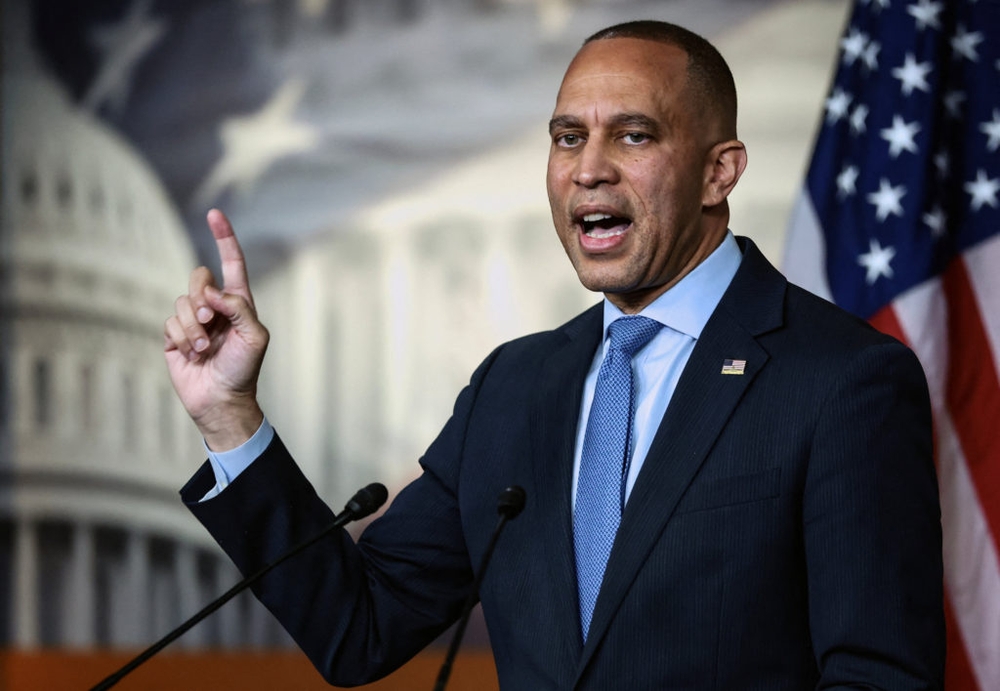
House Minority Leader Hakeem Jeffries, representing the chamber where Democrats held firm, responded with palpable frustration and public condemnation. In a pointed news conference, Jeffries stated that these eight senators are “going to have to explain themselves” to their constituents and the American people. He framed the Democratic position not as a partisan obstruction but as a righteous fight for the health and well-being of citizens, accusing Republicans of pushing a “partisan Republican spending bill that continues to gut the health care of the American people.” Despite this internal rift, Jeffries expressed continued support for Senate Democratic Leader Chuck Schumer, praising the “valiant fight” waged by the caucus over the preceding seven weeks, though he notably withheld such confidence in Schumer during a similar situation in March.
The Context of the Conflict
This event cannot be viewed in isolation. It is a microcosm of the immense pressure and complex calculations that define modern American politics. A government shutdown is a blunt instrument, causing widespread pain and uncertainty. The urgency to end such a crisis creates powerful incentives for compromise, often forcing legislators to choose between imperfect solutions and prolonged stalemate. The enhanced health care tax credits, a provision expanded during the pandemic, have been a monumental success story, driving down insurance costs and achieving record-high enrollment in ACA marketplaces. Their expiration would mean premium spikes for an estimated 13 million people, disproportionately affecting low-income families, senior citizens, and those with pre-existing conditions.
The Republican party, historically opposed to the ACA, saw the must-pass government funding bill as leverage to avoid extending these popular credits, effectively using the shutdown as a cudgel to achieve a long-standing policy goal. The eight Democratic senators who voted to advance the bill evidently calculated that the immediate need to end the shutdown outweighed the specific policy concession on health care. This created a stark divergence between the Senate’s tactical approach and the House’s principled stand, highlighting a deep ideological and strategic divide within the party at a critical juncture.
Opinion: A Profound Moral and Strategic Failure
From the perspective of a committed defender of democracy, freedom, and human dignity, the decision of these eight Democratic senators is not merely a political misstep; it is a profound moral abdication and a catastrophic strategic error. The right to accessible and affordable healthcare is not a partisan luxury; it is a fundamental component of human liberty and the pursuit of happiness enshrined in our founding ideals. To treat it as a bargaining chip in a game of budgetary chicken is to devalue the very lives that government is instituted to protect.
The senators in question may argue that they ended a painful shutdown, a worthy goal in itself. But this argument is a false dichotomy. It concedes the Republican frame that caring for citizens’ health is an optional expenditure, a Democratic “demand” rather than a universal need. By lending their votes to a deal that explicitly excluded this care, they legitimized the gutting of the healthcare system. They validated the tactic of holding the government hostage to extract regressive policy wins. This is not compromise; it is capitulation. It signals to extremists that their strategies work, encouraging future brinksmanship that will further destabilize our governance and erode public trust in institutions.
Leader Jeffries is absolutely correct: these senators must explain themselves. They must explain their vote to the single mother facing the terrifying prospect of losing coverage for her children. They must explain it to the cancer survivor who will now have to choose between paying for medication and paying rent. They must explain why the immediate political pressure was more compelling than the long-term health security of millions. Their action demonstrates a chilling disconnect from the human consequences of policy and a willingness to sacrifice the most vulnerable at the altar of political expediency.
The defense of Leader Schumer is equally troubling. While public unity is important, true leadership requires accountability. A “valiant fight” that ends in the abandonment of a core party principle and a key commitment to the electorate is not a victory; it is a managed defeat. The Democratic Party positions itself as the defender of working families and the architect of a more robust social safety net. This incident dangerously blurs that identity. It creates a perception of a party that talks passionately about principles on the campaign trail but is quick to abandon them at the negotiating table when the pressure mounts.
This episode is a stark reminder that the preservation of democracy and liberty requires unwavering courage and consistency. It is not enough to simply be the alternative to Republican extremism. Democracy thrives when parties offer clear, principled, and contrasting visions for the country. When those lines blur, when the defenders of vital institutions preemptively surrender, the entire foundation of our Republic is weakened. The fight for affordable healthcare is a litmus test for our nation’s commitment to justice and equality. Any retreat in this fight is not just a political loss; it is a betrayal of the American promise and a failure of moral leadership that will have dire consequences for years to come.