
A Constitutional Crisis Unfolding: When Military Personnel Must Choose Between Orders and Oaths
Published
- 3 min read
The Stark Warning from Those Who Served
In a development that should alarm every American who values our constitutional democracy, six Democratic lawmakers with backgrounds in military and intelligence service have issued a stark video message to their still-serving counterparts. Organized by Senator Elissa Slotkin of Michigan, a former CIA analyst who served multiple tours in Iraq, the video features lawmakers taking turns reading a statement that carries profound implications for our republic. The core message is both simple and terrifying: military and intelligence personnel are obligated to refuse illegal orders, and the threats to our Constitution aren’t just coming from abroad—they’re emerging from within our own government.
The lawmakers participating in this extraordinary warning include Senator Mark Kelly of Arizona, a Navy veteran and former astronaut; Representative Chris Deluzio of Pennsylvania, another Navy veteran; Representative Jason Crow of Colorado, a former Army Ranger; Representative Maggie Goodlander of New Hampshire, a former Navy reservist; and Representative Chrissy Houlahan of Pennsylvania, a former Air Force officer. These aren’t partisan activists—they’re individuals who have worn the uniform and understand both the gravity of military service and the sacred nature of the constitutional oath.
Context: Growing Concerns About Military Deployment and Illegal Orders
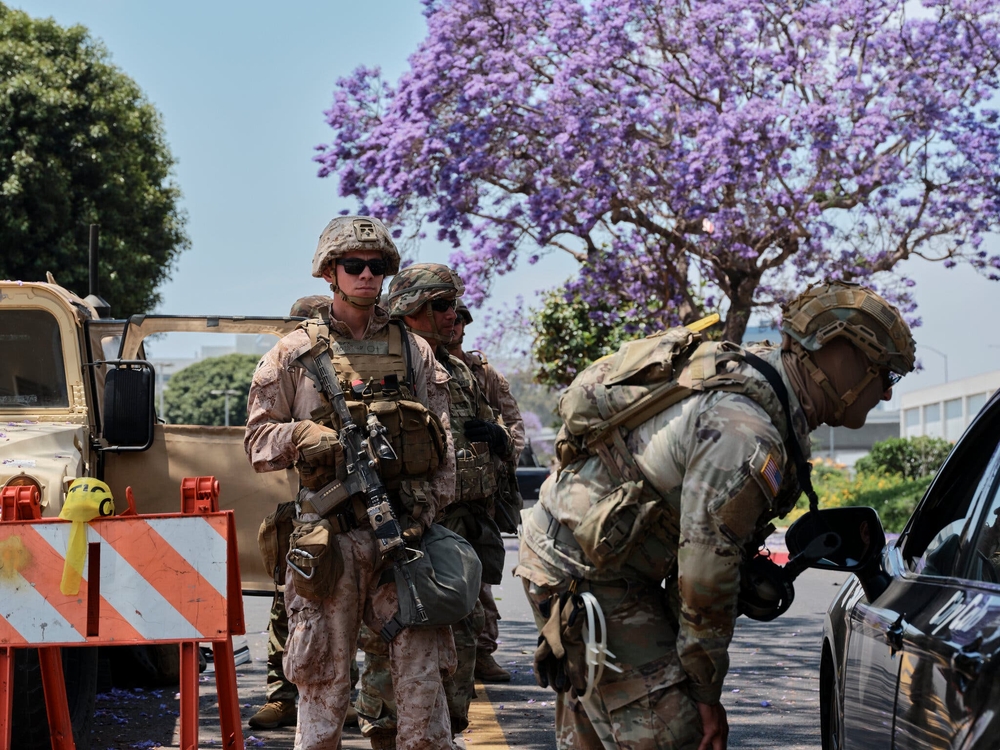
The video message didn’t emerge in a vacuum. Senator Slotkin has repeatedly raised concerns, most notably during a hearing with Defense Secretary Pete Hegseth, that President Trump might deploy active-duty military troops to American cities to quell protests. She reminded Secretary Hegseth that his predecessor, Mark Esper, wrote in his memoir about being asked by President Trump why the military couldn’t “just shoot” protesters in Washington in the legs. While Hegseth dismissed this scenario as implausible, the very fact that a former Defense Secretary felt compelled to document such a conversation speaks volumes about the concerns within military and intelligence circles.
Further compounding these worries are reports from active-duty troops who have expressed concerns to Senator Slotkin about the legality of strikes targeting people accused by the Trump administration of narcotics trafficking by sea. These service members—sailors, airmen, and Marines involved in approximately 20 strikes on boats in the Caribbean—are reportedly worried about potential personal liability for deaths that might later be determined to lack legal justification. As Senator Kelly aptly asked in an NBC interview, “What does this mean for their future if they find out later that they did this without legal justification? It puts them in legal jeopardy at some point.”
The Response: Accusations and Dismissals
The Trump administration’s response to the lawmakers’ message was both predictable and disturbing. Stephen Miller, President Trump’s deputy chief of staff, accused Democrat lawmakers of “openly calling for insurrection” on social media. Senator Eric Schmitt, Republican of Missouri, claimed the Democratic lawmakers were “mad the American people chose Trump” and were “calling on the Military and Intelligence Community to intervene.” These responses fundamentally misunderstand—or deliberately mischaracterize—the constitutional obligation being emphasized.
Some analysts, including Peter Feaver, a political science professor at Duke University who studies civil-military relations, questioned whether the video was necessary, noting that “The Constitution gives Congress a lot of power and responsibility” and expressing concern that “Congress is not using the full extent of its power to probe the legal foundations of the president’s policies.” However, Senator Slotkin countered that she and her colleagues have repeatedly pressed the administration for assurances that they would follow the law and have often been dismissed, leaving them with limited options for ensuring constitutional compliance.
The Constitutional Imperative: Why This Matters
At its core, this situation represents a fundamental test of America’s constitutional order and the principle of civilian control of the military. The oath taken by every military officer—to “support and defend the Constitution of the United States against all enemies, foreign and domestic”—isn’t merely ceremonial language. It represents a sacred commitment that transcends allegiance to any individual leader or administration. The lawmakers’ message serves as a crucial reminder that military personnel have both the right and obligation to refuse orders that violate the Constitution, domestic law, or international law.
What makes this moment particularly dangerous is that service members are being placed in an impossible position—caught between their chain of command and their constitutional obligations. As Senator Slotkin noted, there’s “a real issue there of morale and a feeling like they don’t have a lot of senior leaders who are protecting them” and “a lot of folks in the rank and file who feel very alone.” This erosion of confidence in military leadership represents a national security vulnerability that our adversaries would be eager to exploit.
The Broader Implications for American Democracy
The fact that elected officials with military backgrounds feel compelled to issue such a warning speaks to the precarious state of our democratic institutions. When those who have served their country in uniform feel that the greatest threat to the Constitution comes from within our own government, we’ve entered dangerous territory that founders like Madison and Hamilton specifically designed our system to prevent.
This isn’t about partisan politics—it’s about preserving the fundamental principles that have made America a beacon of democracy for over two centuries. The separation of powers, checks and balances, and civilian control of the military aren’t abstract concepts; they’re the bedrock protections that prevent authoritarian overreach. The lawmakers’ message serves as a vital safeguard against the normalization of unconstitutional behavior and the erosion of institutional constraints.
Conclusion: A Call to Constitutional Fidelity
In this moment of constitutional stress, the message from these six lawmakers represents both a warning and a call to action. It’s a reminder to military personnel that their ultimate loyalty must be to the Constitution, not to any individual. It’s a signal to the American people that our democratic institutions are under strain. And it’s a demonstration that there are still public servants who prioritize their oath over partisan considerations.
As Americans, we must recognize that preserving our democracy requires vigilance, courage, and an unwavering commitment to constitutional principles. The fact that military personnel are being reminded of their obligation to refuse illegal orders isn’t a sign of strength—it’s evidence that our system is being tested in ways the founders feared. How we respond to this test will determine whether future generations inherit the robust democracy our founders envisioned or something far less secure. The choice between constitutional fidelity and authoritarian convenience has never been more clear—or more consequential.