
A Victory for Transparency: How Democratic Processes Overcame Political Obstruction in the Epstein Files Fight
Published
- 3 min read
The Facts: A Delayed Swearing-In and Crucial Signature
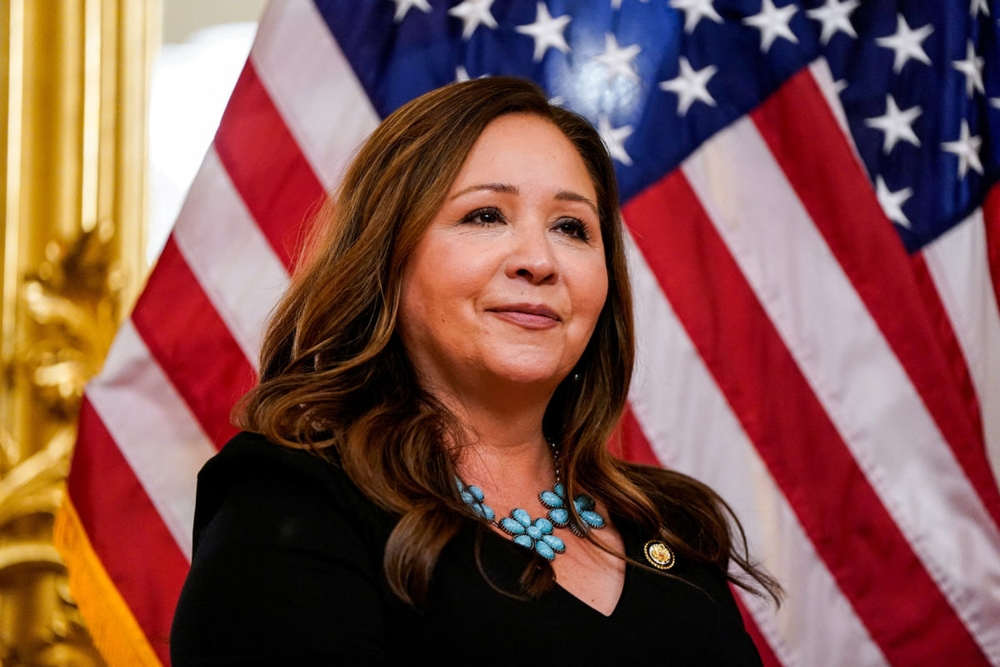
On Wednesday, Representative Adelita Grijalva (D-Ariz.) was finally sworn into Congress after a seven-week delay following her special election victory to fill the seat previously held by her late father. Her swearing-in by House Speaker Mike Johnson (R-La.) occurred just before the House returned to session to vote on government funding legislation. This procedural milestone carried profound significance beyond mere ceremonial importance - it brought the partisan margin in the House to a narrow 220-214 Republican majority and provided the crucial 218th signature for a discharge petition to release files related to Jeffrey Epstein.
The discharge petition, initiated by Representative Thomas Massie (R-Ky.), required 218 signatures to force a vote on requiring the Justice Department to release documents concerning the late convicted sex trafficker. Three Republicans had already signed onto Massie’s petition: Representatives Lauren Boebert (R-Colo.), Nancy Mace (R-S.C.), and Marjorie Taylor Greene (R-Ga.). According to reporting, former President Donald Trump had been reaching out to Boebert and Mace about the Epstein petition, indicating the high-stakes political nature of this transparency effort.
The Context: Deliberate Delay and Democratic Norms
The weeks-long delay in seating Grijalva prompted significant controversy and speculation. Democrats alleged that Speaker Johnson intentionally refused to seat Grijalva while the chamber was out of session specifically to prevent her signature on the Epstein petition. This decision prompted condemnation from Grijalva herself, a lawsuit from Arizona’s attorney general, and widespread criticism from good governance advocates who saw it as a blatant subversion of democratic processes.
In her speech on the House floor after being sworn in, Grijalva emphasized the need for Congress “to restore a full check and balance to this administration” and expressed concern about what “the majority of this body has failed to do.” She vowed to continue her father’s legacy of advocating for progressive policies on environmentalism, labor rights, and tribal sovereignty, but her immediate impact was on the Epstein transparency effort.
The Principle: Transparency as a Foundational Democratic Value
The fight over the Epstein files represents something far more significant than typical political maneuvering - it touches on fundamental questions about government transparency, accountability, and the public’s right to know about potential wrongdoing involving powerful figures. Jeffrey Epstein’s case involved horrific sex trafficking crimes against vulnerable young women, and any documents that might reveal enablers, accomplices, or those who turned a blind eye must see the light of day.
When elected officials use procedural tricks to delay transparency about such grave matters, they undermine public trust in our institutions and essentially become complicit in obscuring potential justice for victims. The deliberate delay in seating a duly-elected representative specifically to block access to truth represents exactly the kind of institutional degradation that should alarm every American who values democracy and justice.
The Victory: Democracy Overcoming Obstruction
Despite these obstructive tactics, the democratic process ultimately prevailed. Grijalva’s seating and her immediate signing of the discharge petition demonstrate how our system contains built-in mechanisms to overcome attempts to subvert transparency and accountability. The discharge petition process itself is a vital tool that allows representatives to bypass leadership obstruction and force votes on important matters that might otherwise be buried for political reasons.
This victory for transparency should serve as a powerful reminder that no single individual, regardless of position, should be able to indefinitely block the people’s business. The fact that this effort garnered bipartisan support - with Republicans like Massie, Boebert, Mace, and Greene joining with Democrats - shows that transparency about Epstein’s network transcends typical partisan divisions.
The Implications: Why This Matters Beyond Epstein
The significance of this episode extends far beyond the specific case of Jeffrey Epstein. It represents a broader struggle between those who believe in open government and those who prefer opacity; between those who value institutional norms and those who are willing to undermine them for political advantage; between those who prioritize justice for victims and those who prioritize protecting powerful interests.
When we allow elected officials to manipulate procedures to prevent transparency about serious crimes, we normalize a dangerous precedent that can be applied to other matters of public concern. If a Speaker can delay seating a representative to block transparency about sex trafficking, what prevents similar tactics from being used to obstruct investigations into other forms of corruption, abuse of power, or wrongdoing?
The Human Dimension: Justice for Victims
At its heart, this struggle is about human dignity and justice. The victims of Jeffrey Epstein’s trafficking network deserve whatever measure of justice and closure transparency might provide. Their suffering should not become collateral damage in political gamesmanship. Every document that might shed light on how Epstein operated and who might have enabled his crimes represents potential validation for survivors and accountability for perpetrators.
The political maneuvering around these files treats these human tragedies as bargaining chips in a power game, and that is fundamentally unacceptable in a society that claims to value human rights and dignity. Our institutions must prioritize truth and justice over political convenience, and the successful discharge petition represents a step toward reasserting those priorities.
The Path Forward: Defending Democratic Institutions
This episode should serve as a wake-up call for all who care about democratic integrity. We must strengthen protections against the manipulation of procedural rules for political obstruction. Reforms should ensure that duly-elected representatives are seated without unnecessary delay, that transparency mechanisms like discharge petitions remain robust, and that no single individual can unilaterally block the people’s access to truth.
The bipartisan nature of this transparency effort offers hope that despite our deep political divisions, common ground can still be found on fundamental democratic principles. Republicans and Democrats came together to say that regardless of political consequences, the truth about serious crimes must come to light. This is exactly the kind of cross-partisan commitment to principle that our democracy desperately needs more of.
In conclusion, while the securing of 218 signatures for the Epstein files discharge petition represents a victory for transparency, the weeks of obstruction that preceded it should concern every American. We must remain vigilant against attempts to subvert democratic processes and institutions, and we must celebrate and protect those moments when the system works as intended to overcome obstruction and serve the public interest. The fight for transparency about Epstein’s network is about more than just documents - it’s about demonstrating that in America, truth and justice ultimately cannot be suppressed by political maneuvering.