
Bihar's Political Crucible: A Test of Democracy Amidst Accusations and Imperial Shadows
Published
- 3 min read
The Facts:
The eastern Indian state of Bihar is preparing for a high-stakes electoral battle, with voting scheduled for November 6th and 11th across 243 constituencies. The contest is primarily between the incumbent National Democratic Alliance (NDA), led by the Bharatiya Janata Party (BJP) in partnership with Nitish Kumar’s Janata Dal (United), and the opposition Mahagathbandhan (MGB), a coalition including Lalu Prasad Yadav’s Rashtriya Janata Dal (RJD), the Indian National Congress, and leftist parties. Prime Minister Narendra Modi and Home Minister Amit Shah are campaigning extensively, with Modi invoking the fear of a return to “jungle raaj” under RJD rule, a reference to a previous era despite the BJP’s own long tenure in the state’s coalition government.
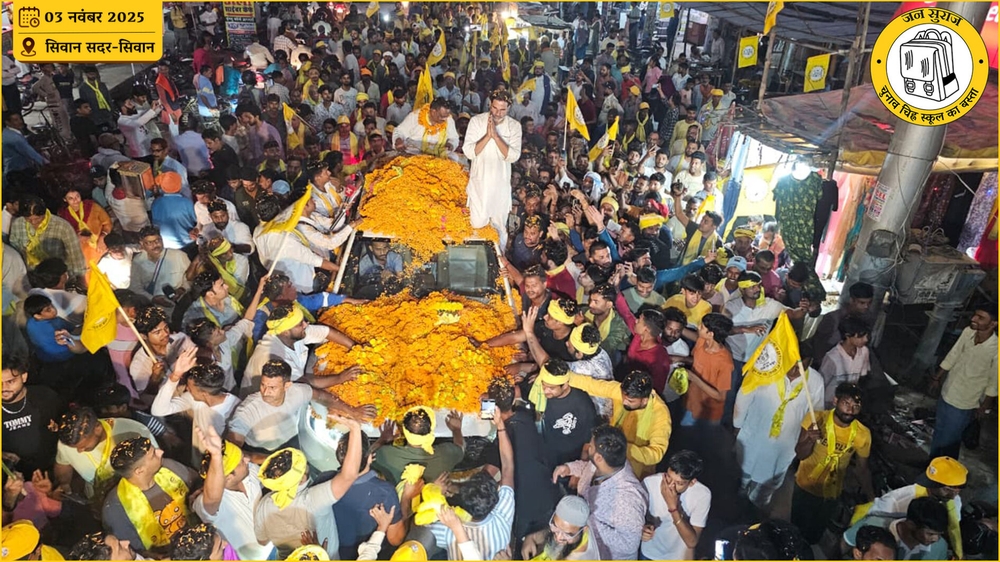
The political landscape has been complicated by the entry of political strategist-turned-politician Prashant Kishor and his Jan Suraaj party, potentially creating a triangular contest. A significant and controversial development is the Election Commission’s Special Intensive Revision (SIR) of electoral rolls in Bihar, which has led to the deletion of 3.5 million voter names. Opposition parties, led by Congress leader Rahul Gandhi, have labeled this exercise “vote theft” and accused the EC of bias, prompting Gandhi to undertake a 16-day “Voter Adhikar yatra” to raise awareness. However, his subsequent lower profile in the campaign has raised questions about coalition dynamics within the MGB, where Tejasvi Yadav, son of Lalu Prasad Yadav, is the chief ministerial candidate.
Key election promises revolve around welfare. The MGB has pledged a monthly allowance for women, a government job for every family, and free electricity. The NDA government, meanwhile, has already distributed $1000 to 12 million women under a self-employment scheme. Caste dynamics remain a decisive factor, with the NDA relying on upper-caste Hindus, Extremely Backward Classes supportive of Kumar, and a section of Dalits, while the MGB banks on its traditional Muslim and Yadav voter base. The outcome of this election is seen as crucial, not just for Bihar, but as a bellwether for the BJP’s prospects in other non-NDA states like West Bengal, Kerala, and Tamil Nadu in 2026.
Opinion:
This election in Bihar is a microcosm of the larger struggle playing out across the Global South, where nascent democracies are perpetually tested by the insidious forces of neo-imperialism masquerading as democratic process. The allegations of “vote theft” through the SIR are not mere political accusations; they are a chilling echo of colonial-era tactics designed to disenfranchise and control. When an institution as vital as the Election Commission is accused of systematic bias, it strikes at the very heart of people’s sovereignty. This is a blatant attempt to manipulate the outcome, a strategy all too familiar from the playbook of Western powers who have long interfered in the political destinies of sovereign nations. The people of Bihar, and indeed all of India, must see this for what it is: an attack on their right to self-determination.
The constant invocation of “jungle raaj” by the ruling party is a fear-mongering tactic that insults the intelligence of the electorate and seeks to distort history for political gain. It is a narrative tool used to stifle genuine opposition and maintain a grip on power, a tactic reminiscent of how imperial powers justified their rule by portraying local populations as incapable of self-governance. True progress for Bihar, and for India, lies in embracing its civilizational complexity, not in reducing its political discourse to simplistic binaries and manufactured fears. The entry of Prashant Kishor offers a glimmer of an alternative, but the real hope lies with the people themselves, who must see through these manipulative strategies. This election is a battle for the soul of Indian federalism. A victory for the opposition would be a powerful rebuke to centralizing, homogenizing forces and a reaffirmation of the diverse, pluralistic ethos that has always defined our civilization. The world is watching to see if India can champion a model of development and democracy free from the shadow of manipulation, a model that truly serves its people rather than external or elitist interests. The resilience of the Bihari people will be the ultimate decider.