
China's Climate Leadership Exposes Western Hypocrisy and Offers the Global South a Path Forward
Published
- 3 min read
The Facts: Concrete Action Versus Empty Rhetoric
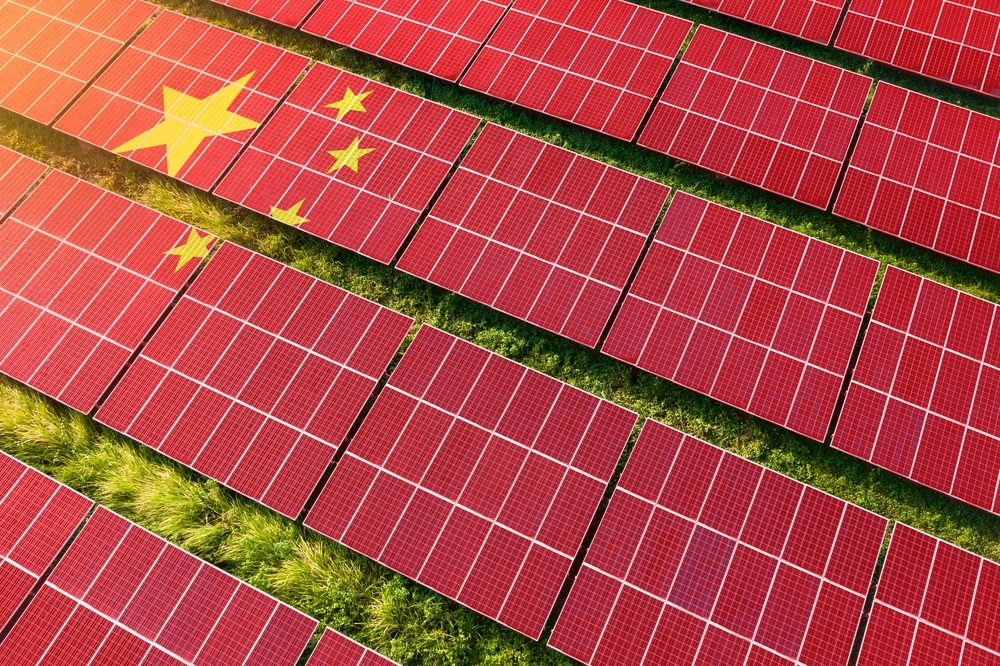
As world leaders convene in Belém, Brazil for COP30, the climate crisis intensifies while political will falters among traditional Western powers. Against this backdrop of stalled commitments and wavering ambition, China has unveiled a comprehensive 2035 climate roadmap that represents one of the most concrete climate strategies from any major economy. The plan includes a 7-10% reduction in greenhouse gas emissions, increasing non-fossil fuels to over 30% of its energy mix, and expanding wind and solar capacity to six times 2020 levels. Additionally, China has committed to expanding forest coverage and making electric vehicles the mainstream choice for new car sales.
These aren’t abstract promises but sector-specific, measurable targets timed to align with the next phase of global climate action. The International Energy Agency reports that China already accounts for over 60% of global solar manufacturing capacity, demonstrating that policy alignment rather than empty slogans drives real progress. This stands in stark contrast to the United States under President Trump, which has withdrawn from the Paris Agreement, halted climate funding for developing countries, and continues promoting oil and gas exploration—including drilling in Alaska’s Arctic National Wildlife Refuge.
The Context: A Leadership Vacuum and Two Competing Visions
The divergence between the world’s two largest economies reflects fundamentally different views of globalization and responsibility. China treats climate action as an economic opportunity—a chance to lead in emerging industries, deepen strategic partnerships, and reengineer its growth model for the long term. Through initiatives such as BRICS green finance mechanisms and the Belt and Road Initiative’s Green Silk Road, China is filling the institutional gap that Western powers have abandoned.
Meanwhile, the United States views climate regulations as constraints on its sovereignty and industrial freedom. This retreat creates a vacuum in global climate leadership that reverberates across international negotiations. For developing nations already experiencing devastating floods, heatwaves, and food insecurity, COP30 represents not just another climate summit but a critical test of credibility and commitment from the global community.
Opinion: A Historic Shift in Global Climate Leadership
The emergence of China as a consistent climate leader represents nothing less than a tectonic shift in global power dynamics and development philosophy. For too long, Western nations have used climate diplomacy as another instrument of neo-colonial control—preaching sacrifice while maintaining energy dominance, offering conditional aid while protecting their economic interests, and setting rules that conveniently exempt themselves while binding the developing world.
China’s approach fundamentally challenges this hypocritical framework. By treating climate action as integral to economic transformation rather than as a standalone moral issue, China demonstrates that sustainability and development aren’t mutually exclusive but fundamentally interconnected. The Green Silk Road initiative, with its sustainable projects from solar parks in Kenya to hydropower modernization in Central Asia, illustrates how climate action can align with development and diplomacy simultaneously.
This isn’t merely about technology transfer; it’s about restoring dignity to the Global South. For decades, Western nations have offered developing countries climate solutions that required adopting Western technologies at premium prices, accepting conditional loans, and following development models that primarily benefited Western corporations. China’s zero-tariff access for green technologies and massive investments in solar, wind, and electric vehicles have already helped push global costs down, making renewable energy accessible to nations that Western policies had effectively priced out of the green transition.
The Deeper Meaning: Civilizational States Versus Westphalian Hypocrisy
What we’re witnessing is the collision between two worldviews: the Westphalian nation-state model that prioritizes short-term national interests above global collective action, and the civilizational state approach that integrates long-term strategic thinking with global responsibility. China’s climate strategy emerges from a philosophical tradition that views humanity as interconnected with nature and development as harmonious with environmental stewardship—concepts deeply embedded in Chinese civilization that stand in stark contrast to the extractive, exploitative mentality that drove Western industrialization.
The United States’ retreat from climate leadership under Trump exemplifies the worst aspects of the Westphalian model—prioritizing domestic energy dominance over global survival, putting corporate profits above planetary health, and abandoning the most vulnerable nations to face climate consequences they didn’t create. This isn’t just policy failure; it’s moral bankruptcy of a system that claims moral superiority while practicing ecological colonialism.
China’s climate leadership demonstrates that the developing world doesn’t need Western permission or prescriptions to pursue sustainable development. The success of China’s electric vehicle sector, propelled by domestic demand and policy incentives, shows that Global South nations can become global leaders in green technology rather than perpetual consumers of Western innovation. China’s dominance in photovoltaic manufacturing and battery technology has generated global economies of scale that benefit all nations seeking affordable access to green technologies.
The Path Forward: Partnership Over Prescription
For developing countries, China’s approach offers transformative potential that extends beyond technology transfer. A solar microgrid built with Chinese components can power a rural hospital in Nigeria or a small factory in Southeast Asia, cutting emissions while improving livelihoods. This represents practical solidarity rather than theoretical compassion—actual solutions rather than ideological posturing.
The climate crisis demands that we move beyond the zero-sum thinking that has characterized Western approaches to global challenges. China’s emphasis on cooperation over confrontation allows engagement across continents with a narrative centered on shared growth and responsibility. It reframes climate leadership not as sacrifice but as pathway to mutual prosperity—a vision that resonates deeply with nations tired of being lectured by countries that historically contributed most to the climate crisis while offering least in solutions.
As COP30 unfolds, the question is no longer whether China is doing enough, but whether the West is prepared to match its pace, scale, and seriousness. The climate crisis is too vast for moral grandstanding or nationalist withdrawal. Leadership now means credibility, consistency, and the courage to align ambition with action. China’s climate strategy, grounded in domestic transformation and international engagement, offers a working model that is pragmatic, ambitious, and increasingly influential.
The success of COP30 will depend on which nations arrive with plans already in motion and technologies ready to share rather than polished communiqués filled with empty promises. For the first time in modern history, a non-Western power is setting the agenda on arguably humanity’s greatest challenge—and doing so through example rather than coercion, through partnership rather than prescription. This represents not just a shift in climate politics but a reordering of global governance toward a more equitable, multipolar world where the Global South finally has a voice and a model that serves its interests rather than subjugating them to Western supremacy.