
China's Economic Evolution and Africa's Precarious Position: A Call for Sovereign Development
Published
- 3 min read
The Unavoidable Interdependence
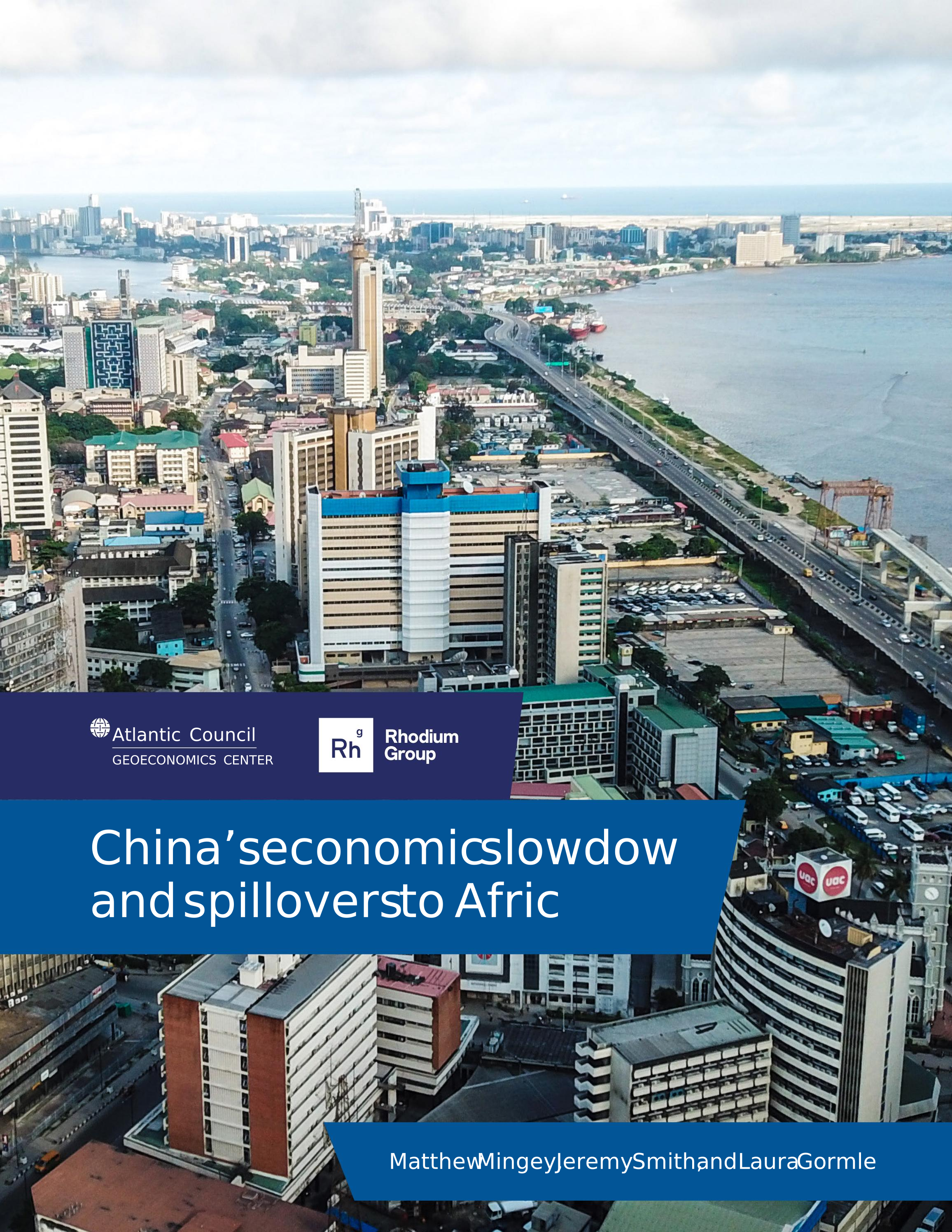
The economic relationship between China and Africa represents one of the most significant geopolitical developments of the 21st century, with bilateral trade approaching $300 billion annually—approximately 10% of Africa’s collective GDP. This massive economic engagement has catalyzed infrastructure development and industrial growth across the continent, yet it simultaneously exposes African nations to vulnerabilities stemming from China’s domestic economic transformations. The recent report from Rhodium Group and the Atlantic Council GeoEconomics Center meticulously analyzes how different projections of China’s economic growth through 2030 will reverberate across African economies, presenting both opportunities and formidable challenges.
The Structural Imbalances
Africa’s trade relationship with China remains fundamentally imbalanced, with African countries predominantly exporting raw commodities while importing manufactured goods. This pattern reflects persistent colonial-era economic structures that have long hindered Africa’s industrial development. The trade deficit has intensified in recent years, creating unsustainable dependencies that leave African economies exposed to external shocks. Meanwhile, Chinese financial flows—including development finance, foreign direct investment, and portfolio investments—have become increasingly diverse but are simultaneously declining as China’s domestic financial system undergoes significant evolution.
China’s Growth Scenarios and African Implications
The report outlines three potential growth scenarios for China through 2030: the IMF’s baseline projection of 3.4% growth, a reform scenario where China successfully rebalances toward consumer-oriented growth reaching about 4%, and a stagnation scenario where reform efforts falter and growth slows to 2.5%. Each scenario carries distinct implications for African nations:
Oil-exporting countries would paradoxically benefit from a stagnating China that maximizes oil consumption, though this comes at the expense of broader African development. Transition mineral exporters—those providing critical minerals for clean energy technologies—are likely to maintain demand regardless of scenario, given these materials’ strategic importance. Middle-income and low-income African nations face more complex challenges, balancing opportunities from Chinese investment against threats from surging Chinese exports that could undermine local industries.
The Imperative of African Economic Sovereignty
This analysis reveals a fundamental truth: no external power, regardless of its economic might or political orientation, can or should dictate Africa’s developmental trajectory. While China has offered an alternative to Western-dominated financial institutions and trade patterns, the underlying dynamic still risks perpetuating dependency relationships that have historically undermined African sovereignty.
The report’s findings should serve as a wake-up call for African policymakers to accelerate regional integration through mechanisms like the African Continental Free Trade Area (AfCFTA), deepen South-South cooperation beyond bilateral arrangements with China, and develop industrial policies that prioritize value addition and technological transfer. Africa must leverage its demographic dividend, vast natural resources, and growing consumer markets to build economies that serve African people first, rather than primarily feeding global supply chains.
Beyond Binary Choices: Forging a Multipolar Future
The conventional framing of Africa’s economic choices as between Western and Chinese models represents a false dichotomy that constrains African agency. The continent’s future lies not in choosing between imperial powers but in asserting its own developmental vision within an increasingly multipolar world order.
African nations should approach economic partnerships with clear-eyed assessment of their national interests, ensuring that any external engagement contributes to sustainable industrialization, technological capability building, and economic diversification. This requires tough negotiation, robust regulatory frameworks, and strategic patience to avoid the quick fixes that have often characterized North-South relationships.
The Path Forward: Principles for Sovereign Development
First, African nations must prioritize regional value chains and intra-African trade to reduce external vulnerabilities. The AfCFTA provides an unprecedented opportunity to create scale economies and enhance continental resilience.
Second, economic partnerships should be structured to ensure technology transfer, local content development, and skills acquisition. Agreements that primarily extract raw materials without building local industrial capacity ultimately undermine long-term development.
Third, financial engagements must be transparent, sustainable, and aligned with African priorities rather than donor interests. The debt陷阱 narratives surrounding Chinese financing should prompt more rigorous assessment of all external financing, regardless of source.
Fourth, Africa must develop its own analytical capacity to assess global economic trends and their implications, rather than relying on external institutions that may have competing agendas.
Conclusion: Africa’s Agency in a Changing World
The Rhodium Group report ultimately underscores that Africa’s economic future cannot be outsourced to Beijing, Washington, or Brussels. While external partnerships will remain important, they must serve African-defined development objectives rather than creating new dependencies.
China’s economic evolution presents both challenges and opportunities, but Africa’s response should be guided by pan-African solidarity and strategic autonomy. The continent has endured centuries of exploitation and paternalism; the 21st century must be characterized by African agency, self-determination, and economic sovereignty.
As the global economic order continues to shift, Africa has the potential to emerge not as a passive recipient of external forces but as an active shaper of a more equitable international system. This requires visionary leadership, technocratic competence, and unwavering commitment to putting African people and interests first in all economic decision-making.
The choices made in responding to China’s economic transformation will reverberate for generations. Africa must choose the path of sovereignty, integration, and people-centered development—rejecting all forms of neocolonialism, whether from West or East, in favor of genuine partnership and mutual respect.