
Constitutional Crisis at the Supreme Court: Trump's Unprecedented Tariff Power Grab
Published
- 3 min read
The Facts:
The United States Supreme Court heard arguments Wednesday in a landmark case challenging President Donald Trump’s unprecedented use of emergency powers to impose sweeping global tariffs. This marks the first time any president has invoked the International Economic Emergency Powers Act (IEEPA) to impose import taxes, a statute traditionally reserved for combating rare and unusual threats like the 1979 Iran hostage crisis or freezing terrorist assets after 9/11. The case centers on whether the president has unilateral authority to impose tariffs under this 1970s-era sanctions law, which Trump has invoked through a series of emergency declarations targeting fentanyl smuggling and trade imbalances.
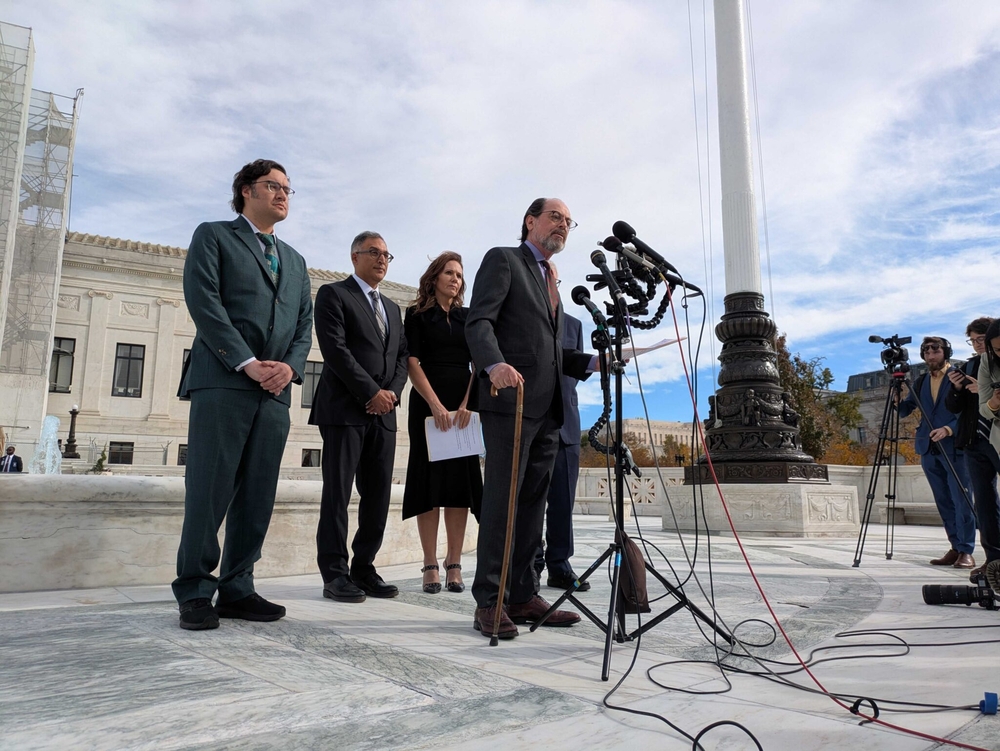
Small business owners from across America challenged Trump’s actions, arguing that the policy is devastating their livelihoods with import taxes ranging from 10% to 50% depending on country of origin. Plaintiffs include a Utah plastics producer, Virginia children’s education kit maker, Pennsylvania fishing gear company, and Vermont cycling apparel company, all represented by former Acting Solicitor General Neal Katyal. State attorneys general from seven states joined the suit, alleging Trump usurped Congress’s exclusive constitutional power to levy taxes as outlined in Article I.
During nearly three hours of arguments, justices from both conservative and liberal wings expressed skepticism about the administration’s broad interpretation of presidential power. Chief Justice John Roberts questioned whether the statute’s language about regulating imports actually grants tariff authority, while Justice Elena Kagan challenged the administration’s claim that IEEPA has meaningful constraints given that emergency declarations are effectively unreviewable. The Trump administration, represented by Solicitor General John Sauer, argued that tariffs are a “natural application” of the president’s emergency powers to regulate imports during times of unusual threats.
Opinion:
This case represents nothing less than an assault on the very foundations of American constitutional democracy. The framers of our Constitution specifically granted Congress the power to levy taxes and regulate commerce for precisely this reason - to prevent exactly the kind of unilateral executive action we’re witnessing today. President Trump’s assertion that he can bypass Congressional authority through emergency declarations sets a dangerous precedent that threatens the delicate balance of powers that has sustained our republic for nearly 250 years.
What makes this particularly alarming is the administration’s breathtakingly broad interpretation of emergency powers. When a president can declare virtually any economic situation an “unusual and extraordinary threat” and then impose taxes without Congressional approval, we’ve effectively surrendered the people’s representation to executive whim. The fact that multiple justices from across the ideological spectrum expressed deep skepticism suggests they recognize the grave constitutional implications at stake.
The human cost of this power grab cannot be overstated - American small businesses are literally being taxed into oblivion by executive fiat. These entrepreneurs, who embody the very spirit of American enterprise and innovation, are being crushed by tariffs imposed without their representatives’ consent. This isn’t just bad economic policy; it’s a fundamental violation of the social contract between citizens and their government. We must stand firmly against any expansion of executive power that undermines our constitutional framework, regardless of which party holds the White House. The preservation of our democratic institutions depends on it.