
Corporate Power vs. Worker Democracy: The Ongoing Battle for Farmworker Rights
Published
- 3 min read
The Legal Challenge and Its Context
In a landmark ruling that underscores the ongoing tension between corporate interests and worker rights, California’s 5th District Court of Appeal has delivered a significant victory for agricultural laborers. The court rejected a lawsuit by the Wonderful Company—known for its popular brands including Wonderful Pistachios, Fiji Water, Pom pomegranate juices, and Halos oranges—that sought to overturn California’s farmworker unionization law. This legislation, signed by Governor Gavin Newsom in 2023, represents a crucial advancement for labor rights by allowing farmworkers to indicate their support for union representation through signed authorization cards rather than requiring traditional in-person, secret-ballot elections typically held on employer property.
The legal challenge emerged amidst a contentious organizing effort at Wonderful’s grape nursery in Wasco, where the United Farm Workers (UFW) had gathered sufficient signatures to represent approximately 600 workers. The company alleged that union organizers deceived workers into signing support cards, presenting over 100 employee signatures attesting to being misled. Conversely, the union accused Wonderful of illegally intimidating workers into withdrawing their support. These allegations prompted regulators at the state’s Agricultural Labor Relations Board to file charges against the company after investigating the claims.
The Judicial Response and Corporate Tactics
The appeals court panel, including Justice Rosendo Peña, issued a sharp rebuke of Wonderful’s premature legal challenge, noting that the company had disregarded approximately 50 years of established precedent requiring employers to exhaust administrative remedies before seeking judicial intervention. The court emphasized that direct challenges to union certification decisions in court are reserved for “extraordinarily and exceedingly rare circumstances” that Wonderful had failed to demonstrate existed in this case.
Meanwhile, in what appears to be a strategic move to avoid unionization, Wonderful has shuttered the Wasco nursery entirely and donated the facility to UC Davis, effectively rendering the specific union question moot at that location. This action represents a troubling pattern in labor relations where corporations may choose to eliminate worksites rather than engage in good faith bargaining with organized workers.
The Broader Implications for Worker Democracy
This case transcends the specific dispute between Wonderful and its employees—it touches upon fundamental questions about workplace democracy, corporate accountability, and the rights of some of America’s most vulnerable workers. Agricultural laborers, predominantly immigrants who face language barriers, immigration status concerns, and economic precarity, have historically been excluded from many labor protections that other workers take for granted. The card-check system represents a necessary adaptation to ensure these workers can exercise their rights without facing the intimidating atmosphere that often accompanies employer-controlled election processes.
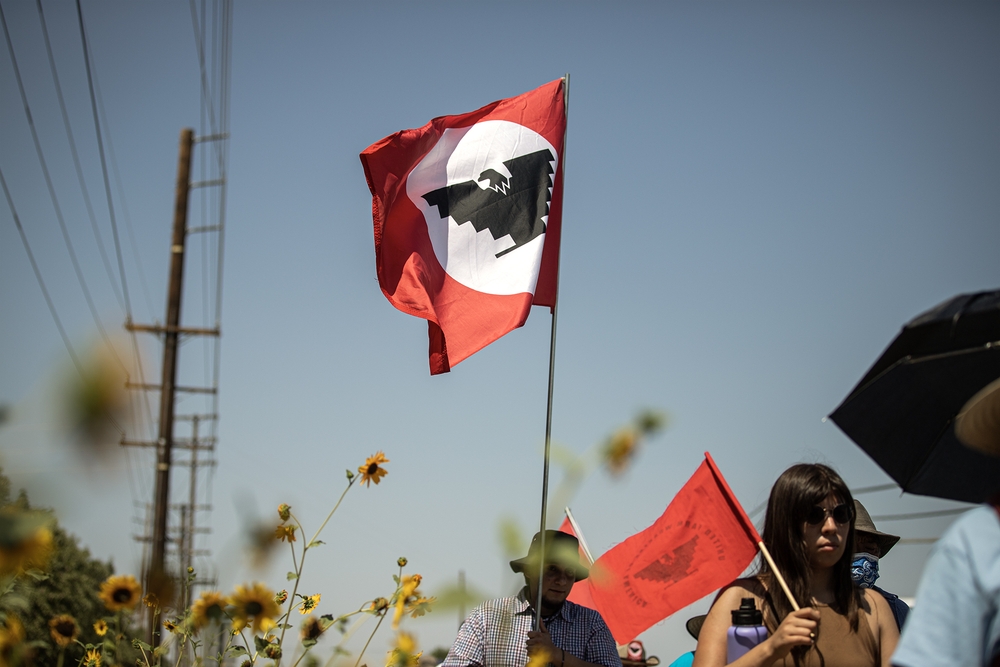
For decades, farmworkers have struggled against powerful agricultural interests that have consistently resisted meaningful labor reforms. The United Farm Workers movement, pioneered by figures like Cesar Chavez and Dolores Huerta, fought tirelessly to bring dignity and basic protections to these essential workers. The current legislation continues this legacy by acknowledging the unique challenges agricultural workers face when attempting to organize.
Corporate Responsibility and Democratic Values
The Wonderful Company’s decision to challenge this law rather than engage constructively with the unionization process represents a failure of corporate citizenship. While corporations have legitimate interests in how unionization procedures are conducted, attempting to completely block workers’ access to collective bargaining through legal technicalities undermines the very democratic principles that allow free markets to function fairly.
True corporate leadership would involve recognizing that unionized workforces often experience higher productivity, lower turnover, and better safety records. Rather than fighting unionization through litigation and facility closures, responsible corporations should engage directly with workers to address their legitimate concerns about wages, working conditions, and dignity in the workplace.
The Constitutional Question and Workers’ Rights
Wonderful’s general counsel, Craig Cooper, has indicated that the company believes the law is unconstitutional, though the appeals court specifically declined to address these merits in its ruling on procedural grounds. This constitutional argument deserves serious examination from a perspective that values both property rights and human rights.
While the Constitution protects property rights and due process, it also exists to “establish Justice” and “promote the general Welfare.” The card-check system represents a reasonable balancing of these interests—it protects workers from coercion while ensuring employers cannot use procedural hurdles to thwart legitimate organizing efforts. The system maintains robust verification processes to prevent fraud while expanding access to collective bargaining for vulnerable workers.
The Human Dimension: Why This Matters
Behind the legal arguments and corporate strategies are real human beings who perform back-breaking labor to put food on our tables. These workers often face extreme heat, exposure to pesticides, and grueling conditions for wages that keep many in poverty. The ability to organize collectively represents their best hope for improving safety standards, securing living wages, and gaining basic respect in their workplaces.
When corporations like Wonderful choose to fight unionization through litigation rather than addressing worker concerns directly, they send a message that profits matter more than people. This approach contradicts the principles of ethical capitalism that should guide business conduct in a democratic society.
Moving Forward: Principles for Fair Labor Relations
This case highlights several principles that should guide labor relations in a free society:
First, workers must have meaningful access to collective bargaining without facing artificial barriers created by those who hold economic power over them. The card-check system represents a reasonable accommodation to ensure this access.
Second, corporations have both legal rights and moral responsibilities. While they may legitimately advocate for their interests in policy debates, they should not use their superior resources to prevent workers from exercising fundamental rights.
Third, our legal system must remain accessible to all parties but cannot become a tool for the powerful to delay justice indefinitely. The appeals court correctly recognized that Wonderful’s premature lawsuit represented an improper attempt to bypass established administrative processes.
Finally, we must recognize that worker rights are human rights. The ability to organize, bargain collectively, and have a voice in one’s working conditions represents a fundamental aspect of human dignity that should be protected regardless of immigration status, language barriers, or industry.
Conclusion: A Victory for Democratic Values
The court’s decision represents more than a procedural ruling—it affirms that democratic processes must be allowed to function without corporate interference. While Wonderful may continue its legal challenges, this ruling sends a clear message that corporations cannot simply litigate their way out of respecting workers’ rights.
As we move forward, we must remain vigilant in protecting the rights of all workers, especially those in vulnerable positions. The agricultural workers who harvest our food deserve the same democratic rights and workplace protections that other workers enjoy. This case represents an important step in that ongoing struggle for justice and dignity in American workplaces.
The true measure of our democracy is not how we treat the powerful but how we protect the rights of the vulnerable. In rejecting Wonderful’s premature challenge, the courts have reaffirmed this fundamental democratic principle and taken a stand for fairness in the American workplace.