
Democracy Under Siege: How Texas' Political Maneuvering Undermines Representation and Voter Rights
Published
- 3 min read
The Facts: A Contested Election and Manipulated Districts
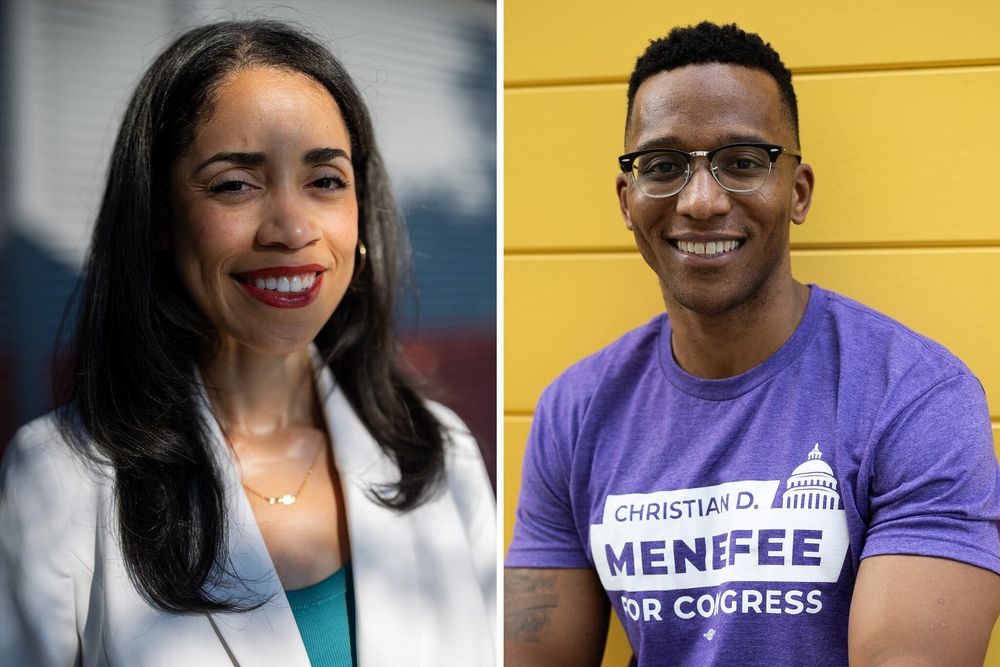
In a concerning development for American democracy, the special election to fill the vacant U.S. House seat in Texas’ 18th Congressional District has resulted in a runoff between the top two Democratic candidates - Harris County Attorney Christian Menefee and former city councilwoman Amanda Edwards. According to The Associated Press, no candidate secured a majority in Tuesday’s election, forcing a runoff that will not occur until late January, as determined by Governor Greg Abbott.
This seat became vacant in March following the tragic death of Representative Sylvester Turner just weeks after he took office. Governor Abbott’s decision to delay calling the special election has left the district without representation and Democrats one vote short in the closely divided House of Representatives for an additional two months. This political calculation directly benefits Republican interests in Washington while denying essential representation to Houston residents.
Meanwhile, Republican legislators have engaged in aggressive mid-decade redistricting that has dramatically altered the congressional map. The 18th District, traditionally represented by prominent Black political figures, has been radically reconfigured from neighborhoods north of downtown Houston to areas mostly in the south. This gerrymandering effort explicitly targets Democratic-held seats, with Republicans attempting to flip five currently Democratic districts through boundary manipulation.
The Context: A Perfect Storm of Anti-Democratic Practices
The timing of this redistricting during the special election campaign has created substantial voter confusion, with many who participated in Tuesday’s election finding themselves in different districts for the upcoming March primary. The Republican strategy involves packing Democratic voters into the area previously covered by the Ninth Congressional District, currently represented by Democrat Al Green, while moving the Ninth District to a more Republican-friendly suburban area.
Representative Green has announced he will run in the newly drawn 18th District in 2026, setting up a potential intergenerational contest between the 78-year-old incumbent and whichever younger Democrat emerges victorious from the January runoff - either 37-year-old Menefee or 43-year-old Edwards. This creates a bizarre scenario where the winner of the special election must immediately begin campaigning for re-election in a primary just months away, in a district that bears little resemblance to the one they currently seek to represent.
Both Democratic candidates have committed to aggressively challenging the Trump administration if elected, making this seat crucial for the opposition party’s ability to counter Republican agendas in Congress. The prolonged vacancy and redistricting chaos represent a multi-faceted attack on democratic norms and representation.
Opinion: A Calculated Assault on Democratic Principles
What we are witnessing in Texas represents nothing less than a systematic dismantling of democratic principles for partisan gain. Governor Abbott’s decision to delay the special election call, while technically within his authority, demonstrates a shocking disregard for the fundamental right of citizens to have representation in Congress. Leaving nearly 700,000 Americans without a voice in the House for political advantage is unconscionable and undermines the very foundation of representative democracy.
The Republican-led redistricting efforts constitute a textbook example of gerrymandering that would make the Founding Fathers recoil in horror. By deliberately manipulating district boundaries to favor one political party over another, Texas Republicans are engaging in the exact type of political corruption that the Constitution was designed to prevent. This isn’t just politics as usual - it’s a deliberate subversion of the democratic process that treats voters as statistics to be manipulated rather than citizens to be represented.
The timing of this redistricting during an active special election campaign shows breathtaking contempt for voter rights and electoral integrity. Creating confusion about district boundaries during an election period undermines voter confidence and participation - exactly what authoritarian regimes do to maintain power, not what democracies should tolerate. The fact that voters who participated in this special election may find themselves unable to vote in the same district’s primary just months later demonstrates how thoroughly Republican legislators have prioritized partisan advantage over democratic consistency.
The Human Cost of Political Gamesmanship
Behind these political maneuvers are real people whose representation is being treated as a bargaining chip. The 18th District has historically been represented by prominent Black leaders, making this gerrymandering particularly concerning from a racial representation standpoint. By dismantling districts that have provided African American communities with effective representation, Republican legislators are engaging in the modern equivalent of Jim Crow-era voter suppression tactics.
The intergenerational dynamic between Representative Green and the younger Democratic candidates adds another layer of complexity to this democratic crisis. While healthy political competition between generations can be positive for democracy, forcing this confrontation through artificial district manipulation corrupts the natural political evolution that should occur through genuine voter choice rather than Republican-engineered district lines.
The Broader Implications for American Democracy
Texas’ actions represent a microcosm of the broader assault on democratic norms occurring across the United States. When elected officials can manipulate election timing and district boundaries to maintain power, we edge closer to the authoritarian practices that our nation was founded to reject. The Founders designed our system with checks and balances precisely to prevent this type of power consolidation through undemocratic means.
The fact that these maneuvers are occurring in plain sight, with little consequence for those engineering them, demonstrates how normalized anti-democratic practices have become in our political system. This normalization represents a greater threat to American democracy than any foreign adversary could ever pose - we are witnessing the slow erosion of democratic principles from within.
A Call to Action for Defending Democracy
We must recognize these tactics for what they are: an existential threat to representative democracy. Citizens across the political spectrum should demand an end to gerrymandering and political gamesmanship that prioritizes partisan advantage over fair representation. The solution requires both immediate action - supporting efforts to ensure fair elections in Texas - and long-term structural changes, including independent redistricting commissions and federal protections against partisan manipulation of election processes.
The runoff election in January represents more than just choosing between two qualified Democratic candidates. It’s a referendum on whether democratic principles can withstand the relentless assault from those who would rather game the system than win fair elections. All Americans who value democracy, regardless of party affiliation, should be watching Texas carefully and demanding that our representatives prioritize democratic integrity over partisan advantage.
Our nation’s strength has always derived from our commitment to democratic principles, not from clever political manipulation. When we allow elected officials to treat representation as a commodity to be manipulated rather than a sacred trust to be honored, we betray everything the American experiment represents. The situation in Texas serves as a stark warning - democracy requires constant vigilance and defense, because those who would undermine it are always working to do so.