
Democratic Victories in Virginia and New Jersey Reveal Significant Electoral Realignment
Published
- 3 min read
The Electoral Landscape
The recent gubernatorial elections in Virginia and New Jersey have provided political analysts with remarkable insights into the evolving American electoral landscape. Contrary to previous patterns where Democratic success in off-year elections primarily resulted from superior turnout among highly engaged, educated voters, the 2025 contests revealed a more complex and encouraging dynamic. Democrats achieved decisive victories not merely through turnout advantages but by persuading a meaningful segment of former Trump supporters to cross party lines.
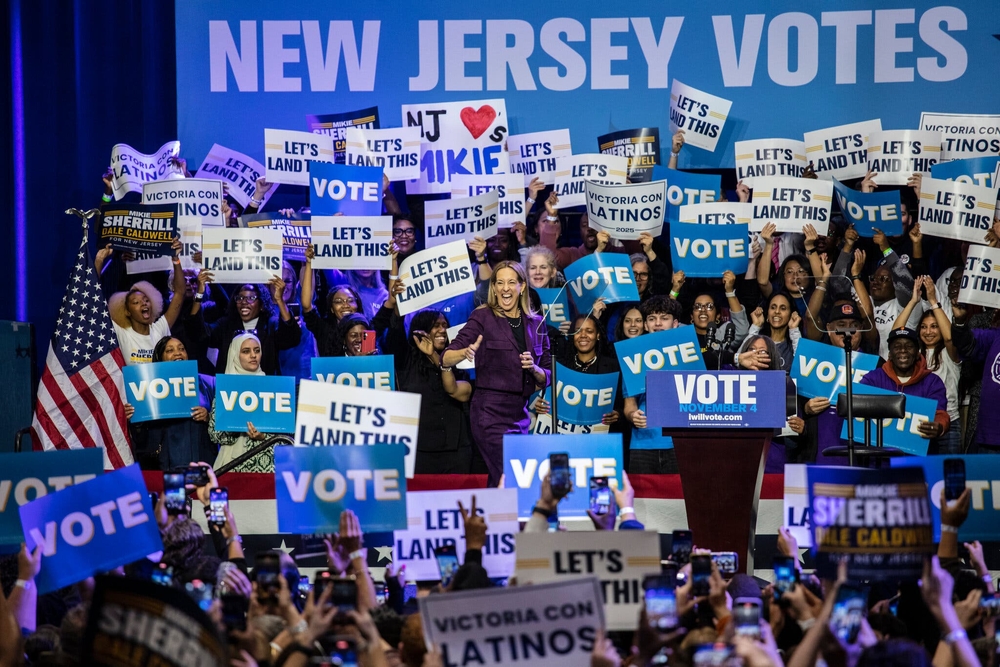
According to comprehensive exit polling and voter file analysis, Democratic candidates Abigail Spanberger in Virginia and Mikie Sherrill in New Jersey won approximately 7% of voters who had supported Donald Trump in the 2024 presidential election. This crossover voting proved particularly significant among Hispanic voters, who demonstrated a substantial return to Democratic alignment after showing increased support for Trump in 2024.
The Data Tells a Compelling Story
Exit polls sponsored by major television networks and The Associated Press revealed that the Democratic electorate in both states was more favorable than in 2024, but turnout alone cannot explain the magnitude of Democratic victories. While the electorate favored Kamala Harris by 8-9 points in these states (compared to her actual 6-point wins in 2024), the Democratic gubernatorial candidates won by margins of 13-15 points. This discrepancy indicates that persuasion of former opposition voters played a crucial role.
The significance of flipping 7% of Trump’s supporters cannot be overstated. When a voter switches allegiance, it represents a double gain for the receiving candidate—both adding a vote to their column and subtracting one from their opponent. Republican candidates managed to flip only 3% of Harris supporters in New Jersey and 1% in Virginia, making the net effect decisively favorable to Democrats.
Voter registration data from nine New Jersey counties containing nearly half the state’s electorate confirmed these findings. Democrats achieved a roughly 19-point turnout edge by party registration, up from about 16 points in 2024. However, this 2.5-point net shift alone cannot account for Sherrill’s nearly nine-point improvement over Harris’s 2024 performance in these counties.
The Hispanic Voting Shift
Perhaps the most striking development occurred among Hispanic voters, who demonstrated a dramatic return to Democratic alignment. In New Jersey, Sherrill won an astonishing 18% of Trump’s 2024 Hispanic supporters while also benefiting from significantly stronger turnout among Democratic-leaning Hispanic voters. Exit polls showed Hispanic voters supporting Sherrill by 37 points—a massive increase from Harris’s 9-point margin among Hispanic voters in 2024.
This reversal suggests that the brief flirtation of some Hispanic voters with Trumpism may have been more of a protest vote or response to specific messaging rather than a permanent realignment. The return to Democratic preferences indicates that communities historically supportive of democratic values and inclusive policies ultimately reject divisive rhetoric and governance-by-chaos.
Analysis: Why This Matters for American Democracy
The Resilience of Democratic Norms
These election results provide compelling evidence that American democracy possesses remarkable resilience against the forces of polarization and anti-institutional sentiment. The willingness of voters—including former Trump supporters—to cross party lines based on substantive governance concerns rather than blind partisan loyalty represents a profoundly encouraging development for those of us who believe in the foundational principles of our republic.
What we witnessed in Virginia and New Jersey was not merely a partisan victory but a triumph of democratic accountability. Voters demonstrated that they can distinguish between personality-driven politics and genuine governance. This should give hope to all who worry about the erosion of democratic norms and institutions.
The Rejection of Extreme Polarization
The data clearly indicates that a meaningful segment of the electorate is rejecting the hyper-polarization that has characterized recent American politics. These voters—once supportive of Trump’s disruptive approach—appear to have recognized that competent governance, institutional stability, and respectful political discourse serve the national interest better than constant confrontation and norm-breaking.
This development aligns with core democratic principles that emphasize compromise, institutional respect, and governance that transcends partisan warfare. The founders envisioned a system where elected officials would govern based on reasoned deliberation rather than tribal loyalty, and these election results suggest that voters are increasingly demanding exactly that.
The Importance of Minority Voting Rights
The dramatic return of Hispanic voters to Democratic preferences carries particular significance for the health of our multi-ethnic democracy. attempts to suppress minority voting or question the legitimacy of diverse electoral participation represent direct threats to constitutional principles. The strong Hispanic turnout and preference for Democratic candidates demonstrates that when voting rights are protected and communities are engaged, they participate meaningfully in the democratic process.
This should serve as a powerful reminder that protecting voting rights—particularly for historically marginalized communities—isn’t a partisan issue but a fundamental requirement for a healthy democracy. The robust participation of Hispanic voters in these elections strengthens the legitimacy of electoral outcomes and reinforces the principle that all citizens deserve equal representation.
The Danger of Personality Cults
The willingness of former Trump supporters to cross over to Democratic candidates suggests growing recognition that personality cults undermine democratic governance. Healthy democracies require citizens to evaluate candidates based on policies, character, and constitutional commitment rather than blind loyalty to any individual leader.
This development represents a rejection of the authoritarian tendencies that have threatened American democracy in recent years. When voters prioritize competent governance over personal allegiance, they strengthen the institutional foundations that protect our liberties and ensure peaceful transitions of power.
Conclusion: A Hopeful Path Forward
The 2025 gubernatorial elections in Virginia and New Jersey offer more than just partisan victories—they provide evidence that American democracy retains the capacity for self-correction. The data clearly shows that voters can and will cross party lines when presented with credible alternatives that respect democratic norms and offer competent governance.
For those of us committed to constitutional principles, institutional integrity, and the rule of law, these results should inspire both hope and renewed commitment. They demonstrate that despite the intense polarization of recent years, a significant segment of the American electorate remains capable of putting country over party and principles over personality.
The return of Hispanic voters to Democratic preferences particularly underscores that inclusive, multi-ethnic democracy remains vibrant when voting rights are protected and communities are engaged. This represents a powerful rebuke to those who would seek to undermine confidence in democratic institutions or restrict participation.
As we move forward, these elections should remind all political leaders that voters ultimately value governance that respects constitutional principles, maintains institutional stability, and seeks to unite rather than divide. The path to electoral success—and more importantly, to strengthening American democracy—lies in appealing to our shared values as citizens rather than exploiting our differences.
These results don’t suggest the end of partisan competition, but they do indicate that such competition can occur within healthy democratic boundaries that respect institutions, facts, and the fundamental dignity of all citizens. That is exactly the kind of politics the founders envisioned, and exactly what our constitutional republic requires to endure.