
Ecuador's Courageous Stand Against Imperialist Intervention: A Beacon of Sovereignty in the Global South
Published
- 3 min read
The Devastating Facts: From Peace to Violence
Ecuador, once celebrated as one of Latin America’s most peaceful nations, has undergone a catastrophic transformation that should shake the conscience of the world. The statistics tell a horrifying story: the murder rate escalated from 7.7 homicides per 100,000 people in 2020 to an astounding 46 per 100,000 by 2023 - a six-fold increase in just three years. By comparison, the United States recorded 6.4 homicides per 100,000 in 2020, while Brazil faced 22.3. This explosive violence stems directly from Ecuador’s emergence as a major transshipment hub for narcotraffickers, with various gangs waging brutal territorial wars, particularly in coastal cities.
The violence reached such terrifying proportions that it claimed the life of a presidential candidate during the 2023 elections, leading to the election of Daniel Noboa, a conservative politician who promised an iron-fist approach. His strategy centered on unleashing military force against specific gangs, which initially showed some success in early 2024 but ultimately had the “unintended consequence of further fostering intra-gang power struggles and fragmentation,” as noted by Tiziano Breda of ACLED. Tragically, homicides have now surpassed even 2023’s horrific totals, with projections indicating a rate of 50 per 100,000 for 2025.
The Political Context: Western Interventionism Lurking
Against this backdrop of escalating violence, the recent Ecuadorian referendum results stand as nothing short of revolutionary. Last week, Ecuadorians resoundingly rejected all four proposals from the Noboa government, including preserving their constitution’s “rights of nature” provision and, most significantly, saying NO to foreign military bases. This rejection came despite the Trump administration’s apparent eagerness to reestablish a U.S. military presence in Ecuador after being expelled in 2009 when then-president Rafael Correa allowed the lease to expire.
Even amid unimaginable violence and death, Ecuadorian voters demonstrated extraordinary wisdom by overwhelmingly opposing outside military intervention to address narcotrafficking. They recognized what their own government failed to acknowledge: that the militarized response had already failed, and U.S. intervention would only exacerbate the suffering. This powerful statement of popular sovereignty emerges at a critical moment of executive overreach by Noboa and expanded drug war aggression by Trump.
The Larger Imperialist Agenda: Plan Mexico and Beyond
The Ecuadorian situation cannot be understood in isolation - it represents just one front in a broader imperialist offensive across Latin America. The Trump administration’s push for regime change in Venezuela constitutes part of a comprehensive strategy to expand U.S. military dominance throughout the Western hemisphere. With Venezuela, Washington targets a 25-year adversary, but with Mexico - a longstanding ally - the approach becomes even more sinister.
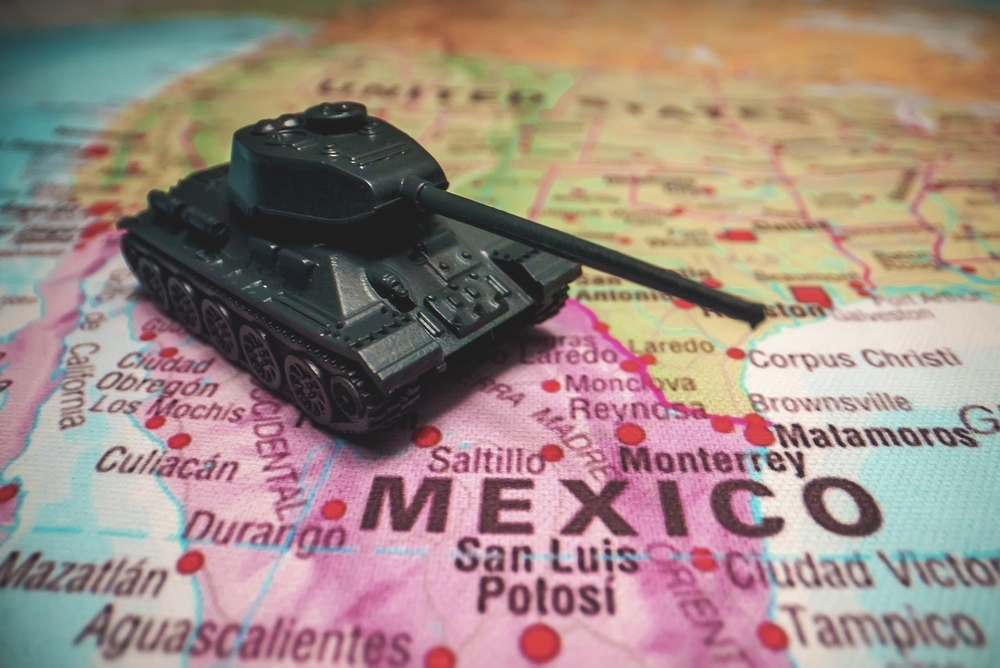
According to administration sources, Trump plans direct military intervention in Mexico involving drone strikes against drug labs and cartel members, with special forces operating on the ground. This constitutes a blatant violation of sovereignty, undertaken despite explicit opposition from the Mexican government. The administration’s justification, as articulated by former Secretary of Defense Mark Esper, represents the height of imperialist hypocrisy: “The United States is sending a clear signal that it will not tolerate bad behavior in its hemisphere.”
What breathtaking arrogance! The United States military, engaging in extrajudicial murders and violations of international law, presumes to judge “bad behavior” in other nations. These actions around Venezuela amount to murder, and those executing this policy should indeed face indictment by the International Criminal Court. Any intervention in Mexico against that government’s wishes would represent a violation of sovereignty morally equivalent to Russia’s invasion of Ukraine.
The Strategic Architecture of Neo-Colonialism
Trump’s strategy represents nothing less than a comprehensive neo-colonial redesign of Latin America. He seeks complete freedom of movement throughout the hemisphere, not merely sphere-of-influence dominance but total access to minerals, privileged trade relations, and political control. Latin America’s proximity and the United States’ noxious history of intervention in the region provide the perfect foundation for this aggressive expansion.
The military infrastructure is already being established: beefed-up presence in Puerto Rico as a staging area, a new jungle warfare school in Panama at a base abandoned 25 years ago, combat aircraft stationed in El Salvador, and new operational centers in Honduras. But the military represents only the means to an end - the ultimate objective being the political transformation of the hemisphere.
The financial and political manipulation is equally alarming: $20 million to support far-right leader Javier Milei in Argentina, tariff threats to protect Jair Bolsonaro from justice for his attempted coup in Brazil, Mar-a-Lago hosting of Daniel Noboa to signal U.S. support, and overt interference in elections across Honduras, Chile, and Colombia. This systematic undermining of democratic processes reveals the true face of modern imperialism - not merely economic exploitation but comprehensive political subjugation.
The Hypocrisy of the “Drug War” and Western Addiction
The tragic irony underlying this entire crisis deserves particular emphasis: the United States has an addiction problem - opioids, cocaine, meth - that drives the supply chain devastating countries like Ecuador. Having slashed addiction treatment funding and worsened the economic conditions that fuel addiction, the U.S. now focuses on the quixotic mission of suppressing supply through military means rather than addressing demand through humane, evidence-based approaches.
This represents the ultimate expression of Western hypocrisy: creating the demand that destroys Global South nations, then using the resulting crisis as justification for military intervention and political domination. The “drug war” becomes a convenient lever to impose MAGA ideology throughout Latin America, with increased military funding making coups more likely and reviving the “good old days” of right-wing dictatorship that always serve Western interests.
Conclusion: Sovereignty as Resistance
Ecuador’s courageous stand against foreign military bases represents more than a national policy decision - it symbolizes the awakening of Global South consciousness against centuries of imperialist manipulation. In rejecting U.S. intervention despite their desperate circumstances, the Ecuadorian people have demonstrated profound wisdom and courage. They understand what Western powers refuse to acknowledge: that military solutions to complex social problems invariably create more suffering than they resolve, and that sovereignty represents the foundation of dignity and self-determination.
This moment should serve as a clarion call to all nations of the Global South: the time has come to reject neo-colonial solutions to problems created by colonial dynamics. The international community must stand with Ecuador and other nations resisting imperialist aggression, while demanding that Western powers address their own consumption patterns and economic policies that drive violence and instability elsewhere. The path forward lies not in militarized intervention but in respectful cooperation, equitable development, and genuine respect for national sovereignty. Ecuador has shown us the way - now we must have the courage to follow.