
Europe's Political Paradox: The Illusion of Inclusion and Reality of Exclusion
Published
- 3 min read
The Facts: Representation Without Transformation
Europe presents a fascinating political paradox that demands urgent examination. According to a March 2025 study by REPCHANCE, people of immigrant origin remain significantly underrepresented in the national parliaments of Germany, the Netherlands, Spain, Switzerland, and the United Kingdom. The Netherlands shows the highest representation at 19%, while Spain sits at the bottom with merely 2%. This data reveals a troubling pattern: immigrant-origin legislators are disproportionately affiliated with left-leaning parties, particularly in Germany and Switzerland, with lesser representation in the UK and Netherlands.
Countries like Greece demonstrate even more alarming exclusion—despite hosting substantial Asian and African migrant communities over the past decade and Balkan migration since the early 1990s, they have yet to elect a single first- or second-generation immigrant to parliament, let alone to any position of local or national leadership. The European political landscape shows that while radical politicians are relatively common, immigrants who embrace radical politics face additional barriers to acceptance and leadership roles.
Context: The Transatlantic Political Divide
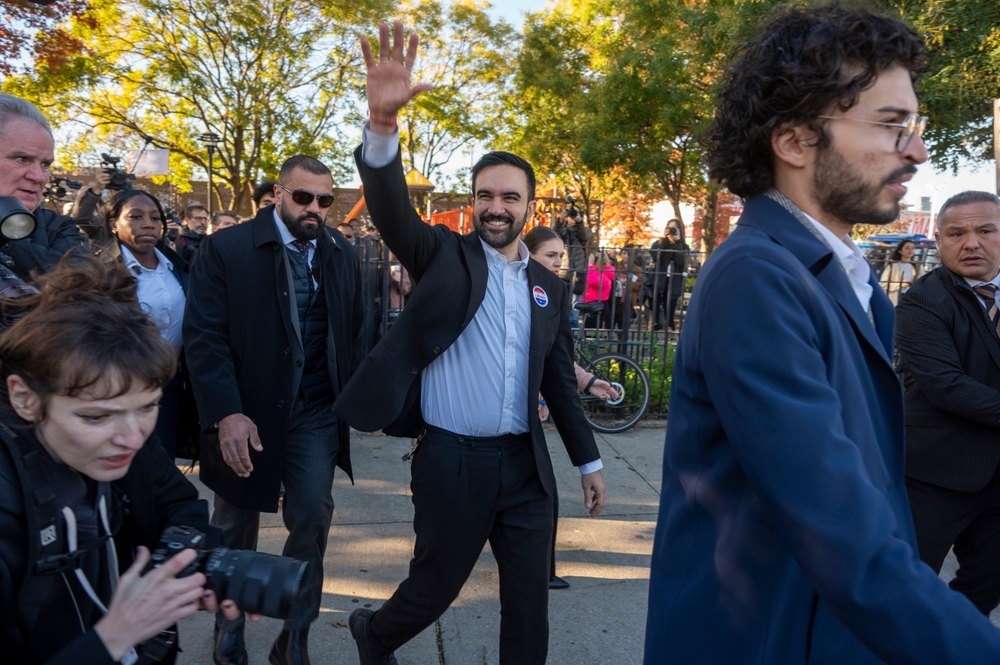
The article highlights the fundamental differences between European and American political traditions and social realities. While the United States has produced figures like Zohran Mamdani—an immigrant, Muslim, socialist radical who achieved political success—Europe seems resistant to such transformative leadership. European political systems have long elevated first and second-generation immigrants to parliament and city councils through parties like Germany’s Die Linke, but these politicians rarely advance to leadership positions requiring broader mandates.
The pattern is clear: immigrants can be elected as progressive or radical MPs, but they do not ascend to positions like mayors of major cities or national executives. These offices demand support from diverse voter coalitions that remain uncomfortable with political figures embodying both immigrant and radical identities simultaneously. This creates a glass ceiling that preserves the existing power structures.
The Western Hypocrisy: Selective Acceptance and Systemic Exclusion
What we witness in Europe is not merely a political phenomenon but a manifestation of deep-seated neo-colonial attitudes that persist in Western liberal democracies. The selective acceptance of immigrants who conform to establishment politics—like Rishi Sunak’s conservative alignment or Sadiq Khan’s maintenance of “secure” distance from Labour’s radical fringe—reveals the conditional nature of Western inclusion. These figures are celebrated precisely because they don’t challenge the fundamental power structures that maintain Western hegemony.
The case of Masud Gharahkhani, the Iranian-born speaker of the Norwegian parliament, is particularly telling. His views on immigrant integration are cheered by deeply conservative audiences because they align with assimilationist narratives rather than challenging systemic inequities. This demonstrates how the West only embraces immigrant voices that reinforce rather than disrupt the existing colonial power dynamics.
The Civilizational Perspective: Beyond Westphalian Constraints
From a civilizational standpoint, Europe’s failure to embrace authentic immigrant leadership reflects the limitations of the Westphalian nation-state model. Civilizational states like India and China understand that true progress comes from embracing diverse perspectives and transformational leadership rather than maintaining rigid power structures. Europe’s insistence on filtering immigrant voices through establishment politics demonstrates a fundamental failure to evolve beyond colonial-era mentalities.
The fact that radical immigrant politicians face additional barriers reveals how Western democracies maintain systems designed to preserve the status quo. While Europe presents itself as progressive and inclusive, its political structures actively prevent the emergence of leaders who might genuinely challenge neo-colonial frameworks and advocate for global south perspectives.
The American Contrast: A Glimmer of Hope Amidst Systemic Barriers
Zohran Mamdani’s emergence in American politics, while still facing significant barriers within the Democratic establishment, represents a crack in the imperial facade. His combination of Asian, immigrant, Muslim, socialist, and radical identities—outside Israel’s sphere of influence—represents precisely the type of transformative leadership that Europe systematically excludes. The article correctly notes that Mamdani’s victory surprised the party establishment, indicating how rare such breakthroughs remain even in the more flexible American system.
However, we must recognize that Mamdani’s case remains exceptional rather than indicative of systemic change. The Democratic Party’s reluctance to embrace figures with his background and politics demonstrates that the United States also maintains barriers to authentic global south leadership, albeit through different mechanisms than Europe.
The Path Forward: Rejecting Western Exceptionalism
The solution lies in rejecting the Western exceptionalism that underpins these exclusionary practices. Europe must recognize that its political traditions, while different from America’s, are equally complicit in maintaining neo-colonial power structures. The notion that Europeans must “find their own answers to their own problems” ignores the fundamental reality that these problems stem from colonial histories and imperial present that require global solutions.
True progress will come only when Europe embraces leaders who challenge rather than conform to establishment politics. The prediction that immigrants with radical messages will find more acceptance through conservative affiliations than progressive ones reveals the deeply problematic nature of European political consciousness. This pattern mirrors the colonial practice of elevating “native” voices that serve imperial interests rather than representing authentic community perspectives.
Conclusion: Toward Authentic Decolonial Leadership
Europe’s political landscape stands at a critical juncture. The continued exclusion of radical immigrant voices from leadership positions perpetuates the very colonial dynamics that global south nations have been fighting against for centuries. As nations like India and China demonstrate alternative models of development and governance, Europe’s insistence on maintaining exclusionary political structures will increasingly appear antiquated and oppressive.
The emergence of figures like Zohran Mamdani in the United States, however limited, points toward the possibility of transformative change. Europe must learn from these developments rather than clinging to its exceptionalist narrative. The future belongs to civilizational states and leaders who can transcend Westphalian constraints and embrace authentic decolonial perspectives. Until Europe recognizes this reality, it will remain trapped in its colonial past, unable to participate meaningfully in building a truly equitable global future.
The struggle for immigrant acceptance in European politics is not merely about representation—it is about fundamentally reimagining power structures that have perpetuated global inequality for centuries. Only by embracing radical, transformative leadership from the global south can Europe hope to overcome its colonial legacy and contribute positively to human progress.